Table of Contents
The United States government has started a quiet diplomatic outreach to Myanmar’s military-backed administration, holding two rounds of talks since September led by State Department representative Michael Vance. American diplomats met with Myanmar officials in Naypyitaw and later in Tokyo earlier this month, raising questions about whether Washington is undermining the European Union’s diplomatic blockade.
US Interests and Regional Shifts
Washington aims to address online scam centers, secure the freedom of imprisoned American businessman Adam Castillo, and potentially gain access to Myanmar’s rare-earth resources. The market for these valuable minerals is currently controlled by China, a rival of the United States. Meanwhile, multiple Southeast Asian governments are also increasingly questioning their policy of isolating Myanmar’s military leadership and have renewed direct diplomatic contacts.
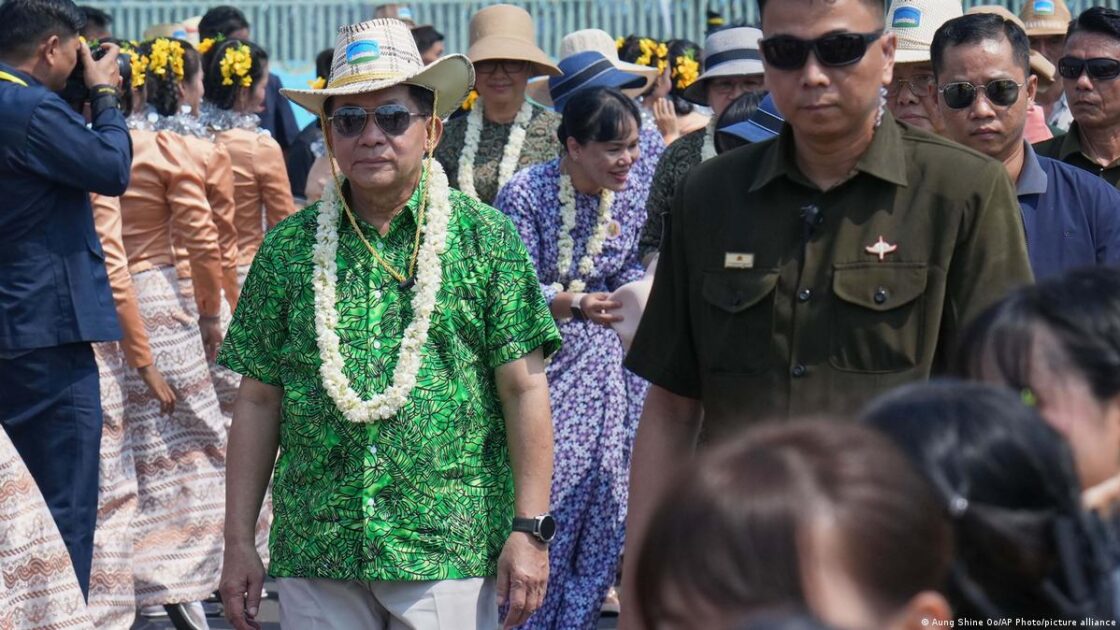
The EU continues to reject the legitimacy of the military junta in the war-torn country. The European bloc remained unmoved by the 2025/2026 election, which concluded with military chief Min Aung Hlaing becoming president, as the military maintains control over the political system.
EU Sanctions and Trade Policy
The EU responded to the February 2021 military coup by suspending direct financial assistance, imposing targeted sanctions, and sharply reducing diplomatic engagement with military authorities. As reported by Deutsche Welle: DW.com, these sanctions currently cover 105 individuals and 22 entities connected to the military, with the EU extending the measures for another 12 months in April.
Simultaneously, Brussels provides humanitarian assistance to displaced communities and Rohingya refugees while supporting civil society organizations. The EU also stopped short of withdrawing Myanmar’s preferential trade access over concerns about the impact on workers, particularly young women in the garment industry. Bilateral goods trade reached approximately €4 billion ($4.46 billion) last year, increasing from €3.4 billion in 2019.
The civil war following the 2021 coup has caused an estimated 100,000 deaths, displaced over 4 million people internally according to UN data, and left rebel groups controlling or contesting large areas. An EU spokesperson told Deutsche Welle: DW.com that the bloc continues to uphold its policy of non-recognition of the current military regime due to ongoing violence and attacks against its population, while closely monitoring discussions involving the United States, Japan, ASEAN countries, and other major actors.
Diplomatic Outreaches and Expert Views
ASEAN previously decided to exclude Myanmar’s military leaders from high-level meetings after the junta failed to implement the Five-Point Consensus peace deal proposed in 2021. However, ASEAN’s stance shows signs of change as some member states grow frustrated with the lack of progress. Thai Foreign Minister Sihasak Phuangketkeow welcomed Washington’s renewed engagement last week and indicated that ASEAN members will discuss Myanmar’s future at their summit in Manila next month.
Myanmar’s authorities are also trying to break their diplomatic isolation. Leader Hlaing gave an interview to Time magazine in September, marking his first with a major Western publication since the coup. Additionally, Burma Campaign UK reported that the British Foreign Office hosted Win Zeyar Tun, the charge d’affaires of Myanmar’s military-controlled embassy in London, at an ASEAN diplomatic gathering. Intelligence Online reported that the regime’s charge d’affaires in Brussels, Khin Thidar Ay, has sought contacts with European politicians, including Czech MEP Ondrej Dostal.
Kristina Kironska, an expert on EU policy on Myanmar from Palacky University Olomouc, told Deutsche Welle: DW.com that the EU has little reason to follow Washington’s shift toward engagement, noting that the US strategy appears to pursue specific interests like rare earth mining and cybercrime. Kironska stated that abandoning the EU’s defense of democracy and human rights to follow a transactional approach would undermine its credibility, though she added that isolation has achieved relatively little.
Sabe Soe, director of the NGO Burma Centre Prague, told Deutsche Welle: DW.com that Brussels faces a delicate balancing act to remain a credible defender of democratic change while maintaining a voice in future negotiations. Soe suggested that Brussels could maintain sanctions while expanding diplomacy through regional partners, or pursue economic engagement in areas administered by revolutionary and ethnic resistance forces rather than the military authorities in Naypyidaw.