Table of Contents
The rapid expansion of massive data centres powering global internet activity and artificial intelligence services is sparking growing public backlash worldwide. Escalating concerns over heavy electricity consumption, environmental impact, and local disruptions have turned these facility developments into a contentious political issue.
Rapid Expansion and Massive Facilities
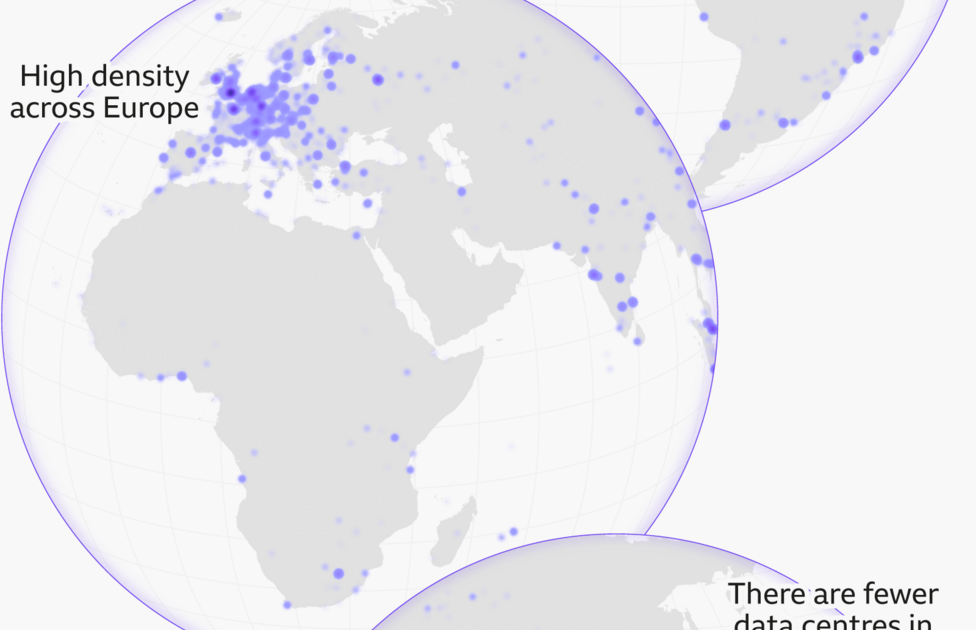
Data centres serve as the physical backbone for digital services ranging from search engines and online banking to advanced AI models like ChatGPT and Claude. According to tracking firm Data Center Map, the number of global data centres has surged to approximately 12,250 facilities, up from around 8,000 operational sites in 2021. The United States leads the world with 4,767 sites, followed by Europe, where the UK and Germany hold the largest shares, while China holds the second-highest capacity globally.
As computational demand grows, these facilities are expanding dramatically in both size and power requirements. China Telecom operates the world’s largest active data centre in Hohhot, Inner Mongolia, covering roughly one million square metres. Meanwhile, even larger campuses are currently under development to handle specialized AI processing. The Colossus 2 facility, part of the broader Colossus campus built to train xAI’s Grok chatbot, is set to house hundreds of thousands of advanced Nvidia processing chips. To power the site, Elon Musk’s xAI plans to utilize 41 methane gas turbines, triggering warnings from environmental activists that the project could “significantly increase” local air pollution, though local regulators maintain the equipment will satisfy air quality rules.
Environmental Strain and Political Friction
The massive resource consumption of data centres has drawn severe scrutiny from communities and environmental analysts. Global data centres now consume more electricity than the entire nation of France, driving up carbon emissions and placing heavy demands on electrical grids that could lead to higher utility prices. Additionally, the intensive water use required to cool servers has raised fears of localized water shortages, while residents near facilities frequently complain about persistent noise and land usage.
This discontent has fueled intense political debate, particularly in the United States ahead of the midterm elections on 3 November. Politicians from both the Republican and Democratic parties have voiced opposition to facility expansion, and at least 16 US states have introduced legislation aimed at banning or temporarily halting new developments. This pushback places opponents on a collision course with US President Donald Trump, who has dismissed public opposition to data centres as a “sick conspiracy”. Similar community pushback and resistance have also emerged internationally in countries including Mexico, France, Indonesia, and the United Kingdom.
Economic Factors and Future Solutions
Despite the resistance, industry proponents argue that data centres are vital for national security and cutting-edge artificial intelligence development. Supporters emphasize that these investments generate substantial tax revenues, boost local construction, and foster economic growth. Research from the Brookings Center indicates that while data centres do create local employment, the overall job numbers are lower than industry advocates suggest. The study noted that hyperscale facilities owned by major tech firms like Amazon and Microsoft provide greater local employment benefits than colocation sites that rent space to distant tenants.
Global tech spending on AI infrastructure is projected to reach $765 billion in 2026 before surpassing $1 trillion the following year, as reported by BBC News. To alleviate environmental pressure and power constraints, tech companies are examining long-term alternatives. Proposed solutions include deploying data centres into space or onto the Moon to capitalize on uninterrupted solar energy, as well as shifting more AI processing directly onto individual smartphones and computer hardware.