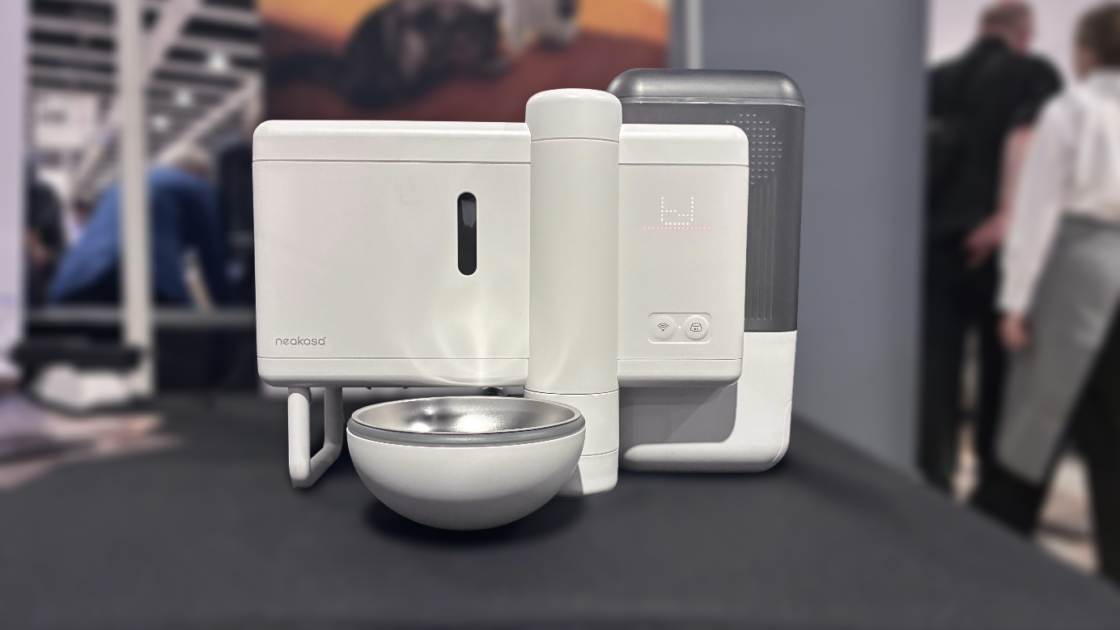
Following a personal health scare that required monitoring a cat’s diet, CNET tested the Neakasa Riko automatic cat feeder over a month. The device rehydrates freeze-dried food meal by meal, addressing the traditional inconveniences of serving wet cat food.
How the Neakasa Riko Functions
Unlike typical smart feeders that rely on refrigeration or freezer packs, the Neakasa Riko stores freeze-dried food and water separately in an 80-ounce water tank. When it is time for a meal, the unit grinds and soaks the food before serving it in a retractable bowl positioned beneath the storage hopper. While designed primarily for freeze-dried food, Neakasa states it can also accommodate air-dried and baked cat food, though it is not recommended for extruded kibble.
The unit features easily removable storage tanks, a desiccant compartment for freshness, and a safety mechanism that prevents operation without the food hopper lid in place. It comes with two dishwasher-safe stainless steel bowl inserts, and the food dispenser scale is calibrated with the bowl removed for quick swapping. The starter kit also includes wet wipes, spare desiccant packs, a limescale cleaner, and an optional rechargeable battery pack that provides up to seven days of backup power.
App Integration and Usability
The Neakasa app offers an intuitive interface where users can view daily feeding history, manage manual and scheduled feeding controls, and check estimated food and water levels. A small display on the unit shows status updates, a clock, or icons, though the reviewer noted the scrolling custom text was distracting. Users can adjust sound and display settings, including a Do Not Disturb schedule for nighttime.
Testing revealed that scheduling had a quirk where each feeding occurred an hour after the set time, which was easily fixed by adjusting the schedule. The unit takes about 20 minutes for scheduled rehydrations, providing enough time for water to soak in. The bowl remains out after emptying to allow pets to lick it clean or make it accessible for cleaning.
Testing and Performance
Testing involved replacing daily treats with rehydrated freeze-dried chicken to enrich the cat’s existing diet. Finding the right water ratio took a few attempts, with a 1:4 food-to-water ratio working best so the cat finished the meal within minutes. The safety retraction threshold requires 10 grams or more of uneaten food to trigger, meaning it will not retract small leftover amounts.
Priced at $240, the Neakasa Riko fills a useful niche for diversifying a pet’s diet. However, exclusive use with freeze-dried food is significantly more expensive than traditional canned food or dry kibble, with daily servings averaging roughly $5.18 compared to budget canned options at $1.05 or dry kibble at $0.48 per serving.
Competing alternatives include the $170 Petlibro PLAF109, which uses refrigeration for up to three meals, and the $262 PetSafe FreshFeed, which holds up to six meals. Despite the higher cost of freeze-dried ingredients, the Neakasa Riko provides a convenient, energy-efficient option that avoids subscriptions while bridging the gap between dry and wet feeding routines.