Table of Contents
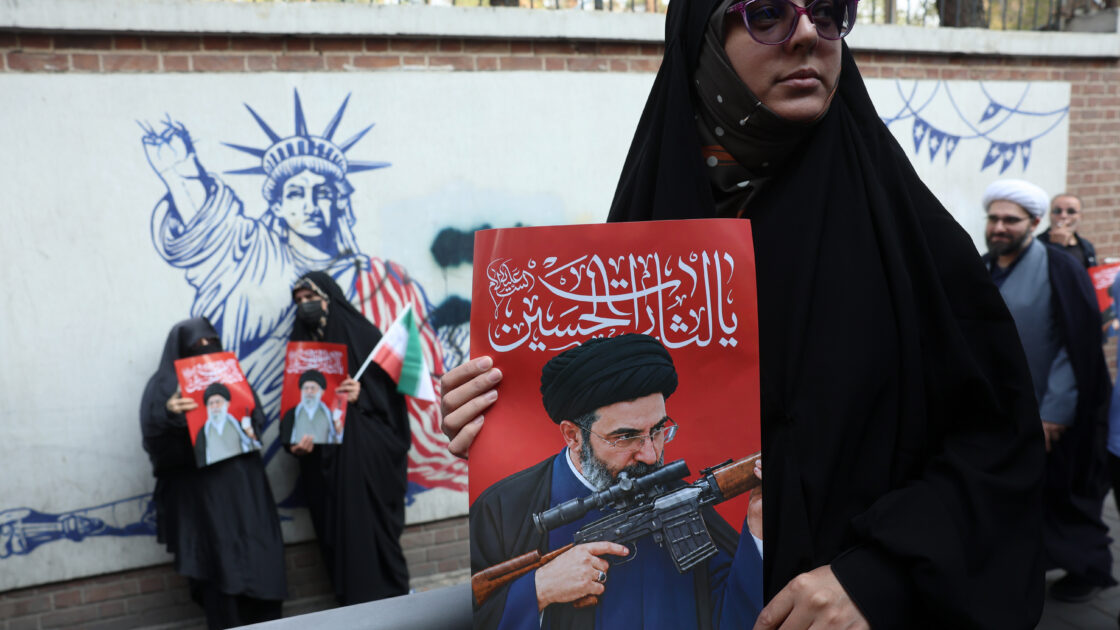
Iran’s new supreme leader, Mojtaba Khamenei, is exercising authority without making public appearances or allowing his voice to be heard. Since succeeding his father in March, he has governed through written decrees and statements, with reports of meetings involving senior officials offering insight into his style of governance.
A New System of Decision-Making
Initial meetings announced in May and August appeared aimed at reassuring the public that the new leader was alive and active. However, a series of four meetings announced within an 11-day period in October, featuring the heads of parliament, the judiciary, national security, and senior military commanders, indicates the emergence of a new decision-making system.
These developments occur as Tehran evaluates whether to pursue negotiations or renew confrontation with the United States and Israel. The consultations mirror the discussions that preceded the 2015 nuclear agreement, raising questions about whether the new leadership is preparing for a major decision and whether the current system can deliver one.
For nearly 37 years, Ali Khamenei maintained power through his direct personal presence and public speeches. His son came to power under different conditions, having been injured in the February 28 strike that killed his former leader father. According to sources close to him quoted by Reuters, he was advised against appearing in public or releasing audio recordings to avoid being tracked.
His rule has instead been established through institutional decrees, a narrow circle of trusted officials, and the testimony of others. The October meetings followed appointments to replace military and security commanders killed in the conflict. In August, Khamenei appointed military adviser Mohsen Rezaei as his representative on the Supreme National Security Council, a role in which Rezaei later became secretary. Six military appointments followed, including Ali Abdollahi as chief of the Armed Forces General Staff, Ahmad Vahidi as commander of the Islamic Revolutionary Guard Corps (IRGC), and Ali Azmaei as IRGC Navy commander. Abdollahi was also tasked with completing the merger of the General Staff with Khatam al-Anbiya Central Headquarters.
Meetings announced in May with President Masoud Pezeshkian and Abdollahi, alongside another meeting with Pezeshkian in August, served primarily to confirm the leader’s survival and active role. By contrast, the October meetings constituted a systematic round of consultations across constitutional institutions and the armed forces.
During his first reported meeting with the reconstituted military leadership on October 31, Abdollahi, army commander Amir Hatami, and Vahidi briefed Khamenei on military readiness in the Gulf, the Strait of Hormuz, and the Sea of Oman. Al Jazeera reported that Iran appears to be moving from institutional reconstruction to operational activity, activating a formal decision-making apparatus.
Diplomacy and Deterrence
These internal consultations coincided with intensive mediation efforts, with each phase following an external diplomatic initiative. On October 20, Pakistan’s army chief, Field Marshal Asim Munir, brought a Qatari-Pakistani compromise proposal to Tehran. Arab media reports indicated the plan involved unannounced nuclear facility inspections in exchange for Iran receiving interest on frozen funds in Qatar. Khamenei’s meeting with chief negotiator Mohammed Bagher Ghalibaf was announced the following day.
Munir returned on October 26 alongside Saudi Defence Minister Prince Khalid bin Salman Al Saud and Turkish intelligence chief Ibrahim Kalin, leading to an understanding that regional security is the responsibility of local states. Rezaei also announced that Tehran had delivered a proposal concerning the Strait of Hormuz to Washington with a seven-day deadline. Khamenei’s meeting with Rezaei, who received a letter from US Vice President JD Vance, was announced the next day.
On October 30, Qatari mediators conducted 12 hours of talks in Tehran, coordinated with the White House, after US envoy Tom Barrack suggested an initial understanding was near. Khamenei’s meeting with military commanders followed on October 31.
The statements emerging from these meetings conveyed two parallel messages. In his meeting with Rezaei, Khamenei insisted on Iran’s terms for ending the war, escaping the state of “neither war nor peace,” and managing the Strait of Hormuz. Conversely, his instructions to military commanders demanded immediate retaliation against any threat without geographic limits, an expanded target list for the US and Israel, and asserted that Iran would dictate the end of any renewed confrontation.
Frequent appeals for unity indicate an awareness of differing views among the political elite regarding war and negotiations. The meetings appear to define the boundaries of Iran’s options rather than settle on a specific path, ranging from rejecting the current stalemate to preparing for an expanded conflict. Between these limits lie a negotiated settlement pursued through Ghalibaf, Rezaei, and mediators, or continued mutual pressure while strengthening domestic readiness.
A significant gap remains between the two sides, as Washington demands nuclear concessions before talks resume, while Tehran insists on the lifting of the naval blockade, the release of frozen assets, and the restoration of oil exports. Notably, Khamenei attributed conditions to officials rather than himself, distributing responsibility across institutions to retain flexibility regarding any final outcome.
Parallels and Contrasts with 2015
The current situation bears similarities to the extensive consultations preceding the July 14, 2015, nuclear agreement. A secret backchannel in Muscat opened with Ali Khamenei’s approval, leading to his September 2013 speech to IRGC commanders about “heroic flexibility.” He later established red lines in June 2015 and issued a conditional approval letter in October, while responsibility for the nuclear file shifted from the Supreme National Security Council to the Foreign Ministry under Mohammad Javad Zarif.
While both scenarios involve a supreme leader setting red lines, delegating negotiations, and involving the military before major shifts, the current circumstances differ significantly. The earlier process unfolded over two years under sanctions rather than active warfare. Recent consultations were compressed into 11 days amid armed conflict, a naval blockade, and the approach of the November 3 US midterm elections.
Furthermore, Ali Khamenei communicated in his own voice, whereas his son relies on written statements. Diplomats led the 2015 negotiations, while figures with IRGC backgrounds like Ghalibaf and Rezaei now play central roles. Mediation has shifted from Oman to Qatar and the countries of the Mecca Agreement, signed on August 7.
Deepened mistrust stemming from the wars of June 2025 and February 2026 adds complexity that technical agreements cannot easily resolve. Consequently, the recent consultations resemble the 2013 process in form rather than function, preparing the leadership for a choice between negotiation and escalation.
The seven reported meetings indicate that the new governance model functions beyond merely filling a leadership vacuum, even though the supreme leader’s physical presence remains mediated by others. However, announcements intended to dispel doubts continue to lack photographs or precise details regarding when and where meetings took place, leaving decision legitimacy tied to the leader’s elusive presence.
The ongoing developments will test whether a system reliant on new commanders, parallel messages of compromise, and indirect leadership can enact a consequential decision when the political cost of flexibility has risen significantly.