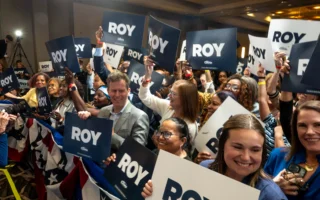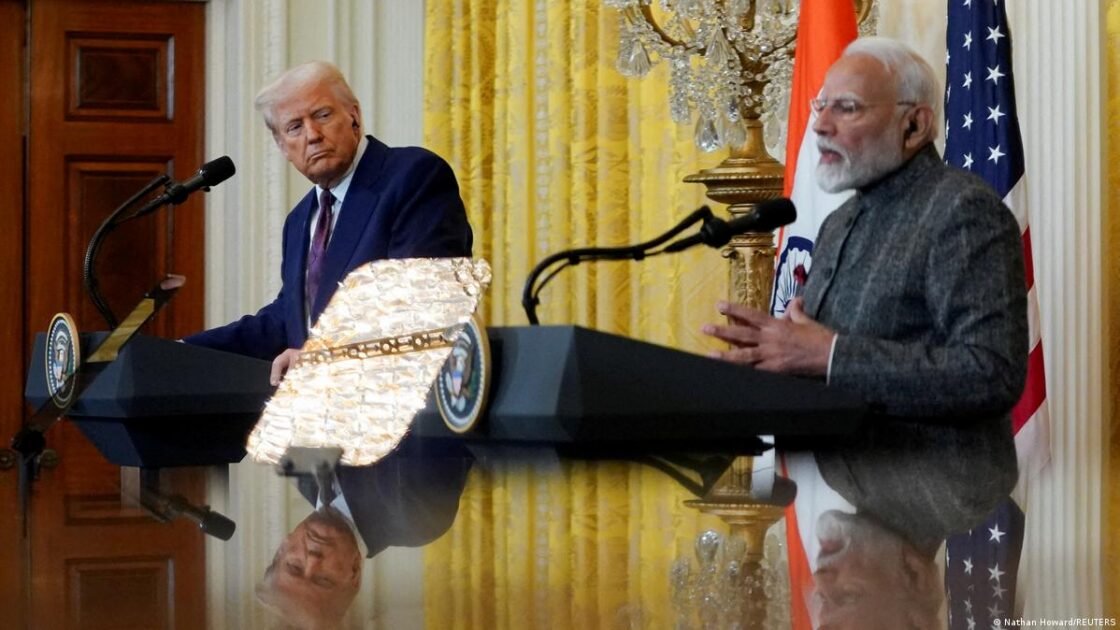
Following a resounding midterm victory by US Democrats who secured control of both chambers of Congress, President Donald Trump’s administration faces heightened scrutiny for the remainder of his term. As reported by Deutsche Welle, this political shift raises questions about the future of strained ties between Washington and New Delhi, which have weathered friction over stalled trade agreements, immigration restrictions, and India’s trade with Russia.
Congressional Scrutiny on Trade and Tariffs
Trade remains an immediate test for the bilateral relationship as both nations work to formalize an interim framework previously discussed by Trump and Indian Prime Minister Narendra Modi in February. Shanthie Mariet D’Souza, founder of the Mantraya Institute of Strategic Studies, told Deutsche Welle that she expects the new Congress to apply increased scrutiny to protectionist measures and push for clearer labor and environmental standards. While the US remains India’s largest export market, D’Souza noted that the fundamental pillars of the strategic partnership and the long-term goal of deepening economic ties are expected to remain strong.
Immigration presents another complex challenge, particularly following the administration’s tightening of H-1B visa rules and a steep $100,000 fee for certain new petitions that alarmed Indian professionals and tech companies. California-licensed immigration lawyer Rajkrishna Iyer told Deutsche Welle that while a Democratic majority might increase oversight, immigration has seen little legislative action from Congress in over 25 years. Iyer stated that the new fees will likely face court challenges, arguing that such charges are unreasonable and that only Congress has the authority to pass legislation of that magnitude.
Geopolitical Realities and Defense Ties
Security cooperation and energy imports continue to complicate the relationship. Although the US granted an oil ban waiver in March 2026 and lifted some Russia sanctions in October, Washington remains eager to reduce India’s reliance on Moscow. D’Souza told Deutsche Welle that the administration will likely continue pursuing this goal with diplomatic caution to avoid straining ties.
Meanwhile, regional conflicts and military sales add further tension, including Indian objections to US weapons supplies to Pakistan, such as a $686 million sale for F-16 fighter jets. Navtej Sarna, a former Indian ambassador to the US and Israel, told Deutsche Welle that it is premature to measure the immediate impact on specific foreign policy areas, noting that much depends on Trump’s reaction and whether Washington becomes a more contested place with greater congressional pushback.
Amitabh Mattoo, dean of the School of International Studies at Jawaharlal Nehru University, told Deutsche Welle that while some hope the electoral setback will prompt a more considered review of earlier actions, Trump could alternatively double down and adopt a harder line toward New Delhi. However, Harsh Pant of the Observer Research Foundation told Deutsche Welle that the US president retains significant foreign policy leverage and that the partnership has traditionally enjoyed strong bipartisan backing, meaning India is unlikely to become a major flashpoint between the White House and Congress. Pant added that the broader calculation for New Delhi remains unchanged, emphasizing the ongoing necessity for India to diversify partnerships and build self-reliance in critical sectors.