

Table of Contents
On November 8, 2016, Indian Prime Minister Narendra Modi announced a surprise televised address to the nation, declaring the withdrawal of all 500- and 1,000-rupee banknotes from circulation starting at midnight. This sudden measure invalidated 86.9% of the value of currency in circulation in a single stroke, with Modi asking citizens to make a grand sacrifice to help cleanse the country by eliminating black money, corruption, counterfeit currency, and terrorist financing.
The cost to the informal economy
Millions of Indians rushed to banks and formed long lines outside ATMs to exchange their savings, often waiting hours without knowing if they would receive money. Workers missed their wages, small businesses struggled with payrolls, and families faced difficulties purchasing essential items, while reports of deaths during the cash crisis compounded the distress.
“I still remember my domestic help’s father,” businessman Prakash Patra from Jaipur city told Deutsche Welle, describing how the man panicked, collapsed, and died while standing in a queue to exchange his family’s savings. “It wasn’t just cash that was lost in those lines. It was human lives.”
The sudden cash shortage heavily affected vulnerable populations, particularly rural people and individuals without bank accounts, compromising money set aside for weddings, medical emergencies, and survival.
Joe Athialy, executive director of the Centre for Financial Accountability, told Deutsche Welle that the impact fell disproportionately on the poor and informal economy, destroying livelihoods and pushing millions into deeper economic insecurity.
Arun Kumar, a former professor of economics at Jawaharlal Nehru University and author of “The Black Economy in India,” told Deutsche Welle that the government operated on the false assumption that illicit wealth was primarily held in cash, thereby penalizing the cash-dependent informal sector while leaving the real engines of the black economy untouched.
Did it solve the black money problem?
The first major setback arrived in 2018 when the Reserve Bank of India reported that 99.3% of the demonetized currency had returned to the banking system, leaving only a small fraction unreturned and undermining expectations that large quantities of undeclared cash would be extinguished.
A decade later, evidence that demonetization reduced black money or corruption remains scarce, as economists note that illicit wealth is primarily held in property, gold, and other assets rather than cash. While some supporters argued that forcing cash into banks would formalize the economy and widen the tax base, the extent of such changes remains contested.
Lekha Chakraborty, a professor at the National Institute of Public Finance and Policy, told Deutsche Welle that research pointed to modest gains against the primary objectives alongside temporary yet real economic costs, particularly in the informal sector where cash remains central.
“The economic shock was real, even if much of it faded over time. But there is little to suggest that demonetization produced a lasting change in the way black wealth is generated or concealed,” Chakraborty said.
Athialy reiterated that the policy relied on a flawed understanding of illicit wealth storage, noting that cash represents an insignificant portion of the black economy while much of the unaccounted wealth sits in real estate and tax havens. He also questioned the lack of accountability for the economic disruption and the institutional consequences for the RBI.
Boost to digital payments
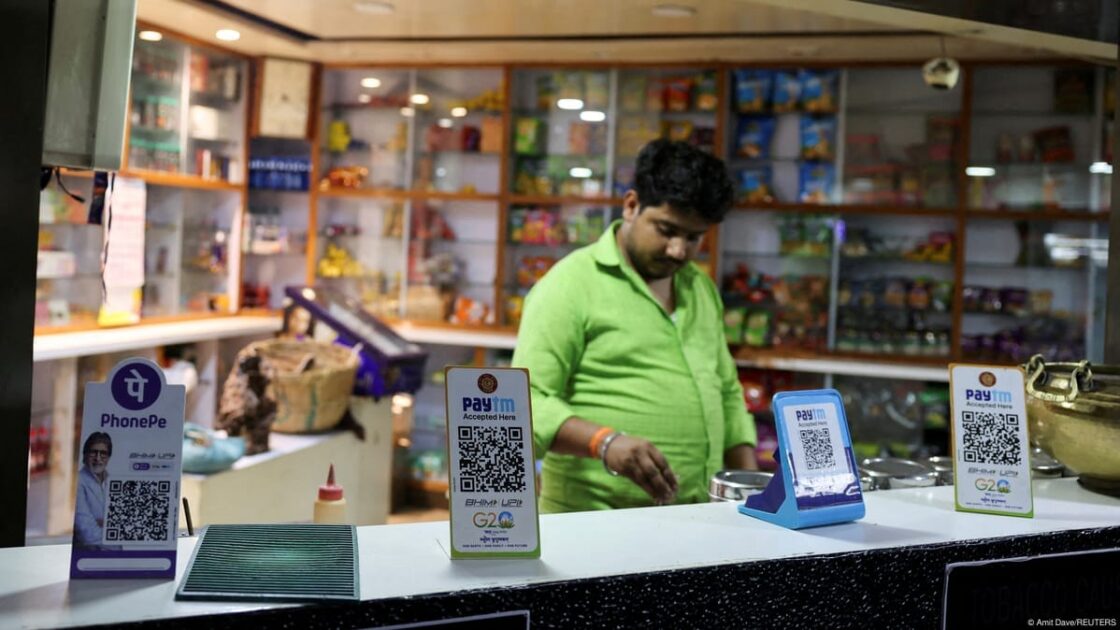
Digital payments have expanded significantly since 2016, with the Unified Payments Interface launched that August becoming a major component of retail payments. According to the RBI, UPI processed 241.6 billion transactions worth 314.2 trillion rupees during 2025-26.
Despite this growth, physical currency in circulation has not decreased. RBI data indicate that the value of banknotes in circulation reached 43.15 trillion rupees on October 23, 2026, compared to 17.97 trillion rupees in November 2016, demonstrating that cash remains active even as digital usage rises.
Chakraborty cautioned against crediting demonetization for the digital payment expansion, explaining that digital platforms largely continued an existing trend already underway before the currency ban.
Ten years after the unprecedented policy implementation, the gap between the government’s original promises and the ultimate outcome remains central to the legacy of demonetization.