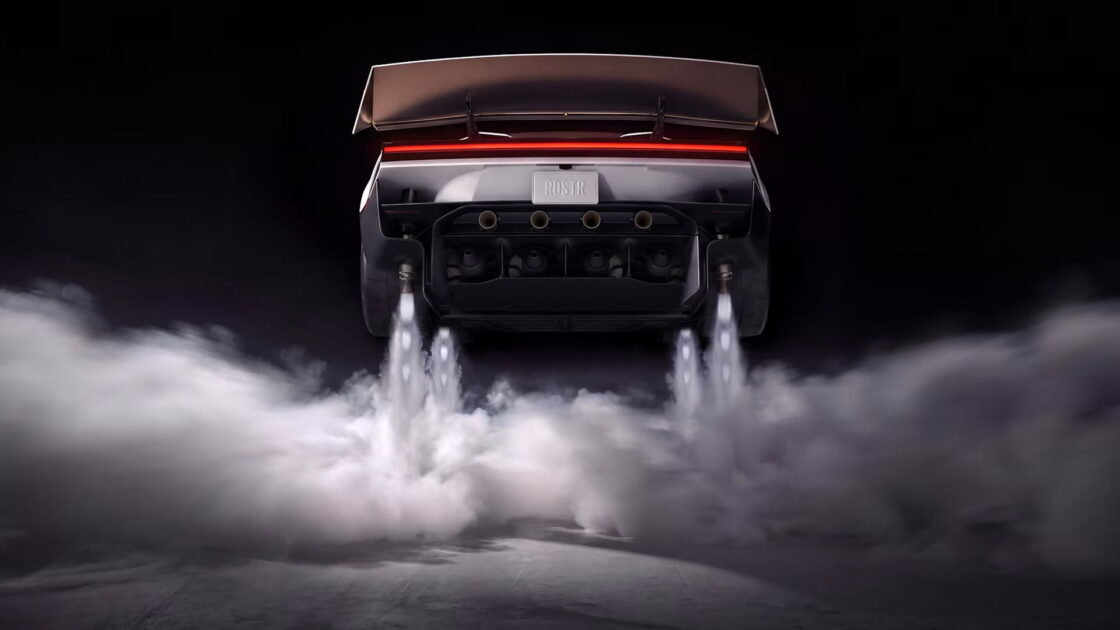
Elon Musk’s “flying” Roadster performed a viral stunt earlier this month by jumping and flipping through the air using compressed-gas thrusters developed by his aerospace company, SpaceX. However, the entrepreneur’s much larger bet involves transforming how Tesla generates revenue as traditional automakers rush to adapt.
The Pursuit of Software Revenue
Just five days after the aerial spectacle, Musk disclosed that Tesla and SpaceX were exploring a potential merger that could speed up his push into autonomous driving. The competitive stakes extend far beyond a technological contest, as car manufacturers deal with rising Chinese competition and attempt to evolve past traditional vehicle sales. Companies increasingly want business models capable of producing recurring income streams from software and artificial intelligence services.
“Automakers are starting to look in the mirror and the software piece is what they are all looking at as the golden goose, because the margins are so high,” stated Dan Ives, a technology analyst and partner at Yorkville Ives.
Despite strategic changes implemented in recent years, the automotive business continues to serve as an essential cash cow for Tesla. It accounts for 75 percent of total revenues and remains critical for funding the massive investments Tesla requires in artificial intelligence to rival major technology competitors.
Fierce Competition and Future Goals
Musk currently faces a vastly different competitive landscape compared to 2008, when Tesla introduced its original battery-powered Roadster. Chinese competitors now dominate the electric vehicle market and are pouring heavy investments into software and artificial intelligence to challenge western firms in autonomous driving.
Faced with this new environment, Musk’s previous target of selling 20 million vehicles annually by 2030 has been reduced to 5 million. Even the revised target remains challenging given that the company delivered 1.6 million vehicles last year.
Analysts noted that the primary short-term driver for reaching the 5 million sales milestone will be the company’s “Full Self-Driving” software. Despite its designation, the system still necessitates a human driver behind the wheel maintaining continuous attention.