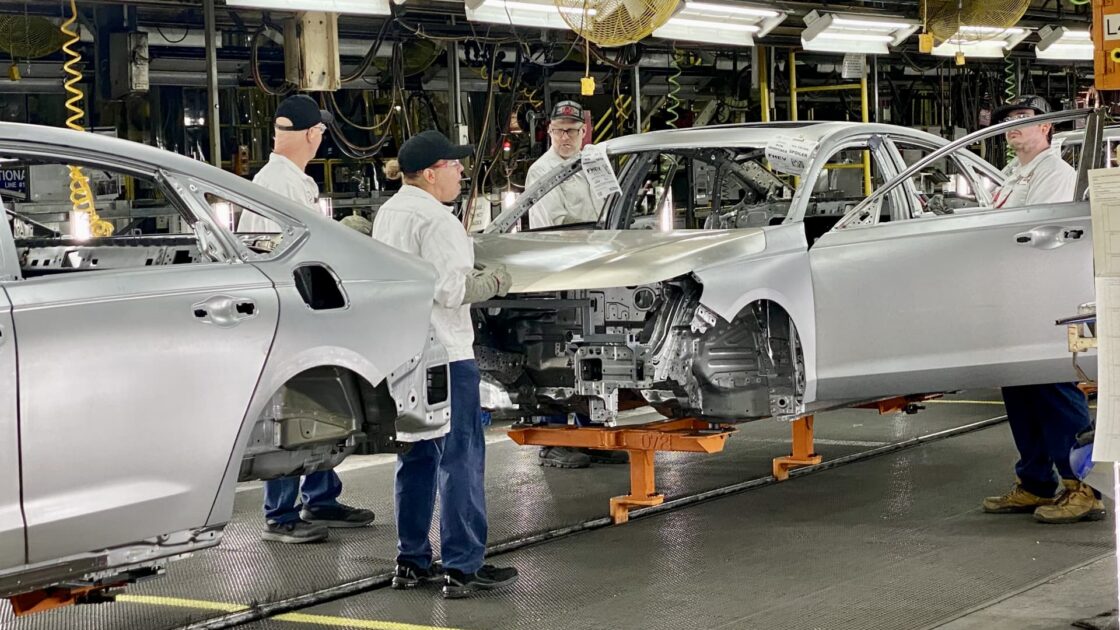
Honda Motor has announced plans to invest $3 billion to construct a new vehicle assembly plant in Ohio. The expansion aims to boost the automaker’s manufacturing footprint in the United States while accommodating growing demand for various powertrain options.
Details of the Ohio Manufacturing Facility
Located near Honda’s existing facilities in Marysville, Ohio, the new plant is scheduled to start production in 2029. The site will have an annual production capacity of 240,000 vehicles and is projected to create more than 2,000 jobs. Once operational, the facility will increase Honda’s total U.S. light-duty vehicle capacity to 1.3 million units per year.
The facility will feature flexible manufacturing lines capable of assembling traditional internal combustion engine vehicles, fully electric models, and hybrid vehicles. This marks Honda’s first new mass-production U.S. vehicle assembly plant since it opened a facility in Indiana in 2008. The company previously built a $70 million performance vehicle facility in 2016 and opened a multibillion-dollar joint venture battery plant earlier this year, both located in Ohio. Honda currently operates 12 manufacturing sites across the U.S., eight of which produce engines or light-duty vehicles.
Speaking at the company’s U.S. heritage center in Ohio during the announcement, Bob Nelson, executive vice president of American Honda Motor, highlighted the strategic importance of the site. “This is not simply an investment in another plant. It is an investment in the future of Honda manufacturing in America,” Nelson said.
Automotive Industry Shifts and Trade Dynamics
Honda’s investment comes as automakers work to localize production in response to tariffs introduced by President Donald Trump and higher shipping expenses that have pressured profits. Other major vehicle manufacturers have made similar commitments, including Audi, which recently announced a $4 billion investment in Georgia, alongside major expenditure plans from General Motors, Ford Motor, Toyota Motor, and Hyundai Motor.
The announcement follows Honda’s decision in May to indefinitely suspend an $11 billion investment project for electric vehicle and battery manufacturing in Canada, as well as the cancellation of three planned electric models intended for the U.S. market.
Jennifer Thomas, senior vice president of corporate affairs at American Honda Motor, emphasized the need to expand local assembly lines during an event in Detroit. “In order to be competitive in this market, you’re going to need to build products here,” Thomas said, noting that while the company is working to optimize its current footprint, its facilities are running at capacity.
Nearly all Honda and Acura vehicles sold in the U.S. are manufactured in North America, with over 60% assembled directly in the U.S. Since beginning U.S. vehicle assembly in 1982, Honda has produced over 33 million vehicles and 39 million engines in the country, maintaining a local workforce of more than 30,000 employees.
Thomas also warned that the broader automotive sector could face a “catastrophic” scenario if the U.S. and Canada fail to establish a new trade agreement before the end of the year, ahead of potential tariff increases threatened by President Trump on Canadian vehicles and auto parts from 25% to 50% starting Jan. 1.