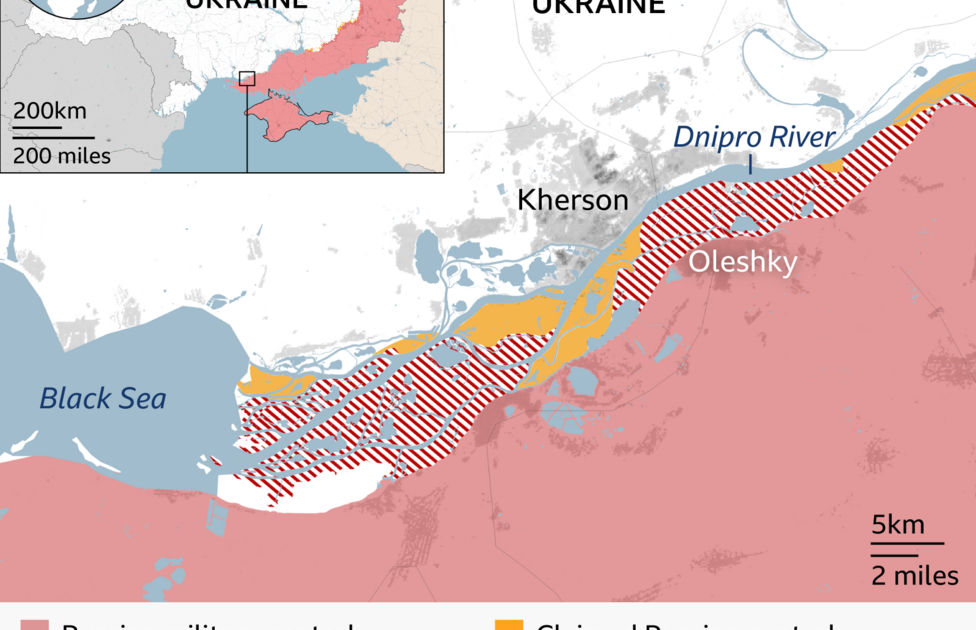
A ceasefire initially established to deliver food and medicine to the Russian-occupied Ukrainian city of Oleshky has been expanded across the broader southern region of Kherson. No breaches of the truce, which began on Tuesday, have been reported by officials as both sides observe the agreement.
Humanitarian Aid and Evacuation Plans
US First Lady Melania Trump, who helped broker the ceasefire alongside Pope Leo XIV, stated on Tuesday that the targeted zone had been broadened to ensure safe passage for humanitarian convoys. The expansion was confirmed by the press secretary for Ukraine’s public ombudsman and by Oleksandr Tolokonnikov, the deputy head of Kherson, who noted that Russian shelling had ceased in both Ukrainian-held Kherson city and the surrounding area. According to David Arakhamia, a senior official in President Volodymyr Zelensky’s party, the truce will remain in effect until Sunday, November 1, at 22:59 Ukrainian time, marking the largest de-escalation since 2022. Kremlin spokesman Dmitry Peskov stated that operations were proceeding according to plan and commended US mediation efforts.
The ceasefire is intended to allow roads to be cleared of mines so that supplies can reach Oleshky, followed by an evacuation planned for Friday for residents wishing to leave. Between 1,700 and 2,000 people remain in Oleshky, with several thousand more in adjacent areas. Many inhabitants have suffered severe hunger, with some resorting to cooking garden weeds for survival. Before the conflict, the city population stood at 24,000, but Russian forces seized the area during the initial days of the full-scale invasion in February 2022. The city has lacked electricity, gas, and running water since the destruction of the Kakhovka Dam in 2023, and escape routes have remained heavily mined and exposed to drone attacks.
Uncertainty and Local Concerns
Russia’s defence ministry reported that units from the army’s Dnepr group were conducting engineering reconnaissance and clearing main access roads of explosive devices. Vladimir Saldo, the Russian-installed head of occupied areas in Kherson, stated that temporary housing had been prepared locally, in Russian-annexed Crimea, and across the border in Rostov, Krasnodar, and Stavropol. Saldo told Russian media that most residents wanted to relocate to Russia, though independent verification is unavailable due to patchy communications and fear of reprisals. Residents speaking to BBC News expressed anxiety that Russia might bar them from returning to Ukraine or inspect their digital devices for signs of Ukrainian support. Ukrainian military leadership advised citizens to disregard unverified information regarding the timing and routes of humanitarian movements.
President Volodymyr Zelensky cautioned that paths cleared by Russia would direct evacuees toward Russia, adding that ideally, displaced citizens would reach Ukrainian territory instead. A former resident named Serhii, who escaped through minefields three weeks prior, reported reaching Ukraine via Russia and Belarus, while advocating for a Dnipro River crossing to bypass occupied zones. However, destroyed bridges and mined riverbanks render a direct crossing into Ukrainian-controlled territory virtually impossible. Meanwhile, in Ukrainian-held Kherson city across the river, local reports indicate that conditions have grown noticeably calmer, with pedestrians and vehicles moving freely and no explosions or drone injuries recorded since Tuesday morning.