Table of Contents
Sweden is pioneering a sustainable approach to datacentres by constructing facilities made from wood, powered by 100% renewable energy, and integrated into local communities. While datacentres face severe backlash globally over land, water, and electricity consumption, Swedish projects like EcoDataCenter in Falun demonstrate that digital infrastructure can be built with environmental and community concerns in mind.
The Wood-Built Datacentre in Falun
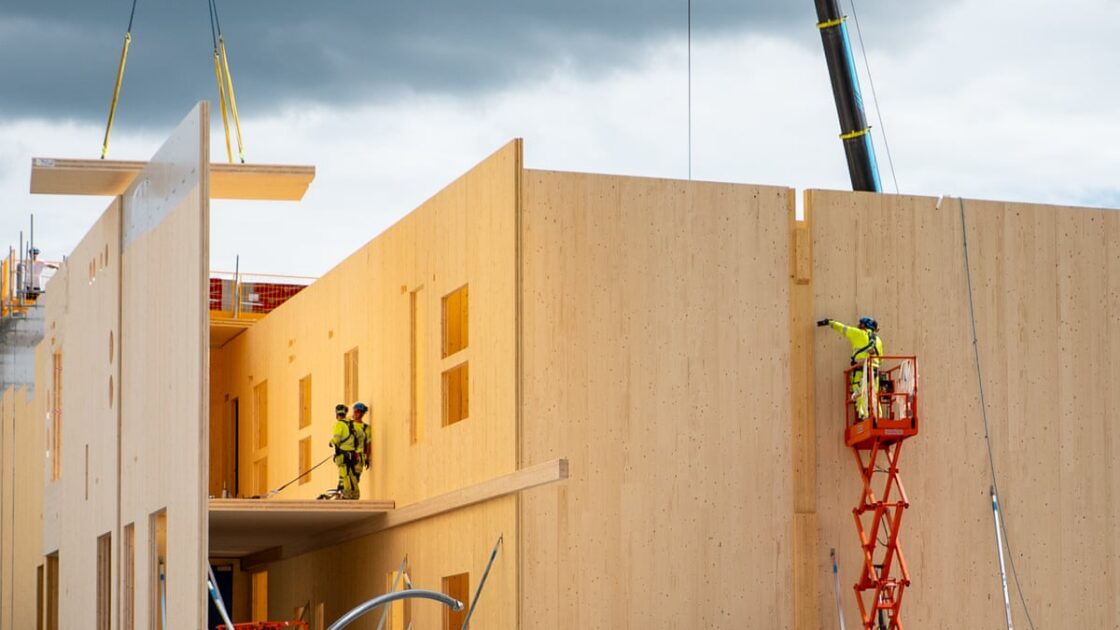
Constructed from massive cross-laminated timber panels assembled like flatpack furniture, EcoDataCenter’s facility in Falun resembles a large IKEA store. According to John Wernvik, the company’s chief external relations and sustainability officer, building with timber lowers the embodied carbon of the structure by three times compared to traditional steel and concrete. The timber used is replenished by Swedish forests in just 10 to 15 minutes, as reported by The Guardian.
The facility operates on a 100% renewable energy supply, split between 75% hydroelectric power and 25% wind power. Sweden’s power mix relies on only 1% fossil fuels, allowing power-hungry datacentres to help balance local grids where renewable generation creates a surplus. EcoDataCenter features a capacity of 80MW, with a remarkably low carbon usage effectiveness (CUE) of 1.17gCO2/kWh and a power usage effectiveness (PUE) of 1.15, far outperforming US and European Union averages.
Cooling the facility utilizes Sweden’s cold climate, drawing water mostly from a nearby former drinking water lake and circulating cold outdoor air. For cutting-edge graphics processing units from Nvidia powering clients like DeepL, CoreWeave, Mistral, and academic institutions, the facility is transitioning to liquid cooling systems in a closed-loop setup. Backup generators on site are fueled by hydrotreated vegetable oil, ensuring operations remain entirely fossil fuel-free.
Community Integration and Heat Reuse
Excess heat generated by the servers is recycled to dry wood pellets for local heating incinerators and fed directly into Falun’s district heating network. Initiated by local government in 2010 to fit municipal needs, the project sources 90% of suppliers locally, dedicates 60% of capital expenditure locally, and sponsors regional sports teams and education.
EcoDataCenter’s second site in Borlänge, slated to open its first phase in 2027, repurposes a closed 202,000 sq metre paper mill brownfield site. The 240MW facility will plug into existing industrial infrastructure and employ 200 to 300 people, matching the workforce of the former paper mill.
Stockholm operates a similar collaborative strategy through Stockholm Data Parks, a joint initiative by the city council and energy companies founded in 2014. Michael Gullberg, product manager at Stockholm Exergi, explained that the initiative frees up land and prioritizes sustainability. In the tech hub of Kista, an atNorth facility pipes its warmed water directly to a neighboring district heating plant, saving energy while receiving cold water in return.
Global Tech Giants and Nordic Expansion
Other companies like atNorth operate 13 datacentres across the Nordic region, utilizing local cold weather and green energy. CEO Eyjólfur Magnús Kristinsson noted that atNorth plans to channel excess heat into a 20-hectare greenhouse complex in Varde, Denmark, to grow winter tomatoes, while Green Mountain in Rjukan, Norway, routes heat to a fish farm.
Major US tech giants are also expanding in Nordic countries to service European users. Meta is building a 723MW facility in Lulea, Brookfield is planning a 750MW datacentre in Strängnäs, and Google broke ground on a 150MW plant in Horndal. However, local friction has emerged; Google apologized after illegally clearing 250,000 trees in Muhos, Finland, for a datacentre site, and Microsoft faced scrutiny over labor and housing conditions for foreign workers at its Gävle construction site in Sweden.
Wernvik noted that American hyperscalers bring necessary competitiveness, but emphasized that Sweden’s physical constraints in land and power prevent uncontrolled exponential growth. Sweden’s long-term integration of technology, energy, and communities offers an alternative model for the future of global digital infrastructure.