Table of Contents
Following a massive mobilization effort during the 2026 midterm elections, labor unions are now demanding that newly elected Democratic officials deliver on key promises. After helping secure victories in Washington and various state houses, union leaders and members are calling for action on inflation, worker protections, and the creation of union-represented jobs.
A Historic Mobilization
Organized labor invested millions of dollars and mobilized thousands of members to support Democratic candidates. According to the AFL-CIO, the federation engaged with nearly 15 million voters since Labor Day and saw over 600 of its own members elected to office across the country. AFL-CIO President Liz Shuler described the initiative as the organization’s “biggest and boldest effort ever.”
Data from the CNBC Voter Poll indicates that union households supported Democrats over Republicans by a 22-percentage-point margin, the highest gap in the last four election cycles. This level of support was significantly higher than that of non-union households, where the margin was only 10 points.
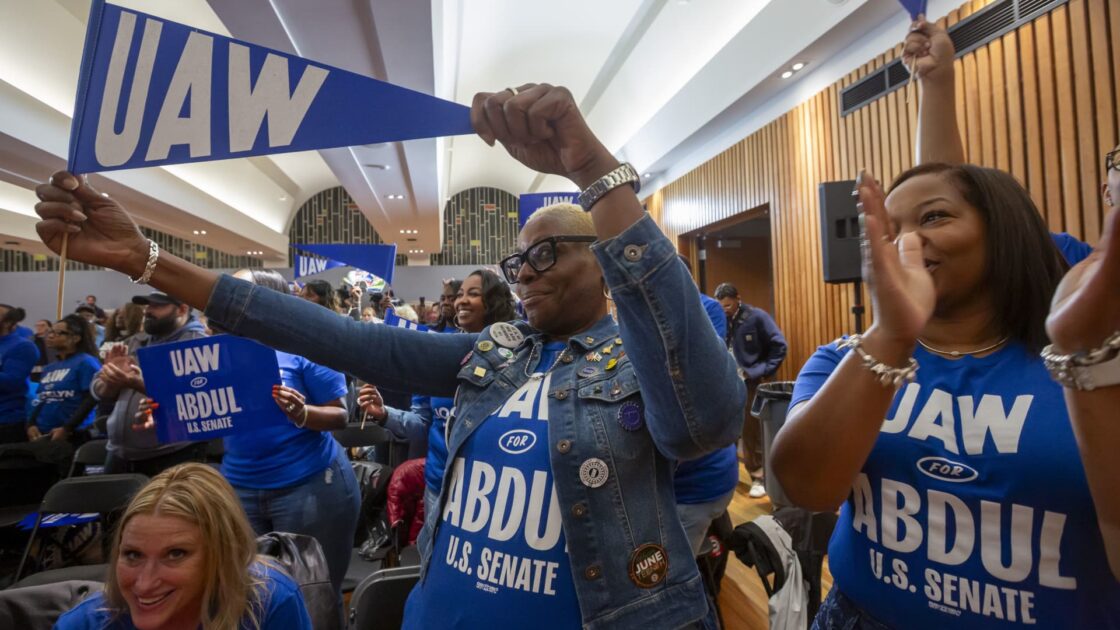
In Michigan, the United Auto Workers (UAW) played a pivotal role in the success of Democratic candidates, including U.S. Senate winner Abdul El-Sayed and Governor-elect Jocelyn Benson. The union reported that its volunteers knocked on over 100,000 doors and made 500,000 phone calls. UAW President Shawn Fain emphasized the importance of these efforts, stating, “There’s a direct correlation between a ballot box and a bread box. What we bargain for today can be taken away in the legislative halls tomorrow.”
Breaking the Malaise
The 2026 results represent a significant shift after recent years of frustration among working-class voters. According to Paul Clark, a professor at Pennsylvania State University, the Democratic Party’s influence over labor had waned as members struggled with high inflation and affordability issues. This trend culminated in the 2024 election, where Republicans secured control of the presidency and both chambers of Congress.
The Teamsters, for instance, declined to endorse either major presidential candidate in 2024, citing internal polling that favored Donald Trump. However, the 2026 midterms saw a resurgence in union engagement. AFL-CIO polling revealed that 83% of union voters felt “very motivated” to participate, a 10-point increase from the 2022 midterms.
Great Expectations
With Democrats now holding legislative majorities in various regions, union leaders are signaling that their support is conditional. In Ohio, union members are pushing for the use of organized labor in new data center construction, while in Michigan, the UAW is seeking legislation to guarantee unemployment insurance for striking workers.
“The days of just blindly giving our endorsements to people because of party affiliation are over,” Fain said. “They’re going to earn our support.”
Union leaders warn that if Democrats fail to address working-class concerns, they risk losing labor support in 2028. Shuler noted that while many union members are focused on leveling the economic playing field, their loyalty remains tied to policy outcomes rather than party labels. As the CNBC Voter Poll found that 70% of respondents believe the U.S. economy favors the wealthy, unions intend to hold elected officials accountable to the working class.