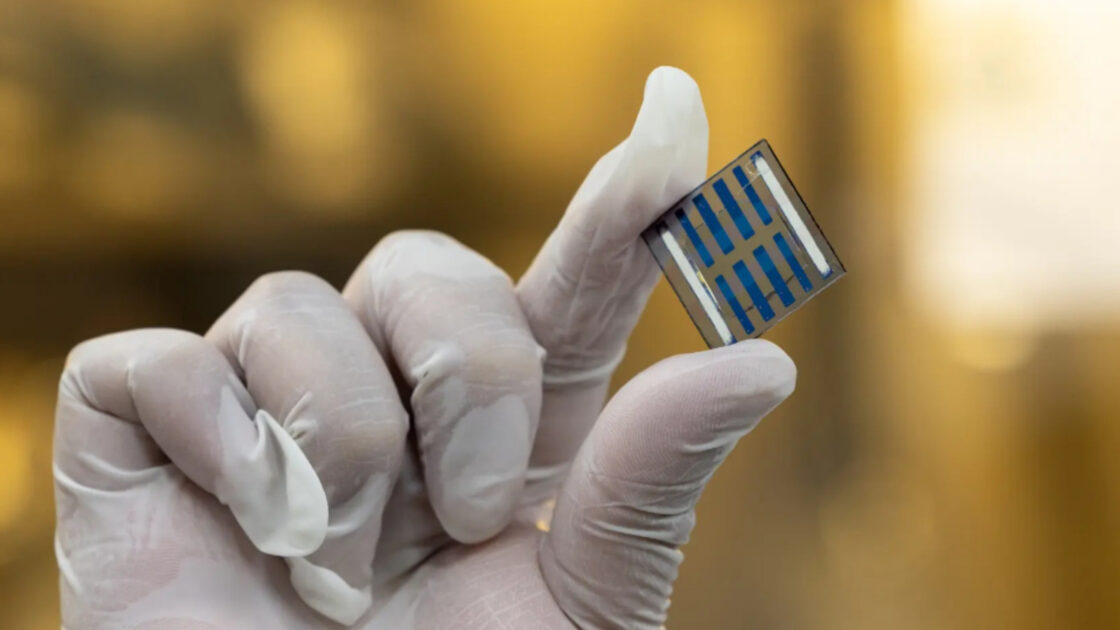
Researchers at the Institut de Ciències Fotòniques (ICFO) have discovered a novel way to design solar panels that can dramatically increase their energy efficiency. While previous studies primarily concentrated on minimizing how much solar energy converts into heat, the ICFO team targeted a different constraint known as Boltzmann loss, which is the energy lost through the light emitted by solar panels.
Overcoming Boltzmann Loss
Solar panels typically consist of semiconducting materials, most frequently crystalline silicon, which release electrons upon exposure to sunlight to generate an electric current. During this process, a portion of the solar energy converts into heat or re-emits as light. While scientists have previously investigated ways to decrease thermal energy loss by modifying semiconductor materials, addressing the light component has proven more difficult.
In a study published in Energy & Environmental Science, the ICFO researchers sought to resolve this challenge by correcting the disparity between narrow sunlight absorption and the wider emission cones of solar cells. Rather than utilizing standard silicon, the team experimented with an organic solar cell. By substituting the front electrode of the cell with a thin silver alternative and transforming the cell into an optical cavity, they successfully built a cell that admits sunlight while restricting light emission at wider angles. This modification enhanced solar cell efficiency by approximately 0.85 percent, demonstrating a way to surpass the traditional theoretical limit.
Future Implications for Consumer Panels
Although this scientific advancement will not immediately translate to commercial products available for purchase, improvements to fundamental solar technology could yield substantial advantages over time, particularly given the rising popularity of plug-in balcony solar panels in the United States. Current consumer solar panels generally operate at an efficiency rate of 20 to 23 percent. If this new technique can successfully elevate efficiency from the existing theoretical maximum of 33.16 percent, known as the Shockley-Queisser limit, toward the projected 43 percent, everyday solar technology could see considerable performance gains.
This development follows other recent advancements in the sector, including a photovoltaic cell unveiled by Chinese company LONGi that achieved 35.5 percent efficiency and a theoretical ceiling of 43 percent. Furthermore, the underlying principle discovered by ICFO is expected to function across various types of photovoltaic cells beyond experimental laboratory materials.
“If the emission cone can be narrowed to more closely match the absorption cone of incoming sunlight, which is exactly what our work demonstrates experimentally, solar cells will, in principle, be able to approach efficiencies close to 43 percent,” Dr. Francisco Bernal Texca, the first author on the study, stated in an ICFO press release.