The fastest-spreading Ebola outbreak in history has surpassed 10,000 infections in the Democratic Republic of Congo since May, according to government figures. Experts note that at this point in the 2014-2016 West Africa outbreak, only about 4,000 people had been infected, though that prior event ultimately recorded more than 28,000 cases.
Factors Driving the Rapid Spread
The current emergency is also the largest in geographic scope, spanning from Nigeria to Kenya, and ranks second in total deaths with nearly 5,000 fatalities compared to over 11,000 in the previous major outbreak. Approximately one-third of the deceased are children, and children under five face a mortality rate of about 75 percent due to their developing immune systems.
Mohamed Janabi, regional director for the World Health Organization Africa, emphasized during a recent press conference that every figure represents an interrupted life, a mourning family, and a community seeking reassurance. He stressed the need to reach individuals earlier, provide safe care nearby, and build trust to overcome fear.
Uncertainty regarding when the virus began circulating contributed to the rapid growth. Although officially declared in May, evidence indicates the virus likely started spreading in February or March. Katie Thomas-Canfield, interim Ebola response director for the International Rescue Committee, explained that a rarer species of Ebola, Bundibugyo, is responsible, and existing tests were not initially calibrated for it.
Additionally, northeastern DRC is remote and affected by conflict. Nahid Bhadelia, an infectious disease physician at Boston University, noted that U.S. foreign aid cuts may have also slowed surveillance efforts. Bhadelia added that international cooperation has been slower than in past outbreaks, with fewer American and international healthcare workers traveling to the DRC because of U.S. policies regarding the return of sick workers. Consequently, local and regional healthcare workers are carrying a larger burden.
Progress and Ongoing Challenges on the Ground
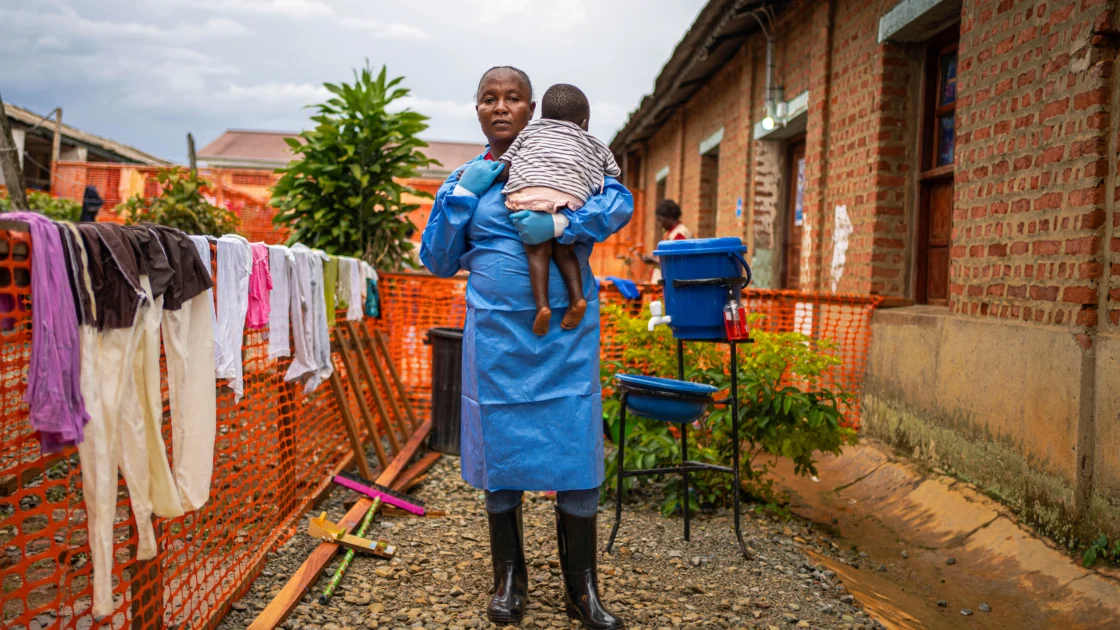
Response efforts have improved with the establishment of roughly two dozen diagnostic labs and over 50 treatment centers, providing nearly 2,000 treatment beds, according to Douglas Noble, global incident manager for Ebola at UNICEF. Nevertheless, about two-thirds of deaths continue to occur within communities rather than treatment centers, indicating that symptomatic individuals are not seeking care promptly.
Thomas-Canfield explained that Bundibugyo infections can initially present mild symptoms such as fever, headache, and body aches, which mirror common endemic diseases in the region. Furthermore, community distrust presents a major barrier. An October survey by the International Rescue Committee found that 85 percent of respondents in the North Kivu hotspot reported that distrust of community responders prevents them from seeking care.
Responders frequently contend with rumors and misinformation questioning the existence of Ebola or the motives of health workers. Building trust remains difficult, particularly in conflict zones where armed groups actively spread disinformation. Approximately 80 percent of new cases stem from individuals who were not previously monitored by health officials, a rate that Bhadelia says must decrease to bring the outbreak under control.
Regarding medical countermeasures, no licensed vaccine or treatment currently exists for the Bundibugyo species. While the Ervebo vaccine targets a different species, healthcare workers began receiving it in late August, and researchers have launched a clinical trial named Tumaini to test its effectiveness against Bundibugyo. Bhadelia cautioned that vaccines and treatments alone are insufficient without basic public health measures like contact tracing, isolation, and treatment.
Bhadelia expressed concern that the international community might lose focus, warning that funding could dry out and attention could fade from a public health disaster that is much deeper and larger than currently recognized.