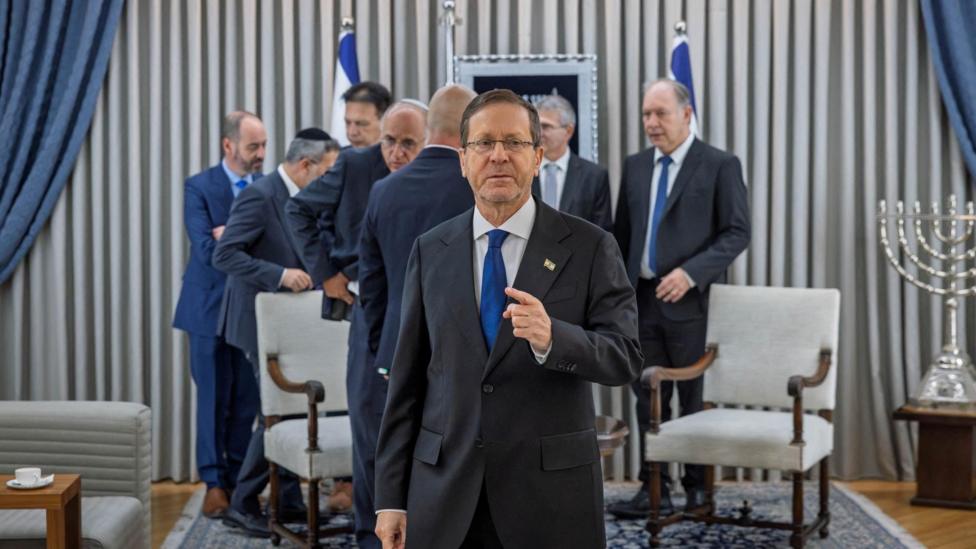
Israeli President Isaac Herzog has commenced consultations with political leaders to determine who will form a new coalition government following an inconclusive general election. Receiving the official results from the Central Elections Committee, Herzog warned party representatives that compromises are essential to avoid yet another round of elections.
Election Results and Potential Kingmakers
In the October 27 election, Prime Minister Benjamin Netanyahu and his right-wing, far-right, and ultra-Orthodox allies secured 53 seats within the 120-seat Knesset. Meanwhile, rival centrist leader Gadi Eisenkot and three other Jewish opposition parties in his bloc captured 48 seats. Two Arab-led alliances, the United Arab List and the Joint List, secured a combined 19 seats following a significant increase in voter turnout among Arab citizens.
While these figures position Arab-led alliances as potential kingmakers, nearly all Jewish parties pledged prior to the vote against forming a government with them. Although the Israeli presidency is predominantly ceremonial, the president is tasked with inviting a Knesset member to build a government within 28 days, which can be extended by 14 days. Herzog holds wide discretion to select the candidate he believes has the highest likelihood of establishing a stable coalition, regardless of which party won the most seats.
Investigating Foreign Interference and Legitimacy Claims
During the official results ceremony in Jerusalem, Central Elections Committee chairman Justice Noam Sohlberg cautioned against attempts to undermine the election outcome, emphasizing that peaceful power transfers form the foundation of democracy. Earlier, Sohlberg informed the committee that the Shin Bet security service is investigating potential foreign interference involving substantial funding inflows from foreign states, including hostile nations. Israeli media previously reported allegations that Qatar funded efforts to boost Arab voter turnout, though Qatar’s foreign ministry categorically denied the claim.
Amid these probes, Far-right National Security Minister Itamar Ben-Gvir urged the Shin Bet to arrest and interrogate Arab party leaders. Conversely, Joint List chairman Yousef Jabareen accused Ben-Gvir and Netanyahu of attempting to steal the election. Eisenkot further asserted that Netanyahu and Likud were waging a damaging campaign against democracy and the rule of law. These tensions escalated after Attorney-General Gali Baharav-Miara rejected a demand from Shin Bet chief David Zini to interrogate four Arab politicians due to a lack of evidence. Likud subsequently accused the attorney-general of obstructing the investigation and covering up electoral manipulation.
Herzog expressed full confidence in the Shin Bet’s ongoing investigation and urged the public to remain patient. He also condemned racist expressions and warned that Arab Israelis, who represent roughly one-fifth of the population, must not be subjected to smears.