Table of Contents
Iranian authorities are interpreting the sweeping midterm election defeats for US President Donald Trump’s Republican Party as a public repudiation of the ongoing conflict with Iran. Iranian parliament Speaker Mohammad Bagher Ghalibaf stated that Americans chose to reject war through their votes, adding that Tehran endorses this message.
Reactions from Iranian Leadership
Ghalibaf warned on X that any betrayal of this public will by the US government to serve international paymasters would be met with severe consequences. Gholam-Hossein Mohseni-Ejei, the head of the Iranian judiciary, stated that Trump faced defeat in both war and politics, promising that the Islamic republic will impose further defeats. Analysts note that the Democratic victories complicate the remainder of Trump’s term and make Iran’s leadership more adamant in demanding an end to the war initiated by the US and Israel on February 28.
Trump has discussed the possibility of attacking Iran over recent weeks while maintaining that no final decision has been made, amidst heavy pressure from US naval blockades, sanctions, and trade disruptions. Sanam Vakil, director of the Middle East and North Africa Programme at Chatham House, told Al Jazeera that the Republican electoral defeat increases pressure to conclude the war, though it does not rule out additional military strikes. Vakil explained that Trump requires a diplomatic victory or an off-ramp, but may fear appearing weak following a defeat.
Hamidreza Azizi, senior Iran analyst at the International Crisis Group, told Al Jazeera that the perceived victory among Iranian decision-makers will likely harden their stance on core demands. These include seven conditions for the partial reopening of the Strait of Hormuz and a requirement for the US to take the initial step. Azizi added that concessions from Iran on the nuclear issue are now even less likely than before.
Embassy Seizure Anniversary and Supreme Leader Statement
Wednesday marked the anniversary of the 1979 seizure of the US embassy in Tehran by Iranian students, an event that sparked a decades-long hostage crisis. Authorities organized demonstrations and speeches around the embassy building, downtown areas, and cities including Bandar Abbas, Mashhad, and Qom to protest US-led global arrogance, with state television featuring pro-government events for schoolchildren.
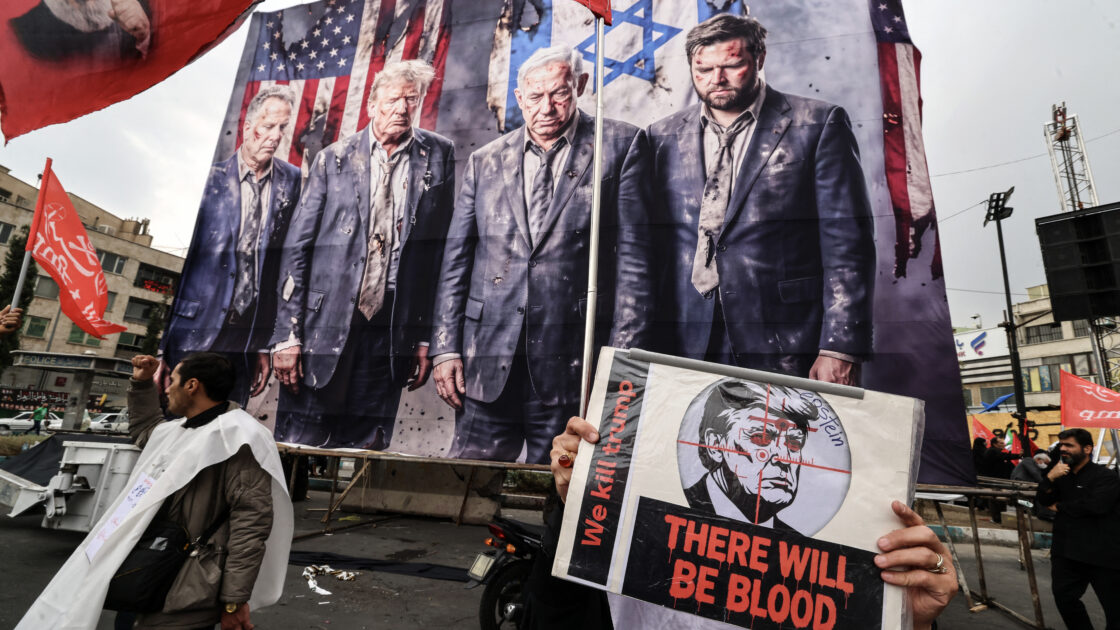
A statement attributed to Supreme Leader Mojtaba Khamenei, who has not made public appearances since becoming supreme leader in early March following his father’s killing, marked the occasion. The statement declared that the Persian Gulf and the Strait of Hormuz have invalidated the myth of American invincibility. Khamenei cautioned against believing that partisan US shifts or concessions could halt American enmity, asserting that the sole path to absolute deterrence is the pursuit of strength. In Tehran’s Enghelab Square, a billboard unveiled on Tuesday depicted Trump behind prison bars with a message stating they will kill him, while state-linked media highlighted losses for hawkish Republicans and celebrated the electoral victory of Muslim senator Abdul El-Sayed in Michigan.
Future Outlook and Diplomacy
Control over the Strait of Hormuz remains contested, while the Trump administration continues its efforts to alter Iranian behavior through economic pressure and blockades affecting 90 million residents. Vakil anticipates a combination of intensified diplomacy and continued military threats in the coming weeks, keeping limited military strikes on the table. She noted that an interim agreement regarding the Strait of Hormuz and the lifting of the blockade is more realistic than a comprehensive settlement.
Barbara Slavin, a distinguished fellow at the Stimson Center in Washington, expressed concern that the US president might utilize the lame-duck period to launch another attack on Iran. Slavin told Al Jazeera that Trump retains significant commander-in-chief powers before the new Congress takes office, though she believes the scale of the Democratic victory reduces the likelihood of an all-out war. She concluded that the war and the resulting economic crisis were responsible for the Republican defeat.