Table of Contents
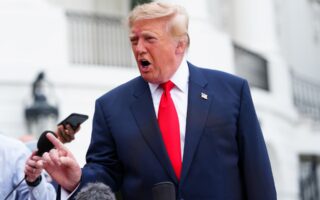
Democrats have secured a majority in both houses of the US Congress after flipping several long-held Republican seats in the recent midterm elections. In response, President Donald Trump has offered a mixed reaction, stating he is willing to work with Democrats while simultaneously signaling his intent to challenge their legislative agenda.
Trump’s Reaction to Midterm Results
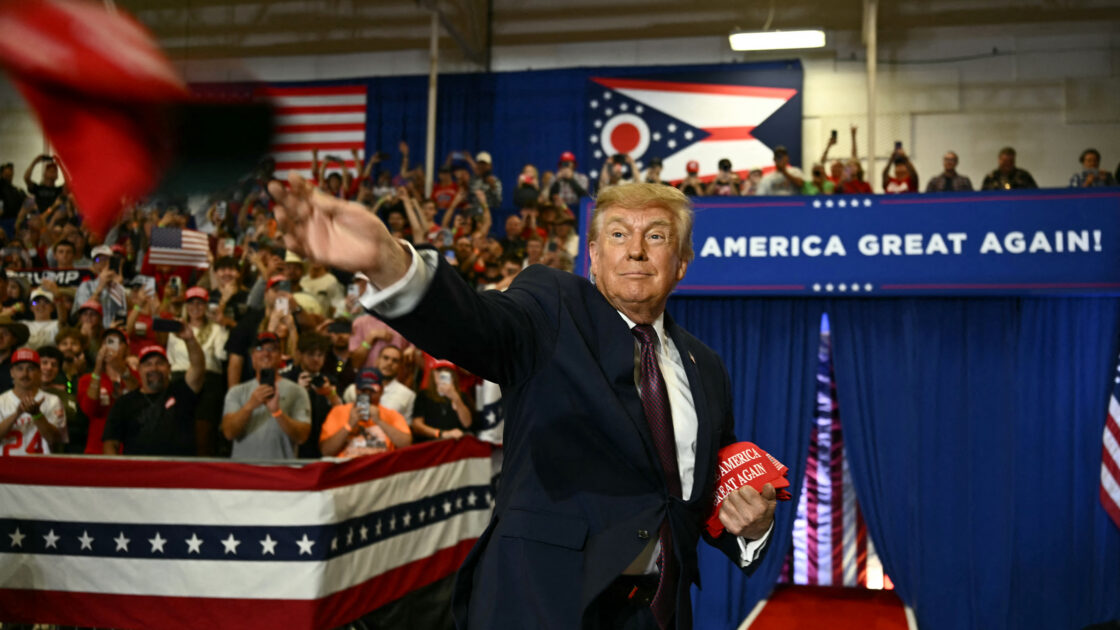
Following the vote, Trump took to Truth Social to attribute the Republican losses to his absence from the ballot, asserting that the party would have achieved a landslide victory had he been running. In an interview with The New York Times, the president stated he was “absolutely willing to accept those results” and cooperate with the opposition. However, he later posted an image on social media featuring a red MAGA hat with the word “VETO” replacing his traditional slogan, highlighting his intention to use his presidential authority to block legislation.
Critics and political commentators have begun labeling Trump a “lame duck.” This term traditionally describes an outgoing official who has limited influence because their time in office is nearing an end. While the president is not scheduled to leave office until January 2029, the loss of Republican control in Congress and the interpretation of the election results as a rejection of his policies have led many to suggest his ability to shape the legislative agenda is significantly diminished.
Executive Power and the Veto
Despite the shift in legislative power, Trump retains significant executive authority. Historically, he has utilized executive orders to bypass congressional gridlock, such as when he declared a national emergency in 2025 to divert funds for a border barrier after Congress provided only partial funding. While Congress can attempt to terminate such emergencies via joint resolution, the president can block these efforts using his veto power.
Overturning a presidential veto requires a two-thirds majority in both the House and the Senate, a threshold the Democratic Party cannot reach on its own. Trump indicated his strategy to Fox News, stating he would veto any legislation he deems “insane.” He suggested that after a period of such vetoes, Democrats would be forced to negotiate, saying, “And after a couple of months of vetoes, they’ll go out, and they’ll say, ‘How do we get this stuff done?’ And we’ll work together.”
Historical Precedent for ‘Lame Duck’ Presidents
Political analysts note that “lame duck” presidents are not necessarily powerless, particularly when focusing on areas where the executive branch holds broad autonomous authority. James Boys, a research fellow at the Centre on US Politics at UCL, told Al Jazeera that foreign policy remains a key area where the president maintains wide-ranging powers, and it is expected that Trump will focus his efforts there.
Other presidents have successfully utilized their final terms to pursue major policy goals. Barack Obama, for instance, used executive authority to finalize the Iran Nuclear Deal and normalize relations with Cuba after losing control of Congress in 2014. Similarly, Bill Clinton focused on foreign policy during his final months, including hosting the 2000 Camp David Summit, and used executive power to protect millions of acres of forestland.
More recently, Joe Biden entered a lame duck period after deciding not to seek re-election in 2024. During his final days, he issued federal pardons, authorized Ukraine to use US-supplied missiles for deeper strikes inside Russia, and directed the Department of Defense to distribute the remainder of a $61bn aid package to Ukraine to prevent it from being canceled by the incoming administration.