Table of Contents
The Democratic Party has seized control of the United States Congress from Republicans by winning majorities in both the House of Representatives and the Senate, dealing a severe blow to President Donald Trump. Democratic Senate candidates broke decades-old electoral records across traditional Republican strongholds, flipping key seats in Kansas, Texas, and South Carolina.
Historic Losses for Republicans in Congress
The Republican Party suffered a historic and worse-than-expected defeat, losing control of both legislative chambers. In the House of Representatives, Democrats secured 228 seats compared to 139 for the Republicans, with 34 races still uncalled. If Democrats win all remaining seats, they could reach over 260 seats, marking their largest majority since 1990 when they won 267 seats. They previously held a strong House majority in 2008 with 257 seats against the Republicans’ 178.
In the Senate, Democrats won a majority with 54 seats, while Republicans captured 44. Such a clear Democratic majority in the upper chamber has not been seen since 2008, when the party won 56 seats during Barack Obama’s first presidential election.
Despite President Trump urging voters to view the election as a referendum on him, numerous candidates he endorsed in key battleground states suffered defeats. In South Carolina, which had not elected a Democratic senator since 1998, Trump-backed Darline Graham lost to Democrat Annie Andrews. In North Carolina, Republican candidate Michael Whatley, endorsed by Trump, was defeated by Democratic Governor Roy Cooper. In Texas, Trump promoted Attorney General Ken Paxton, who lost the race to Democrat James Talarico. In Michigan, Trump’s pick, former US Representative Mike Rogers, was defeated by Democrat Abdul El-Sayed.
Analysis of the Political Fallout
While governing parties typically lose some seats during midterms, political analysts noted the scale of this defeat is exceptional. A Republican Party member told Al Jazeera in Washington, DC, that internal polling had suggested they might hold the Senate, but those expectations proved entirely incorrect.
Chris Featherstone, a political scientist at the University of York, described the results as a seismic loss for Republicans, noting that Trump-backed candidates fell to both progressive and centrist Democrats across the country. Featherstone highlighted James Talarico’s victory by nearly 10 points in Texas, a Republican stronghold, alongside Democrat Gina Hinojosa’s defeat of Texas Governor Greg Abbott despite redistricting efforts intended to benefit Republicans. According to Featherstone, these outcomes will fundamentally alter relations between Congress and the White House, increasing the likelihood of major investigations and potential impeachments for administration members while driving an appetite for aggressive opposition.
Sudha David-Wilp, vice president of external relations at the German Marshall Fund of the United States, told Al Jazeera that the elections may have ushered in a new political epoch. She stated that while Trump maintains a loyal following, his MAGA voter base has splintered, creating difficulties for the Grand Old Party to run on his brand in 2028.
Republican Victories and Historical Parallels
Despite the widespread losses, Republicans secured victories in several states. In Florida, Republican Senator Ashley Moody defeated Democratic state Representative Angie Nixon, and Byron Donalds defeated Democrat David Jolly to become the state’s first Black governor. Additional Republican wins included Harriet Hageman securing a Senate seat in Wyoming, Tommy Tuberville winning the gubernatorial race in Alabama against Democrat Doug Jones, alongside victories in Idaho, Arkansas, Louisiana, South Dakota, Nebraska, Kentucky, and West Virginia.
Historically, the party has rebounded from similar scenarios. In 1992 under George H.W. Bush, Republicans won 176 congressional seats while Democrats won 258. In 2008 under George W. Bush, Republicans similarly won 178 seats to the Democrats’ 257. In both instances, Republicans reversed their fortunes within two years, winning back congressional majorities in 1994 under Bill Clinton and taking control of the House in 2010 during the Obama administration.
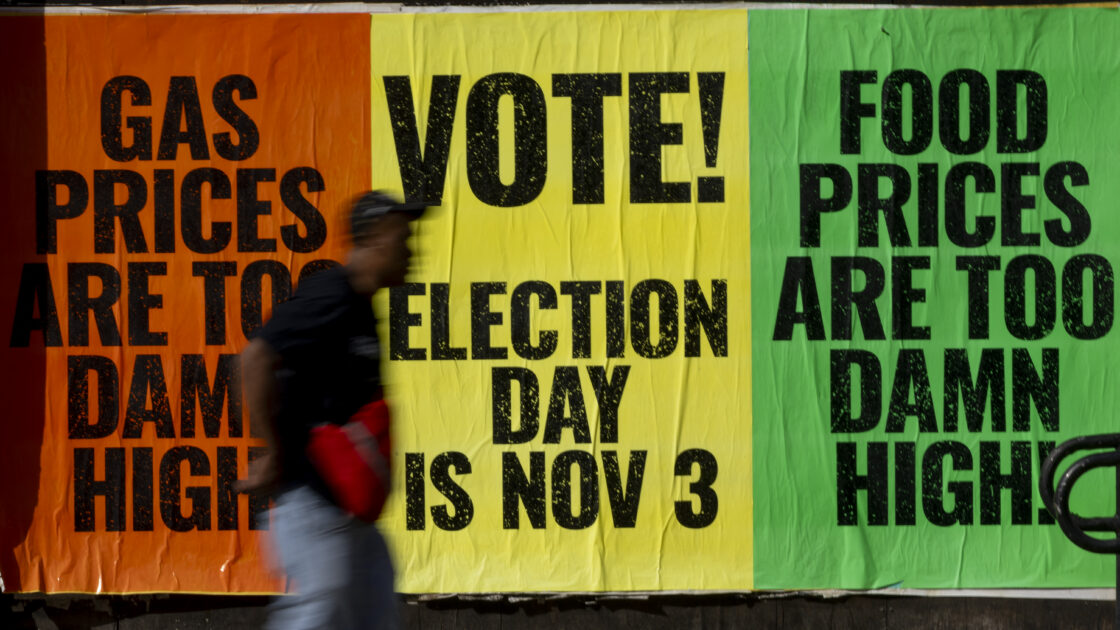
Laurel Rapp, director of the US and North America Programme at Chatham House, noted that this year could differ because voters directly linked the Trump administration’s foreign policy—particularly amid the US and Israel’s war on Iran—to rising food and fuel costs. She told Al Jazeera that voters delivered a resounding verdict demanding change, though Trump still retains wide latitude to unilaterally approach foreign relations, deploy troops, and wage wars over the next two years.