Table of Contents
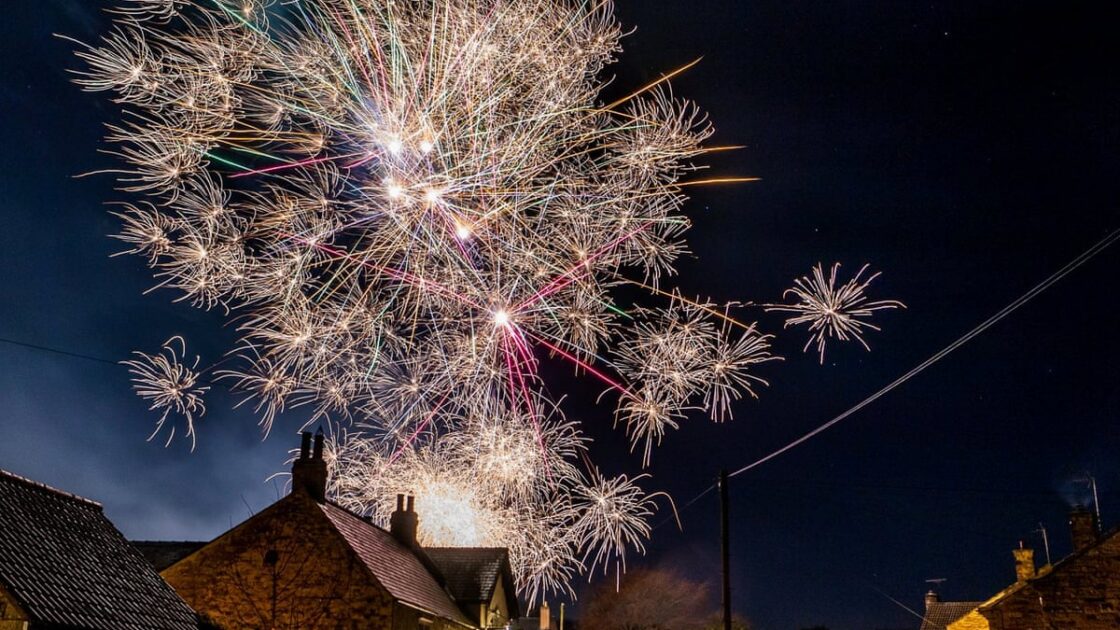
Campaigners are urging the UK government to significantly reduce the maximum noise level of public fireworks to protect wild animals from acute stress and fatal collisions.
Protecting Wildlife From Loud Noises
The Center for Wild Animal Welfare (CWAW) is calling for the legal noise limit on public fireworks to be cut from 120 decibels to 90 decibels. The organization stated that lowering the limit to 90dB—which is roughly one-eighth the loudness of 120dB—would protect millions of wild animals by shrinking the radius in which fireworks disturb surrounding wildlife.
The UK government recently held a consultation regarding proposals to lower the maximum noise level for consumer fireworks from 120dB to 110dB, which would cut the loudness in half. However, CWAW argued that this proposal falls short, noting that a 90dB limit would make the area disturbed by each firework roughly 100 times smaller than the government’s current plan.
Richard Parr, the director of CWAW, explained that sound travels great distances and loud fireworks can reach up to 10km away. Because decibels operate on a logarithmic scale, every 10-decibel reduction cuts the impacted area by a factor of ten.
Parr noted that while the public often recognizes the distress fireworks cause to domestic pets, awareness regarding wild animals remains insufficient. He stated that wild animals suffer equally, noting that sudden and unexpected noises disrupt their natural rhythms and terrify prey species that have evolved to be naturally cautious.
Impact on Birds and Precedents
Rebecca Machin, a wildlife expert at the RSPCA, echoed these concerns, stating that fireworks and their debris cause suffering and distress to various wild animals, particularly birds. According to Machin, impacts include disrupted migration, elevated stress hormones, and hazards from leftover debris, depending on the distance from the explosions.
Research indicates that birds face severe risks during displays, including high stress, mass temporary displacement, and fatal collisions. As an example, more than 1,000 birds were discovered dead on New Year’s Day in 2025 near a hiking trail in Bulgaria, located just over a kilometer from a firework site, after panicked birds collided with trees and each other.
The government’s consultation followed a parliamentary debate in January, sparked by two separate petitions that each gathered over 180,000 signatures regarding firework noise and availability. Beyond noise limits, the consultation examined expanding bans on specific fireworks and reviewing rules for lower-risk items.
New Zealand successfully implemented a 90dB limit on consumer fireworks in 2008, alongside restricted sale days and an increased minimum purchase age. Meanwhile, the UK consultation acknowledged concerns that a 90dB threshold might be difficult to define precisely in legislation, potentially leading to a gamed testing system.
Industry Response
Addressing the calls for stricter limits, a spokesperson for the British Fireworks Association acknowledged that unexpected noise from fireworks and other sources can disturb birds and wildlife, adding that the industry takes these concerns seriously and advises people to consider when and where they ignite fireworks.
However, the spokesperson stated that the association does not believe sufficient evidence supports reducing the limit to 90 decibels. They emphasized that any regulatory changes must rely on clear evidence of benefits and account for unintended consequences, such as an increase in the use of illegal fireworks, favoring better enforcement of current laws and a national awareness campaign instead.