Table of Contents
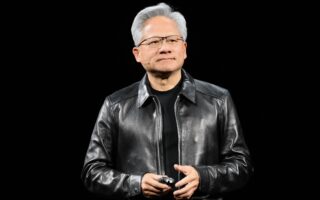
Following Jensen Huang’s resignation as CEO of artificial intelligence giant Nvidia, the company appointed Colette Kress as its interim chief and named Harvey Jones as its first-ever board chair. These changes represent a significant overhaul of Nvidia’s corporate structure after being dominated by Huang since he cofounded the chipmaker in 1993.
The Impact of Founder Departures on Tech Giants
Huang stepped down following scrutiny from United States lawmakers, the board, and shareholders regarding reports of his affairs with a suspected Chinese intelligence operative and two employees. Analyst Dan Ives of Yorkville Ives predicted that Nvidia’s valuation could drop by 25 to 30 percent without Huang leading the company.
While corporate America typically holds executives accountable to shareholders, Silicon Valley companies are frequently built around a founder’s vision. Research from Bain and Company shows that founder-led companies performed 2.1 times better than non-founder-led firms between 2015 and 2025, with that figure rising to 2.6 times in the tech sector.
Michael Monaghan, portfolio manager of Founders 100 ETF, told Al Jazeera that data demonstrates how rare it is for a successor to match an original founder’s success, describing it as part of the evolutionary life cycle of building a company.
Xiaomeng Lu, director of geo-technology at the Eurasia Group, told Al Jazeera that leadership challenges are common among tech giants, comparing the situations of companies like SpaceX and Meta without Elon Musk and Mark Zuckerberg.
Tesla faced board scrutiny and brand damage when Musk’s attention was divided among multiple businesses and his political activities with US President Donald Trump’s administration sparked controversy. Despite falling vehicle deliveries and showroom protests, Tesla’s board retained him, while SpaceX structured its governance ahead of an IPO to make it nearly impossible for the board to fire Musk.
Nvidia’s Unique Management Structure
Nvidia’s management historically centered heavily around Huang, who had dozens of executives reporting directly to him. Unlike other major tech companies, Huang did not hold outsized voting control, owning approximately 3.6 percent of the company without majority voting power, though the 11-person board could remove him with or without cause.
Other giants like Meta and Alphabet utilize special stock arrangements granting founders greater voting control than their ownership stakes suggest, allowing leaders like Zuckerberg to maintain board control and resist shareholder pressure.
Kress, who previously served as Nvidia’s chief financial officer and has been with the company since 2013, now leads as interim CEO alongside Jones, a venture investor with 30 years of industry experience. Meanwhile, Nvidia continues active investments, recently agreeing to purchase $10bn in shares ahead of Anthropic’s upcoming IPO.
Historical Precedents for Leadership Transitions
Corporate history shows that founder departures can severely impact a company’s market direction. In the 1980s, Apple struggled for a decade following a power struggle between founder Steve Jobs and CEO John Sculley, pushing the company near bankruptcy with nearly $1bn in losses by 1997 before the board invited Jobs back.
Starbucks faced similar declines after founder Howard Schultz stepped down in 2000. Following leadership changes under Orin Smith and Jim Donald, the coffee chain lost more than 80 percent of its value amid slowing sales and rising competition, prompting Schultz to return in 2008 to execute a turnaround.
However, departures do not always guarantee a downturn. After Jobs returned to Apple in 1997, he led a turnaround before handing over to Tim Cook in 2011, under whom Apple surpassed a $5 trillion market capitalisation in July 2026. Similarly, at Microsoft, Bill Gates stepped down as CEO in 2000, and subsequent leaders Steve Ballmer and Satya Nadella expanded the company into cloud computing, growing its market capitalisation to $3.88 trillion by November 2026.
Beyond leadership changes, Nvidia faces an AI sector heavily reliant on its chips, including OpenAI’s planned financial agreements worth up to $100bn and a $10bn investment in Dario Amodei-led Anthropic tied to an upcoming US IPO.