Table of Contents
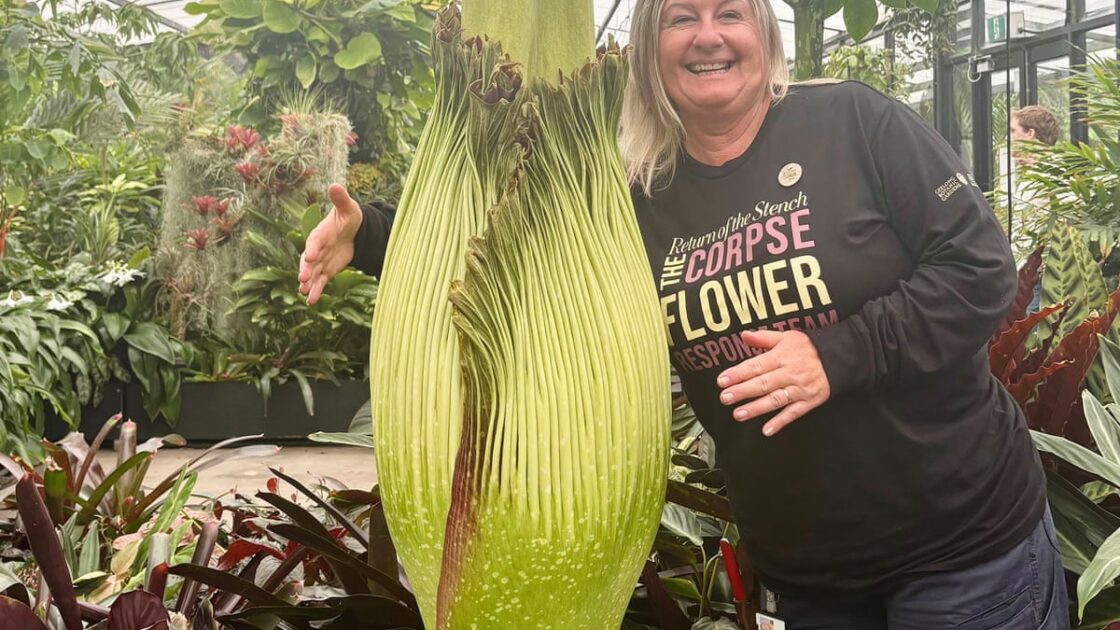
The Geelong Botanic Gardens is preparing for its second corpse flower bloom in two years, an unusual event being described by organizers as a smelly sequel. The 178cm plant, named Pete, emerged from the soil at the end of September and has quickly gained height, turned purple, and begun heating up as it prepares to unfurl.
Growth and Expectation of a Stronger Odor
At 13 years old, Pete measures nearly double the height of Betsy, another corpse flower that bloomed at the facility in 2024. Tracie Abel, a horticulturist at the gardens, noted the impressive size of the specimen.
“It’s pretty impressive,” Abel told Environment | The Guardian, adding, “We’re assuming that it’s going to be a lot smellier this year, because it’s a bigger plant, bigger flower.”
Titan arums are widely known as corpse flowers due to their strong putrid odor, which has been compared to decaying animals, sweaty socks, or the rich stench of a public bin on a hot day. The upcoming bloom is anticipated to last for only 24 to 48 hours once the flower unfurls.
Origins and Pollination Mechanism
Both corpse flowers at the Geelong gardens originated from the Botanic Gardens of South Australia, home to one of the world’s largest collections. Matt Coulter, the senior horticulture curator in South Australia who propagated the specimens from cuttings and cared for them for nearly eight years before donation, expressed pride in their flowering.
“I don’t know any other plant that draws the attention of people like this,” Coulter stated.
According to Coulter, the foul scent serves to mimic a dead animal to attract pollinators during a very narrow window of opportunity, as a corpse flower can require a decade to form and has only one night to achieve pollination. The central column, known as the spadix, functions like a chimney to draw the odor upward and disperse it into the surrounding environment to draw in insects. The surrounding frilly leaf, or spathe, typically begins opening between 12 and 2 o’clock on the day of the event and extends fully by nightfall.
Conservation Significance and Public Interest
Native to Sumatra in Indonesia, where they are listed as endangered, these unpredictable plants have made Australia one of the top three regions globally for corpse flower blooms. John Siemon, director of horticulture at the Botanic Gardens of Sydney—where three specimens bloomed the previous year—remarked on the public fascination with the massive stinky plants.
“People are enamoured with this ginormous stinky flower,” Siemon said, describing the odor as similar to possum urine or the receptacle at the back of a public toilet. He added that these iconic plants provide an important platform for discussing plant conservation.
Visitors traveling to experience the plant in person will also have the opportunity to view the gardens’ 167-year-old Ginkgo biloba tree, recognized as Victoria’s tree of the year. For individuals unable to attend in person, a 24-hour live stream is available to monitor Pete’s progress.