Table of Contents
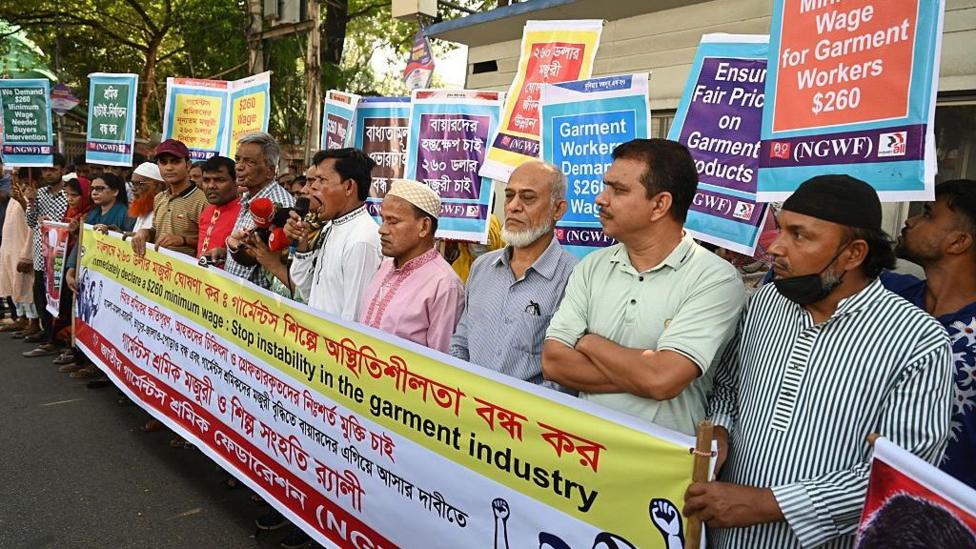
Dozens of clothing factories in Bangladesh’s primary textile-producing regions have shut down due to strikes by workers demanding higher wages. Nearly 150 sites across the textile hubs of Savar, Ashulia, and Gazipur have closed over the weekend.
Industry Importance and Wage Demands
The garment sector serves as a major industry for Bangladesh, generating nearly $40bn in annual exports and accounting for 10 percent of the nation’s total GDP. Employees are striking to demand a minimum monthly wage of 30,000 taka, which is approximately £182. The current minimum monthly wage stands at 12,500 taka, but workers state this amount falls short of covering the cost of living crisis.
Protests and Factory Closures
On Sunday morning, workers gathered on the Dhaka-Tangail highway in Gazipur to block the road. The demonstrations halted traffic for about an hour before police intervened. Under the “No Work No Pay” provision of local labor laws, owners possess the authority to suspend operations and withhold wages during production disruptions.
Police Superintendent Mohammad Amjad Hossain told BBC News that officers shut factories in the city after employees walked off the job. He stated that 13 factories closed on Saturday night, while another 16 factories shut down during the morning unrest.
Impact on Global Brands
The Bangladeshi garment sector employs roughly four million workers who manufacture clothing for major international brands such as H&M, Primark, and Zara. As the world’s second-largest exporter of ready-to-wear garments following China, concerns exist that the ongoing unrest could impact international buyers if the disruptions persist.
Industry groups including the Bangladesh Garment Manufacturers and Exporters Association (BGMEA) and the Bangladesh Knitwear Manufacturers and Exporters Association (BKMEA) have requested security for manufacturing facilities. BGMEA President Mahmud Hasan Khan questioned the reasoning behind continuing wage board negotiations without guarantees of factory safety, announcing that facilities unable to maintain production due to the unrest will remain indefinitely closed under labor laws starting the following day.
The government established a minimum wage board on November 1 to propose a revised pay structure for employees. Chaired by a senior district judge, the board announced during its initial meeting that it will finalize recommendations by the end of November, with the updated pay structure anticipated to take effect on December 1.