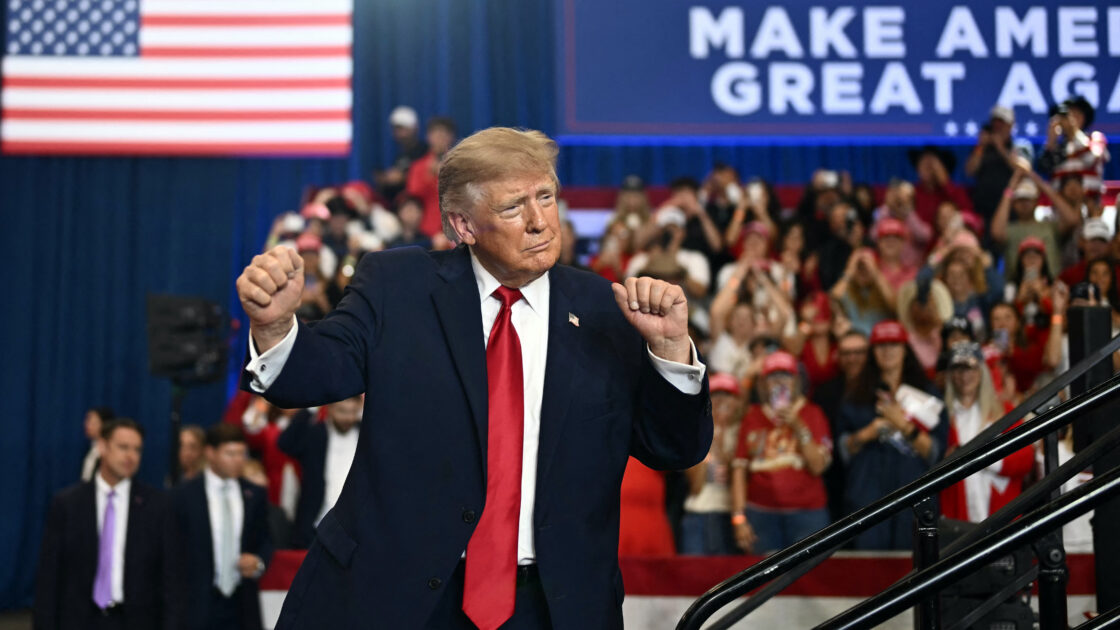
US President Donald Trump is scheduled to hold rallies in Iowa and Kansas, two Republican-leaning states he previously won, in an effort to maintain Republican control of the United States Senate.
Campaign Stops in Iowa and Kansas
His first stop takes place on Sunday afternoon in Dubuque, Iowa, where Republicans are fighting to keep a critical Senate seat and the governorship. Trump won Iowa by double digits in 2024. The 2nd Congressional District, which encompasses Dubuque, has turned competitive as the GOP works to safeguard its fragile majority in the US House of Representatives, featuring a race between Gen Z Republican candidate Joe Mitchell and Democrat Lindsay James.
Following Iowa, Trump plans to visit Salina, Kansas, on Sunday. Although Kansas last elected a Democratic senator in 1932, the state now faces an unexpectedly close race between incumbent Republican Roger Marshall and Democratic challenger Adam Hamilton, a prominent pastor. These visits mark Trump’s return to the campaign trail following a break at his Mar-a-Lago club in Florida on Saturday, after weeks of traveling across multiple US states.
Rescheduled Rallies and Polling Pressures
Republicans initially cancelled the Iowa and Kansas events late Thursday before rescheduling them. A source close to the Trump administration told Al Jazeera on Friday that Trump will headline the previously cancelled rallies in person, stating, “Rallies are BACK ON!” The source added, “No one works harder, fights harder, or loves the American people more than President Donald J. Trump!”
Polling indicates Democrats are tied with or leading Republicans in several state races. Furthermore, Reuters/Ipsos polling showed Trump’s approval rating among rural Americans dropped to a new low of 45 percent in October. Throughout the campaign, Trump has concentrated primarily on states he previously dominated, as voters and former supporters question the economic consequences of his tariff decisions and the war in Iran.
Tuesday’s election will decide 35 Senate seats and all 435 House seats, with Republicans currently holding a 53-47 Senate majority alongside a narrow edge in the House. Losing either chamber would allow Democrats to obstruct Trump’s agenda during his final two years in office and initiate investigations into an administration that has largely relied on compliant Republican majorities.
The University of Florida’s Election Lab reports that more than 52 million Americans have already cast their ballots either in person or by mail, marking a record turnout for a midterm election that exceeds the nearly 46 million early voters from 2022.