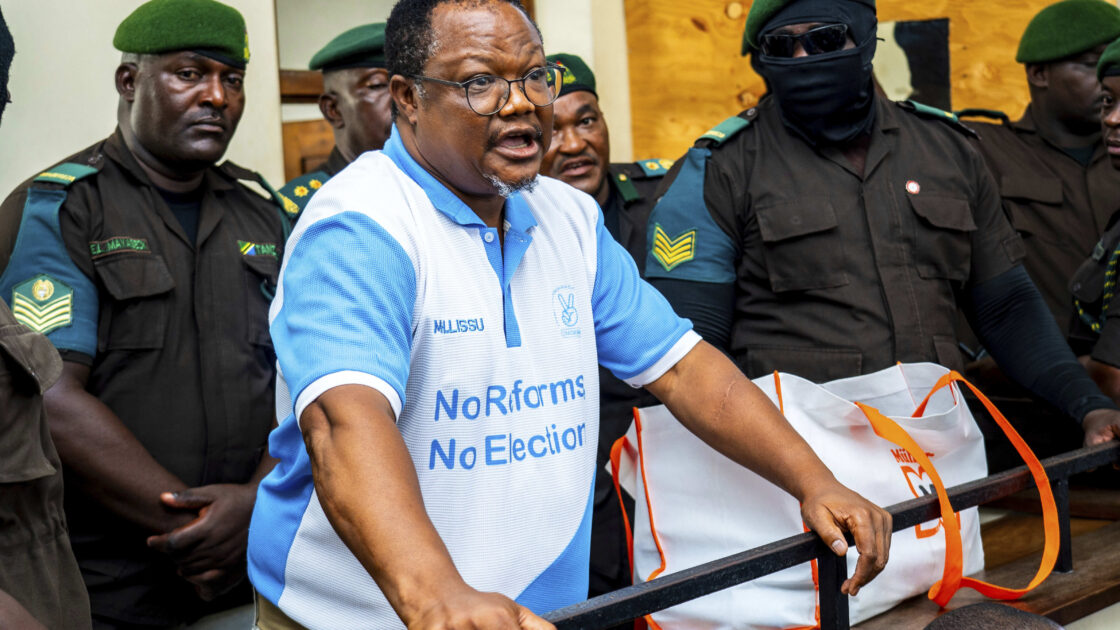
Tanzania’s jailed opposition leader Tundu Lissu has ended a brief hunger strike after prison authorities allowed him to meet privately with his lawyers, according to his legal representative.
Protest Over Denied Legal Access
Lissu, who leads the opposition Party for Democracy and Progress (CHADEMA) and finished second in the 2020 presidential election, began refusing food after prison officials barred his lawyers from entering the facility where he is detained, party spokesperson Brenda Rupia stated on X.
His lawyer Rugemeleza Nshala told The Associated Press that Lissu halted his strike following a lunchtime meeting with his brother. Accounts regarding the timeline of the protest differed slightly, with Rupia stating the refusal of food began on Monday, while Nshala reported it started on Tuesday morning after promised private consultations failed to happen.
Tanzania’s prisons service disputed the reports entirely, telling the Swahili-language daily Mwananchi that Lissu was safe and had not engaged in a hunger strike. Nshala had previously expressed apprehension regarding Lissu’s health condition, noting that the politician depends on regular medication.
Treason Charges and Human Rights Scrutiny
Lissu survived a 2017 assassination attempt in which he was shot 16 times. Authorities arrested him in April 2025 following a rally where he demanded electoral reforms, subsequently hitting him with treason charges. Prosecutors asserted that a speech he delivered incited the public to rebel and disrupt the previous year’s general election.
He entered a not-guilty plea, and his legal team maintains that the charges stem from political motivations, with a court judgement scheduled for November 6. His imprisonment, alongside reported abductions of government critics, has drawn intense international scrutiny toward the human rights record of President Samia Suluhu Hassan, who secured victory in a 2025 election.
The Tanzanian government has denied allegations of widespread abuses and stated its dedication to upholding human rights. Authorities initiated an inquiry into 2024 abduction reports, though they have not released any official findings.
CHADEMA declared a seven-day period of mourning running from Thursday to November 4 to commemorate the anniversary of the October 29 election. A government-appointed investigation reported that at least 518 individuals died during the post-election violence, whereas CHADEMA estimates the death toll reaches approximately 2,000, a figure the United Nations stated it could not independently verify.