A group of ten nature enthusiasts, including two children, gathered at the Edwardian bandstand in the abbey grounds of Hexham, Northumberland, for a guided spider walk led by Fran Garcia, a member of the British Arachnological Society.
Introduction to Arachnid Anatomy
Before beginning the search, Garcia introduced the group to spider anatomy and web-building techniques using an unusual collection of props, including wire, ropes, a bottle of glue, and a folding knife to demonstrate tarantula jaws. He also circulated a teardrop-shaped papery egg sac belonging to a wasp spider, *Argiope bruennichi*, noting that the species is expanding its range northward from southern England.
Moving to a small stone bridge, the group searched for harvestmen. Garcia explained that while harvestmen are arachnids, they differ from spiders because they lack venom, cannot spin webs, and possess only two eyes mounted on a central turret instead of six or eight.
Spider Behaviors and Web Revelation
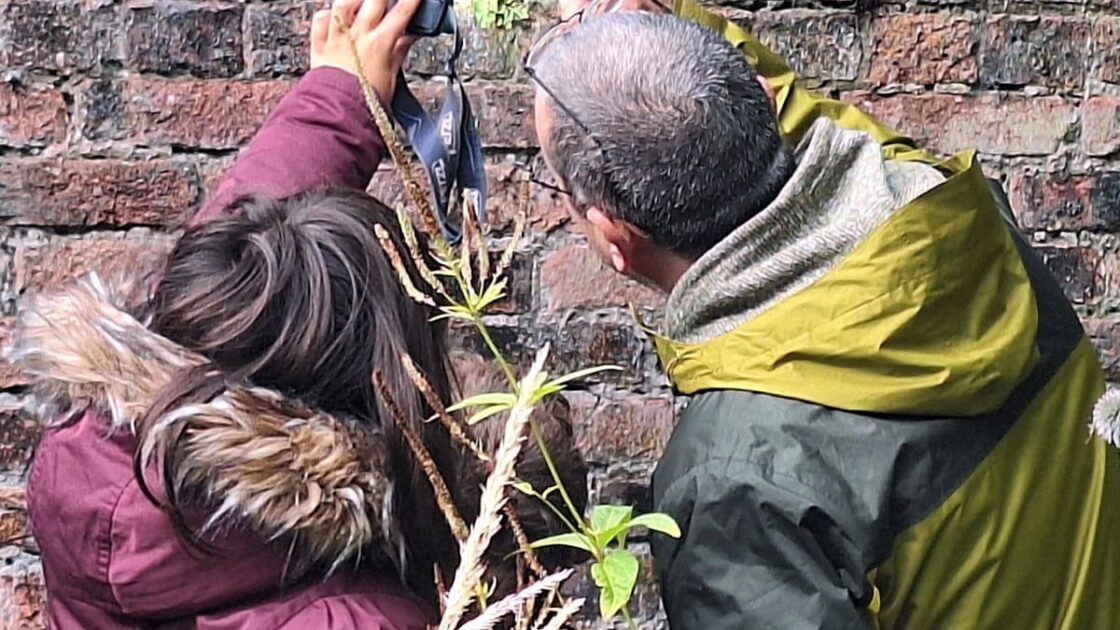
In an old brick wall nearby, participants observed laceweb spiders (*Amaurobius* species) living in silken tunnels tucked into mortar pits, where trip wires help them detect prey vibrations. Garcia demonstrated this behavior by striking a tuning fork against the brickwork near a lair, prompting a spider to briefly rush out before retreating.
Nearby, tube spiders (*Segestria senoculata*) were identified by their characteristic sun-ray trip wires, though they proved to be more reclusive. Among a patch of autumn-tangled creeping thistles, Garcia used a spray bottle of water to coat unseen spider webs, revealing their intricate structures and helping ease the younger participants’ apprehensions about spiders.