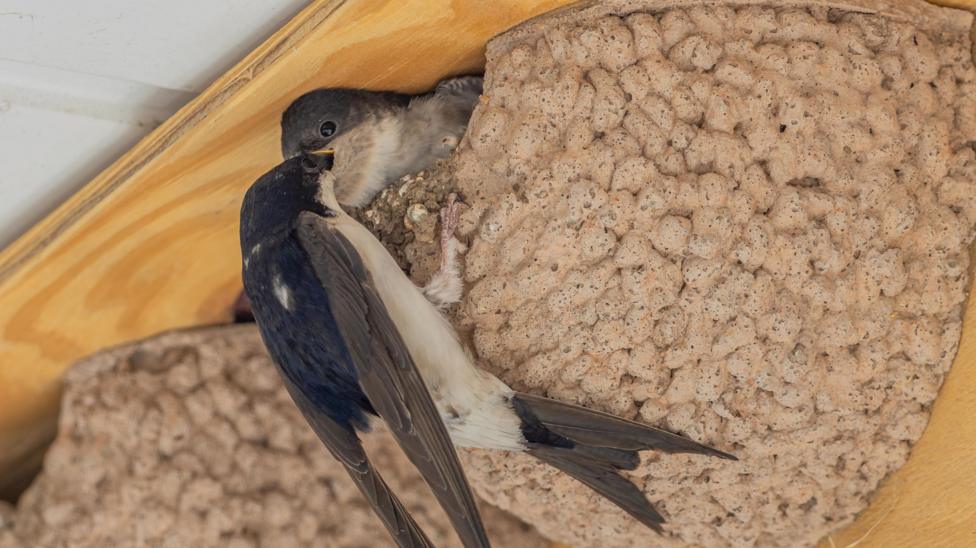
Up to 900 artificial nest cups for threatened house martins will be installed across Hampshire in an expanding conservation initiative. The migratory birds arrive from Africa every spring and currently feature on the UK’s Red List of endangered bird species due to declining numbers.
Conservation Efforts and Mud Shortages
The Hampshire House Martins Project is providing the free artificial cups following a successful pilot phase. Constructing natural mud nests requires significant time and energy from the birds, as they must transport approximately 1,000 pellets of soft mud for every single nest. Project coordinator Nigel Matthews urged local residents, schools, and businesses to apply for the free installations to provide the animals with a secure environment for raising their offspring.
UK house martin populations dropped by 40% between 1995 and 2024, largely driven by poor breeding outcomes. Environmental pressures include a decrease in available insect populations and hotter, drier weather conditions that limit the availability of wet mud required for construction. Furthermore, contemporary houses often feature uPVC soffits, which prevent natural mud nests from adhering properly.
Pilot Project Success and Application Criteria
Following a public nest location survey launched by the Hampshire Ornithological Society last year, organizers are seeking more properties to receive free artificial nests in what is believed to be the nation’s largest undertaking of its kind. During the initial pilot, 249 artificial cups were mounted on structures near established nesting areas in northern and eastern Hampshire, with 27 utilized by house martins during the summer—surpassing organizers’ initial projections.
Keith Betton, chair of the Hampshire Ornithological Society, stated that public enthusiasm during the pilot phase demonstrated strong local commitment to assisting the species. He described the upcoming phase as a translation of gathered knowledge into practical action, offering a straightforward method for property owners, educational institutions, and commercial entities to aid the recovery of the vulnerable bird population.
To qualify for the complimentary provision and installation of a nest cup, buildings must sit within 1 kilometer of a previously documented house martin nest and feature appropriate overhanging eaves on a second story, positioned between four and seven meters above the ground. Interested applicants can submit requests through the Hampshire House Martins Project website.