Table of Contents
Scientists and environmental charities highlight that wetlands, saltmarshes, and mangrove swamps may be more crucial in combating climate change than rainforests, absorbing carbon four times faster than trees. As the Wildfowl and Wetlands Trust (WWT) marks 80 years since founding its first wetland bird reserve at Slimbridge in Gloucestershire, leaders are calling for the restoration of one million hectares of wetlands worldwide.
Origins of Conservation at Slimbridge
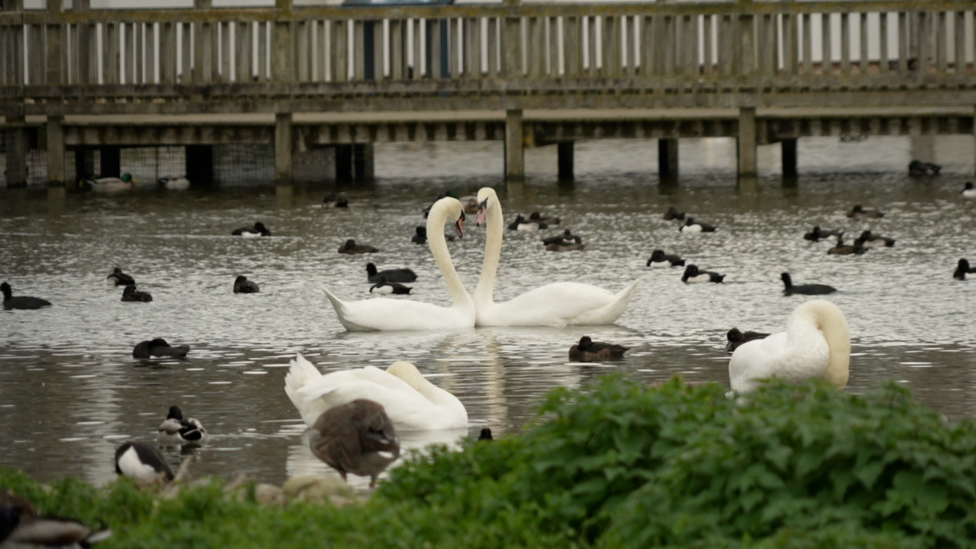
In November 1946, naturalist Peter Scott arrived at a marshy area near the River Severn in Gloucestershire, drawn by thousands of migrating geese and swans arriving from the Russian Arctic. Scott settled in the area, digging lakes, constructing observation hides, and establishing a sanctuary that eventually grew to house numerous species of ducks, swans, geese, and migrating wildfowl.
Described by historian Chris Moore as a pioneer in modern conservation, Scott campaigned vigorously against commercial whaling, presented early natural history programs for the BBC, and helped establish the World Wildlife Fund (WWF). In 1973, he became the first person knighted for conservation work, earning praise from David Attenborough as the patron saint of conservation.
Saving Endangered Species
Among Scott’s ambitious early projects was the rescue of the Hawaiian Goose, or Nēnē, which dwindled to just 24 remaining birds by 1949 due to development. After Hawaiian authorities sent two female geese to Slimbridge, Scott requested a gander, leading to the successful birth and rearing of nine chicks.
While over 3,000 Nēnē geese now live mostly on Hawaiian golf courses, a small group remains at Slimbridge, fed daily by volunteers like Enid Cole. Over the decades, Slimbridge teams have hand-reared other vulnerable species, including the Common Crane and the Madagascan Pochard, an effort that highlighted the absolute necessity of restoring wetland habitats for survival.
The Global Push for Wetland Restoration
According to WWT, approximately 85 percent of the world’s wetland habitats have been lost as marshes were drained for agriculture and swamps cleared for urban expansion, even though 40 percent of global species rely on these ecosystems. WWT currently operates 10 wetland reserves across the United Kingdom and collaborates with local councils on urban projects, such as mooring floating islands of wetland plants in Bristol’s harbour.
WWT CEO Sarah Fowler described the habitats as mood-boosting, flood-buffering, and water-purifying spaces that serve as massive carbon sinks. Explaining the science, Fowler stated that saltmarshes bury carbon rapidly when high tides cover grown plants. “And the brilliant thing about salt marshes is they do this four times faster than trees. Wetlands are vital in our fight against climate change, and we must restore them,” she said.