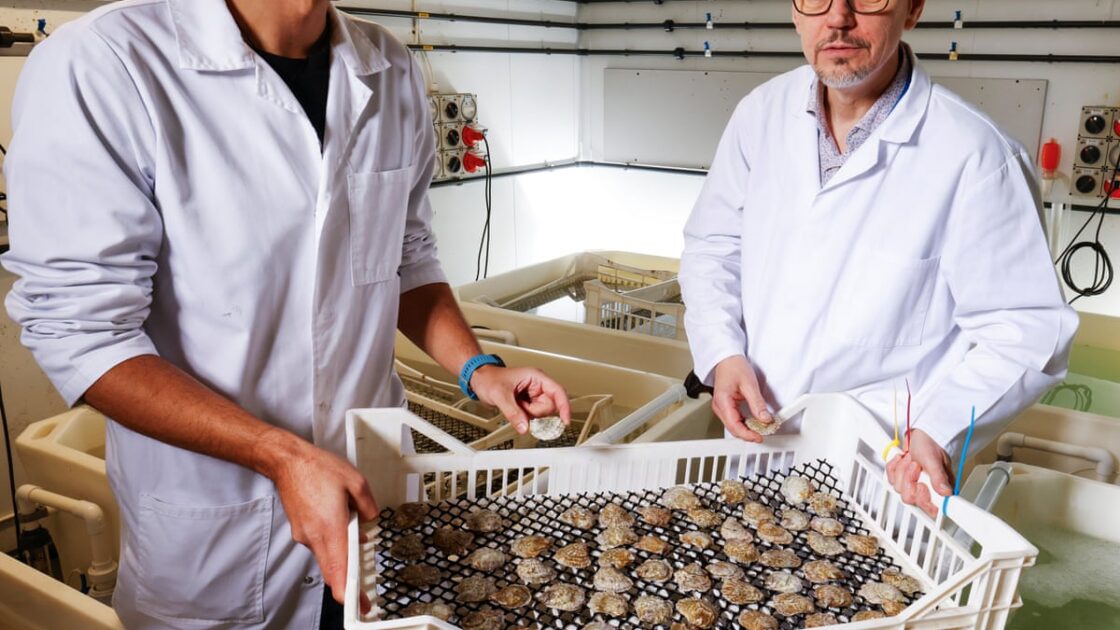
Scientists have successfully bred wild oysters in the Dornoch Firth north of Inverness, where the shellfish had been locally extinct for more than a hundred years. Conservationists hope this breakthrough will eventually allow millions of native European flat oysters to colonize the restoration site and revive marine ecosystems.
A Historic Decline and Conservation Milestone
Historical maps like the 1883 Olsen’s Piscatorial Atlas show that billions of native oysters once formed vast reefs supporting rich marine life around Britain. During the Victorian era, heavy overfishing driven by expanding railways decimated populations across the North Sea and the English Channel, with the Firth of Forth alone yielding 30 million oysters annually at its peak.
Today, only a few locations around Britain maintain substantial wild oyster beds, placing European oysters on lists of critically threatened species globally. Prof Bill Sanderson, a marine biodiversity professor at Heriot-Watt University in Edinburgh who leads the Dornoch Environmental Enhancement Project (Deep), described the confirmation of natural reproduction as a very significant milestone.
Ecologists regard oysters as vital ecosystem engineers that support hundreds of marine species, stabilize seabed sediments, and clean water through filter-feeding. Sanderson noted that establishing an oyster reef typically doubles seabed biodiversity within a decade while building carbon stores and complex habitats.
Project Origins and Future Goals
Launched 12 years ago, Deep is co-funded by Heriot-Watt University, the Marine Conservation Society, and the Glenmorangie whisky company. The initiative has introduced approximately 140,000 adult oysters into the firth, sourced from Loch Ryan near Stranraer—home to about 23.5 million oysters protected by a royal charter—and hand-cleaned by volunteers to ensure biosecurity.
The collapse of native populations previously triggered strict legal protections, meaning most oysters sold in British markets today are farmed Pacific oysters. The success in the Dornoch Firth has inspired about a dozen similar restoration projects across the UK, including efforts in Argyll, Essex, the Solent, and near Edinburgh.
Gurjameer Ramday, the Deep research associate who discovered the juvenile oysters, attributed part of the success to warmer sea temperatures over the past two years. Sanderson stated that the team will continue adding oysters to the population until it becomes self-sustaining by 2031, aiming for a reproduction rate that outpaces predation by crabs and starfish.
While conservationists remain concerned about pollution, overfishing, and government policies regarding seabed-scouring drag-net fisheries, Sanderson emphasized the positive engagement of volunteers seeking hopeful environmental stories.