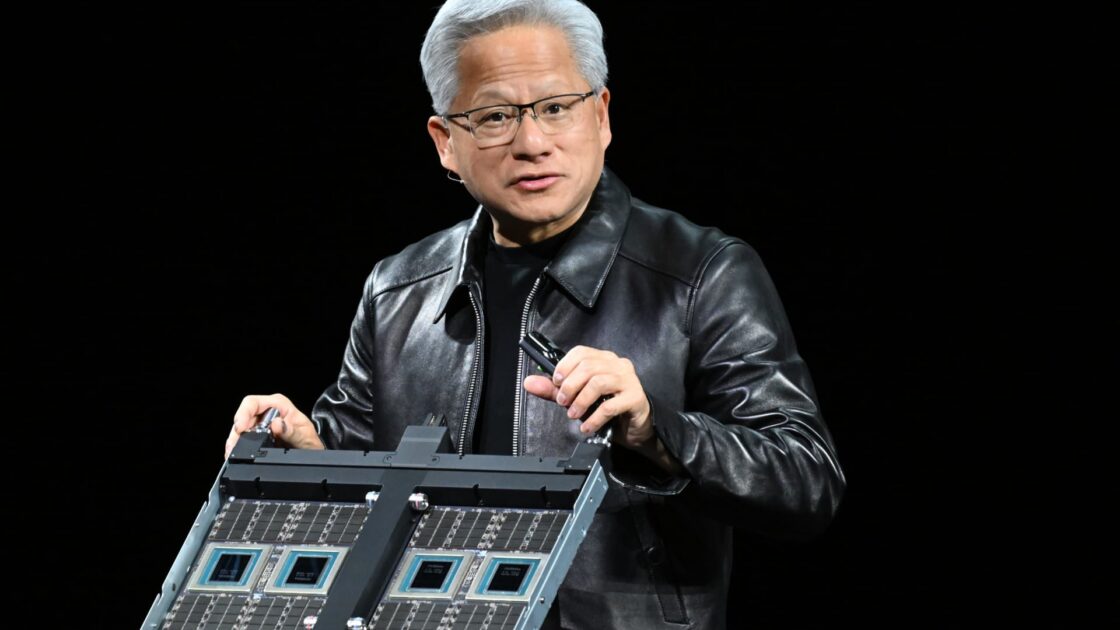
As reports of a potential scandal involving Nvidia CEO Jensen Huang emerged on a Sunday, investors sought immediate answers regarding the stock’s future. This sudden market event brought attention to an expanding niche within the financial markets known as perpetual futures.
Trading Activity and Perpetual Futures
By Sunday afternoon at 3 p.m. ET, hours before standard pre-market equity trading commenced, traders initiated bearish bets on Nvidia perpetual futures. Specifically, perpetual contracts on Nvidia began trading on platforms like Hyperliquid, with the xyz contract dropping to $180.15 alongside $200 million in volume by 3:30 p.m. ET. Both equity shares and perpetuals subsequently dropped below $178 overnight, with the stock ultimately trading 7% lower on Monday.
This weekend activity highlights financial instruments that increasingly fill market voids while traditional exchanges remain closed. In their basic form, perpetual futures represent highly leveraged wagers that lack an expiration date. These instruments track virtually any asset class and operate continuously around the clock, seven days a week.
Market structure expert and former exchange analyst Rich Repetto explained that these products address a major market gap. According to Repetto, they supply market access and price discovery during periods that would otherwise feature a liquidity vacuum.
A similar dynamic occurred when Iran launched a drone attack against Israel on Saturday, April 13, 2024. With traditional markets completely shut, crypto-native exchanges featuring perpetual futures served as the sole global proxies for real-time market sentiment regarding oil and the S&P 500. As the conflict escalated, these perpetuals became essential tools for traders seeking market inputs over the weekend.
David Schamis, CEO of Hyperliquid Strategies (PURR)—the publicly-traded treasury company investing in HYPE tokens that power the decentralized exchange—stated that news continues independently of market operating hours. Investors demand deep liquidity and price discovery whenever necessary, rather than strictly during standard nine-to-five schedules, according to Schamis.
Prediction Markets and Options Growth
Perpetuals were not the sole unconventional products experiencing higher volume during the weekend. Prediction contracts concerning a potential exit by Huang also witnessed a surge in activity. A Kalshi contract addressing when Jensen Huang might depart as Nvidia CEO, which launched shortly before the reports surfaced, recorded over $105,000 in trading volume on Sunday.
Meanwhile, pre-market options trading on Nvidia, which launched only weeks prior, generated $15 million in options premium across roughly 40,000 contracts. SpotGamma data indicated that slightly over half of those contracts were puts, with nearly $10 million in premium associated with puts.
These emerging financial instruments emphasize the rising demand for continuous information access as traditional financial exchanges extend their trading hours. Options Action contributor Mike Khouw noted that the loss of real-time feedback when markets close is mitigated by futures, prediction markets, and expanded after-hours trading.