Table of Contents
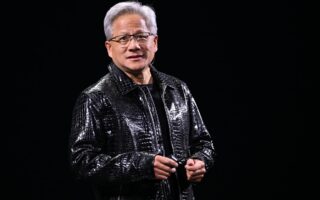
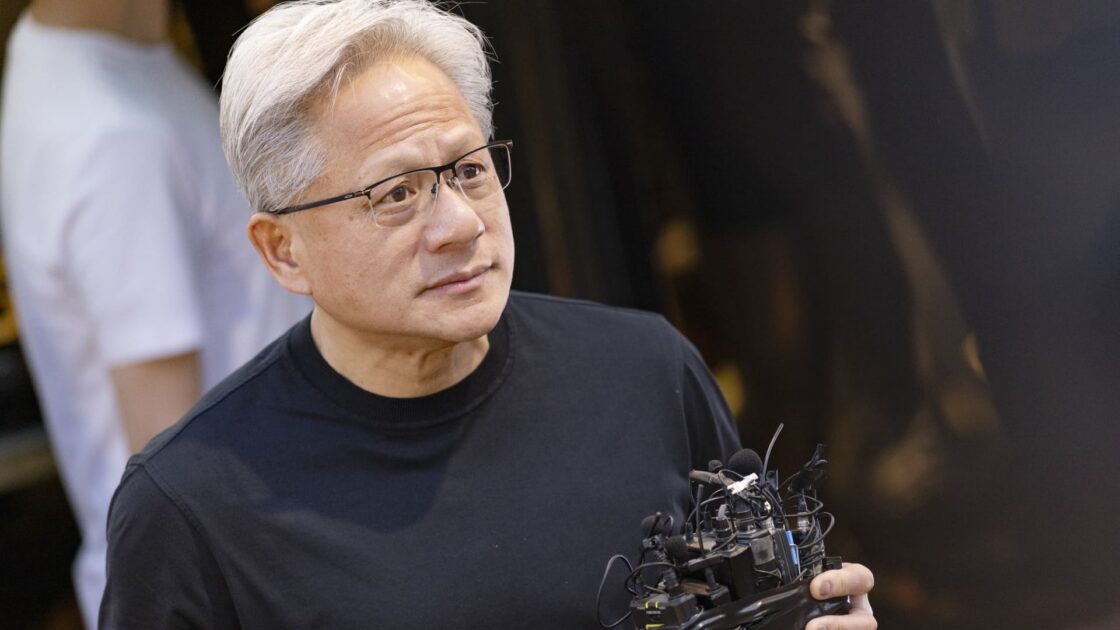
Nvidia shares fell 4.34% on Thursday after Jensen Huang announced his immediate resignation as CEO and board member at the semiconductor company.
Stock Movement and Leadership Changes
The company’s market capitalization stayed below $4 trillion for most of the trading day before rising slightly near the close to finish above that threshold. The 4% drop recovered steeper earlier losses that had reached up to 14%. Nvidia has maintained a market capitalization above the $4 trillion mark since July 2025.
Nvidia announced in a Thursday statement that Chief Financial Officer Colette Kress will take over as interim CEO while a permanent successor is selected. Additionally, former Synopsys CEO Harvey C. Jones will step in as the company’s first-ever board chair.
Controversies and Investigations
On Sunday, Huang acknowledged having an affair with Alice Huang, an executive at cloud computing firm Megaspeed. According to The Financial Times, U.S. intelligence officials suspect she is a Chinese spy.
As exclusively reported by US Top News and Analysis on Thursday, Alice Huang is also connected to Huawei, Nvidia’s primary Chinese rival. She may have held stakes in Chinese companies that benefited Huawei while simultaneously conducting business with Nvidia.
The New York Times reported on Wednesday that Huang was involved in another extramarital relationship with Kimberly Powell, Nvidia’s vice president of health care, who reported directly to Huang. Furthermore, Reuters reported Thursday that Huang had an intimate relationship with a second, unnamed employee.
Market Reactions and Analysis
Prior to the resignation, several Wall Street analysts told US Top News and Analysis that the departure could trigger a 20% stock decline, noting Huang’s vital role in the company’s growth. Nvidia shares have already declined by more than 20% over the past month.
Bernstein cut its price target for Nvidia by half on Thursday, dropping it from $400 to $200. Stacy Rasgon, a senior analyst at Bernstein, stated on the network’s program that Huang’s alleged relationship with a direct report made it extremely difficult for the board to keep him in his role.
Huang co-founded Nvidia in 1993 and played a central role in guiding its transition from a gaming hardware provider to a dominant force in the artificial intelligence industry. Rasgon noted uncertainty regarding who might emerge as a visionary leader to guide the company’s future.
Before the resignation, U.S. lawmakers had already demanded that Huang step down, increasing pressure on both the executive and the company. Richard Reyle, chief investment officer at Questar Capital Partners, told US Top News and Analysis that the absence of a succession plan leaves Nvidia’s stock uninvestable.