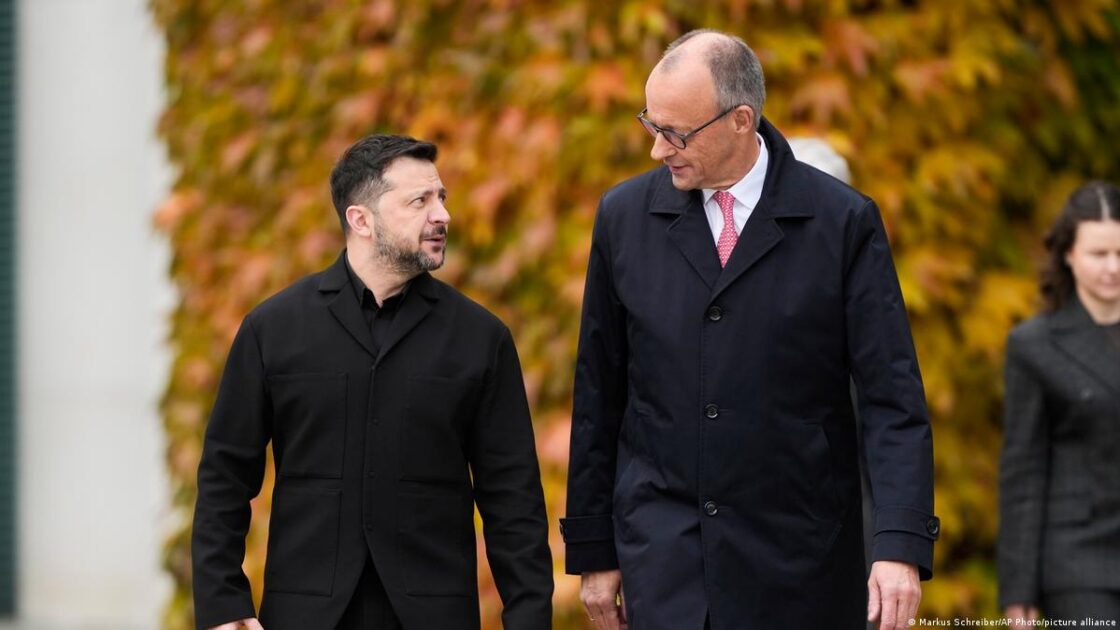
German Chancellor Friedrich Merz stated during a meeting with Ukrainian President Volodymyr Zelenskyy in Berlin on Tuesday that he has observed no indication that Russia is genuinely interested in negotiating a ceasefire in Ukraine. Both leaders emphasized that the European Union must play a role in shaping any sustainable peace agreement.
Upcoming Diplomatic Talks and European Involvement
Germany anticipates that European representatives will attend upcoming US-led discussions with Ukraine and Russia in Abu Dhabi next week, despite European officials being unlikely to participate directly at the negotiating table. When questioned about the Abu Dhabi meetings, Merz told Deutsche Welle: “It is important that Russia finally and seriously engages in negotiations about a ceasefire and a subsequent peace agreement.” He added, “I do not see that happening so far.”
Zelenskyy expressed hope that the trilateral discussions in Abu Dhabi—the first of their kind since February—could establish a pathway toward direct talks between himself and Russian President Vladimir Putin. Putin has previously rejected multiple offers from Zelenskyy for face-to-face negotiations. “We are counting on the fact that work in this format and our other diplomatic steps will open the way to a trilateral format at the level of leaders,” the Ukrainian leader told reporters, as reported by Deutsche Welle.
Merz asserted that Europe must retain a voice regarding international sanctions and postwar security measures. He noted that a local ceasefire in Oleshky could potentially serve as a model for a broader truce, though he cautioned that ongoing Russian military actions in the Black Sea threaten to escalate the conflict further. “Russia is precipitating a global food crisis, to the detriment of the poorest nations and countries in the world,” Merz said.
Zelenskyy outlined key Ukrainian demands, including a cessation of attacks against energy infrastructure, guaranteed safe passage for grain shipments through the Black Sea, and additional prisoner exchanges. He emphasized that a temporary ceasefire alone is insufficient for lasting peace, stating that Ukraine requires robust security guarantees backed jointly by the United States and Europe. “There cannot be a sustainable peace if Europe is not at the negotiating table,” Zelenskyy stated, announcing that Ukrainian officials would meet with the US, European partners, and NATO in Brussels on Wednesday to discuss security guarantees and reconstruction efforts.
Recent Civilian Casualties and German Aid
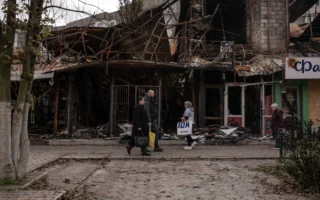
The high-level talks in Berlin unfolded against a backdrop of intensified Russian airstrikes targeting Ukrainian civilians. Zelenskyy reported that at least 33 people were killed, with over 50 others potentially trapped beneath rubble, following multiple Russian attacks on Monday against a school building functioning as an aid distribution center in a frontline southeastern village. Ukrainian authorities stated that Russian forces carried out an initial strike on people waiting for aid, followed by a secondary strike targeting rescue workers upon their arrival, which destroyed emergency vehicles and killed several personnel. Zelenskyy characterized the attack as “one of the largest Russian killings of this war.”
Regional prosecutors reported a separate strike on Tuesday that injured at least 73 people at a hospital in Kharkiv, forcing the emergency transfer of 226 patients to other medical facilities. In response to the escalating hardships, Merz announced that air defense and the energy sector remain Germany’s primary focus ahead of the winter season. He pledged that Berlin would soon supply new assistance in both sectors and provide additional winter support throughout the year. Zelenskyy expressed gratitude for Germany’s contributions toward protecting Ukrainian airspace and supporting energy infrastructure, noting that Ukraine urgently requires further air defense systems, including Patriot interceptors.
Security measures in Berlin were significantly heightened for Zelenskyy’s visit, which coincided with the start of the two-day Berlin Security Conference focusing on European defense and the war in Ukraine. Local law enforcement deployed approximately 3,400 additional police officers from across Germany to secure the government district and western areas of the city, implementing road closures and positioning armed officers and snipers near key locations.