Table of Contents
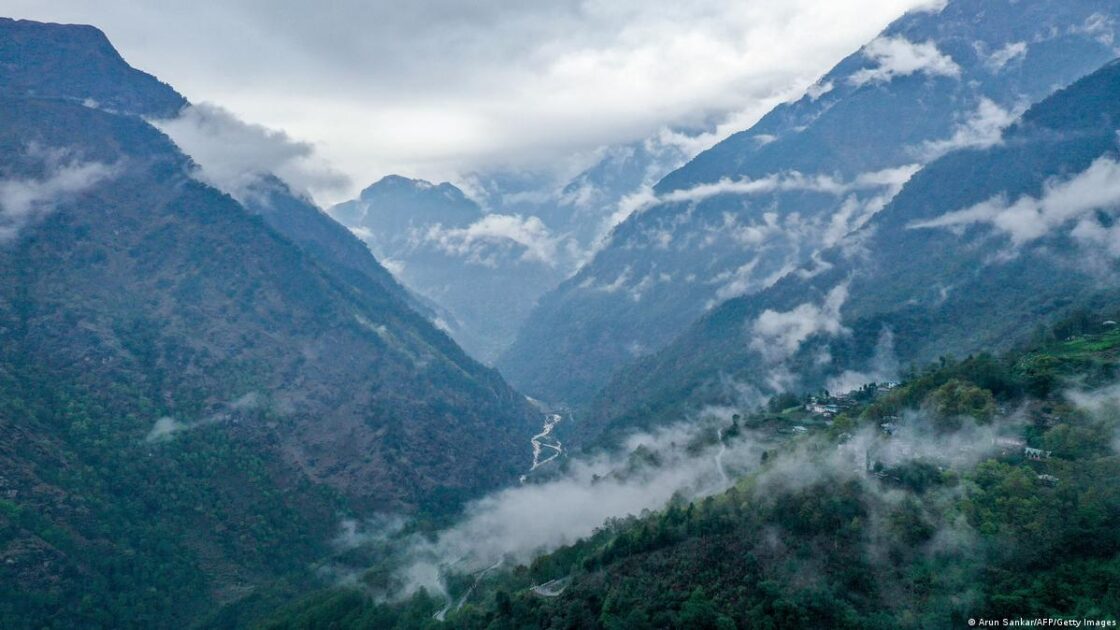
Indian and Chinese troops have confronted each other at several locations along the de facto border in the northeastern state of Arunachal Pradesh, according to Indo-Tibetan Border Police (ITBP) Director General Shatrujeet Kapur. The recent face-offs have brought renewed attention to the remote Himalayan frontier where longstanding territorial disputes continue to strain bilateral relations.
Border Confrontations and Official Responses
Speaking to reporters, Shatrujeet Kapur confirmed that a situation arose recently involving face-offs with Chinese troops at various locations in Arunachal Pradesh and that the situation continues. He noted that countering China could prove difficult by conventional means because their military and border defense forces have advanced significantly through investment and modernization.
Arunachal Pradesh Chief Minister Pema Khandu acknowledged the border transgressions but downplayed them, stating that such incidents are not new and that the border situation remains normal. Khandu noted that the border lacks proper demarcation and that China does not recognize the McMahon Line drawn by the British Empire in 1914, which separates Arunachal Pradesh from Tibet. It remains unclear whether physical violence occurred during these latest confrontations.
The opposition Congress party criticized Chief Minister Khandu’s comments, accusing Prime Minister Narendra Modi’s ruling BJP of rationalizing Chinese actions instead of defending India’s position. Congress general secretary Jairam Ramesh stated on X that there has been a deafening silence from the prime minister and his administration regarding the face-offs confirmed by the border police chief.
Meanwhile, External Affairs Ministry spokesperson Randhir Jaiswal attributed the incidents to Chinese forces altering their patrol routes. Chinese Foreign Ministry spokesperson Guo Jiakun rejected the allegations, stating that Chinese troops were conducting normal patrols and strictly abiding by bilateral agreements.
Underlying Causes of Friction
The Line of Actual Control (LAC) separates Indian- and Chinese-controlled territory, stretching for 3,488 kilometers according to India, though China claims it is shorter. Because neither nation has agreed upon a definitive boundary, troops patrolling territory they regard as their own frequently venture into disputed areas, as explained to Deutsche Welle: DW.com by former Indian ambassador to China Gautam Bambawale.
The two countries have held 25 rounds of talks between their Special Representatives since 2003 without reaching a boundary settlement. The dispute carries high sensitivity in Arunachal Pradesh, which Beijing claims as part of southern Tibet.
Aravind Yelery, a China expert at Jawaharlal Nehru University, told Deutsche Welle: DW.com that the region has gained strategic importance for Beijing, particularly with the 60,000-megawatt Medog hydropower project in Tibet. Yelery described the LAC as a deep zone of overlapping claims where patrols inevitably meet, noting that China’s intensified focus on the eastern sector with new infrastructure and troops has increased friction.
Ashok Kantha, another former Indian ambassador to China, stated that while Chinese transgressions in the eastern sector are not new, the location and extent of deeper intrusions or expanded presence would represent serious developments and violate bilateral border agreements signed in 1993, 1996, 2005, 2012, and 2013. The Indian government has not publicly disclosed the locations or circumstances of the latest face-offs.
Diplomatic Context and Outlook
The renewed encounters coincide with efforts by India and China to stabilize relations following deadly violence in June 2020 in the Galwan River valley in eastern Ladakh, which killed 20 Indian soldiers and four Chinese troops. Both nations have recently undertaken reconciliatory measures, including restoring direct flights and easing travel and economic restrictions, a diplomatic reset that accelerated after meetings between Narendra Modi and Xi Jinping at international summits.
Alka Acharya, director of the Institute of Chinese Studies in New Delhi, cautioned against drawing conclusions without more information, noting to Deutsche Welle: DW.com that the government has not indicated that Chinese troops have taken control of Indian territory. She added that unresolved disputes will continue to sustain distrust, and whether the latest encounters signal a serious escalation depends on details that New Delhi has yet to make public.