Table of Contents
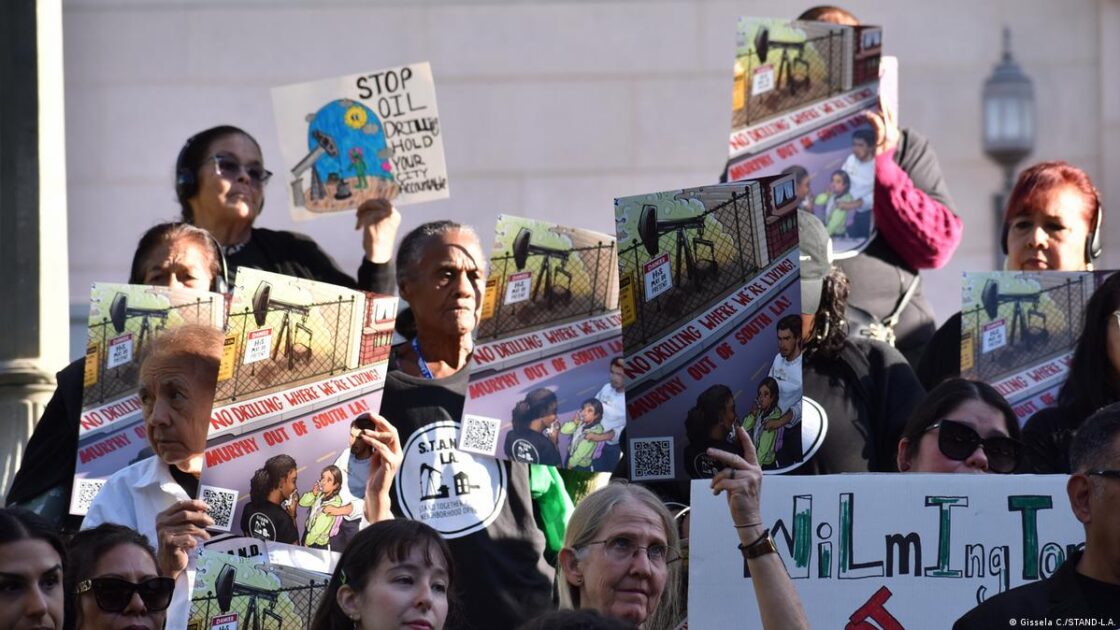
Los Angeles has become the largest city in the United States to ban oil drilling, concluding years of lawsuits and persistent campaigning by residents concerned about pollution and health risks from neighborhood wells. The Los Angeles City Council approved the ordinance on October 28, halting all oil extraction immediately and banning the redrilling or deepening of wells while phasing out existing operations within city limits over a 20-year period.
Health Concerns and Community Impact
California’s oil industry expanded rapidly during the early 20th century, prompting the construction of homes, schools, and businesses around oil infrastructure as the city grew. Today, wells remain situated beneath residential areas, near playgrounds, along the coast, and in densely populated, working-class communities of color, affecting hundreds of active wells and thousands of inactive ones.
Residents living near these sites report strong odors, headaches, nausea, and breathing difficulties. According to Deutsche Welle (DW), oil wells release toxic pollutants such as benzene and hydrogen sulfide, which research links to higher rates of respiratory illness and reduced lung function. Furthermore, active and idle wells can leak methane, while occasional breakages send oil flowing down city streets.
Local resident and policy director Wendy Miranda told Deutsche Welle (DW) that front-line communities have spent decades living near these toxic sites at the expense of their health. Miranda, who suffers from asthma alongside her mother, described the council vote as a source of hope. Council President Marqueece Harris-Dawson added in a statement that working-class families in South Los Angeles have endured corporations drilling directly across the street from their homes, emphasizing that no one should live near an oil site.
Industry Pushback and Previous Attempts
The Los Angeles City Council initially approved a phaseout ordinance in 2022 following lobbying by local residents, but oil companies successfully challenged the measure in court by arguing that the city lacked the necessary legal authority. California subsequently passed legislation granting local governments broader powers to regulate and restrict oil and gas operations, paving the way for the new ban.
Rock Zierman, CEO of the California Independent Petroleum Association (CIPA), told Deutsche Welle (DW) that the ordinance constitutes an unlawful taking of private property and announced that energy companies are prepared to challenge it. Zierman stated that the measure increases reliance on foreign oil from countries with lower environmental standards while consumers struggle with high gas prices, warning that it redirects jobs, investment, and revenue elsewhere.
The California Energy Commission notes that the relationship between local production and pump prices is complex and influenced by crude costs, refining, transportation, distribution, and local taxes. Because oil is traded globally, United States residents face the same price fluctuations regardless of domestic production volumes. Meanwhile, California’s oil production has declined steadily since the 1980s, with output in the LA Basin dropping 43% over the past eight years.
Cleanup Costs and Future Steps
When wells cease production, operators are responsible for removing equipment and plugging them under the supervision of CalGEM, the state oil and gas regulatory agency, and the Los Angeles Fire Department. However, approximately 80% of idle wells in Los Angeles have been inactive for more than eight years, and about a third for over a century.
Plugging costs range from hundreds of thousands to millions of dollars per well. While California law requires operators to submit plugging plans or face escalating annual fines, enforcement challenges persist; CalGEM data shows the agency collected just $1 million out of $36 million in fines in 2025. A report by Carbon Tracker indicates that if all future profits from California oil companies funded decommissioning, the state would still face a $7 billion shortfall, leaving taxpayers responsible by default.
Miranda told Deutsche Welle (DW) that community activists next aim to shorten the 20-year timeline and ensure the oil sector covers the cleanup costs, expressing hope that future generations will experience better health and cleaner air.