Table of Contents
Germany’s historical experience with division and peaceful reunification has prompted renewed calls from Berlin for a united Korea. During a visit to the Demilitarized Zone, German Chancellor Friedrich Merz echoed the sentiments of former leaders, though analysts suggest the prospect remains a distant dream.
Echoes of the Past at the DMZ
Sharing a history, language, and cultural heritage, the story of North and South Korea bears strong parallels to Germany’s past division by opposing regimes until East and West Germany reunited in 1991. Just two years after that event, German Chancellor Helmut Kohl visited the Demilitarized Zone (DMZ) and expressed hope that the two Koreas would reunite by the end of the decade.
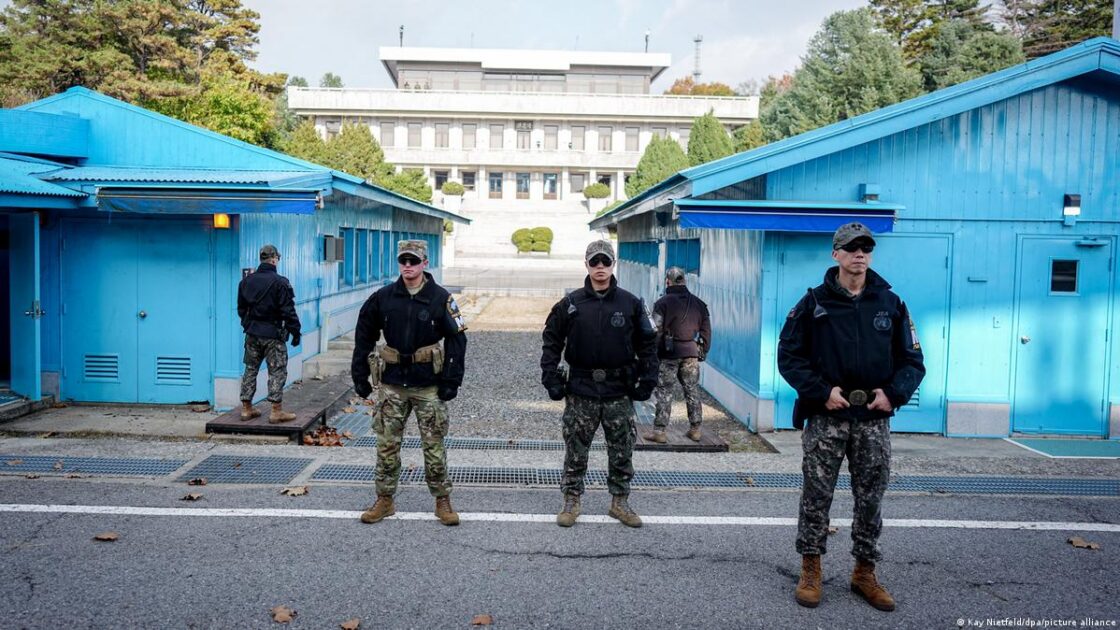
That outcome never materialized, and nearly 35 years after Germany’s reunification, Seoul and Pyongyang remain bitterly divided by political systems, economies, and geopolitical alliances. Overlooking the DMZ on Friday, Chancellor Friedrich Merz repeated the hopes stated by Kohl more than three decades ago, as reported by Deutsche Welle: DW.com.
“We Germans know how painful the division of a country is,” Merz stated in a social media message, emphasizing that those who hold firm to their values and pursue dialogue can tear down walls. “We wish the people in Korea unity in freedom,” he said.
Shifting Attitudes in South Korea
Inter-Korean politics experts view these aspirations as unlikely given current realities. While the Koreas eye each other warily across the border, marked differences in wealth and political freedom are evident, compounded by a lack of popular desire for reunification on either side.
Choo Jae-woo, a foreign policy professor at Kyung Hee University, told Deutsche Welle: DW.com that public sentiment has shifted over recent decades. Younger South Koreans view the North simply as a poor and threatening neighbor with no sentimental attachment, leading many to question the point of reunification.
A September study by Seoul National University’s Institute for Peace and Unification Studies found that 39.1% of South Koreans considered reunification impossible, marking the highest proportion since the survey began about twenty years ago. Citizens worry about the massive financial cost required to rebuild North Korea’s infrastructure, including roads, schools, and hospitals.
Officially, the South Korean government maintains reunification as a national goal in its constitution, advocating for a peaceful union based on freedom and democracy. However, Choo noted that recent administrations promote the concept far less frequently.
North Korea Rejects Reconciliation
North Korea has taken an even more definitive stance against unity. Choo explained that in December 2023, leader Kim Jong Un announced constitutional changes declaring peaceful reunification impossible, designating South Korea as a hostile rival, and abandoning any intention of reconciliation.
The revised North Korean constitution was approved in March 2026, and the regime has systematically removed references to national unity. Mason Richey, a professor of politics and international relations at Hankuk University of Foreign Studies in Seoul, told Deutsche Welle: DW.com that the North has made its stance unmistakable and that individuals in the South roll their eyes when the topic arises.
Beyond public apathy, significant hurdles remain. The North Korean regime seeks to protect its power and prestige, which would be threatened by a democratic system. Furthermore, bridging the vast economic development gap would place immense pressure on the South, even with external help. Richey noted that while unified Germany successfully brought its regions to comparable levels, East Germany in 1990 was substantially more developed than North Korea is today.
Geopolitical Complications Involving Superpowers
Professor Choo emphasized that reunification is not merely a domestic issue because the two nations have opposing strategic and security loyalties, with the South allied to the United States and the North tied to China and increasingly Russia.
Superpowers would be reluctant to surrender their allies for reunification, creating a major strategic roadblock, according to Choo. The United States would oppose a united Korea leaning toward China, while Beijing would resist a scenario where the U.S. military could station troops directly on the Chinese border.
Ultimately, Choo concluded that the current status quo on the peninsula is an imperfect solution that preserves regional stability, though future economic, social, and security shifts mean that observers should never say never.