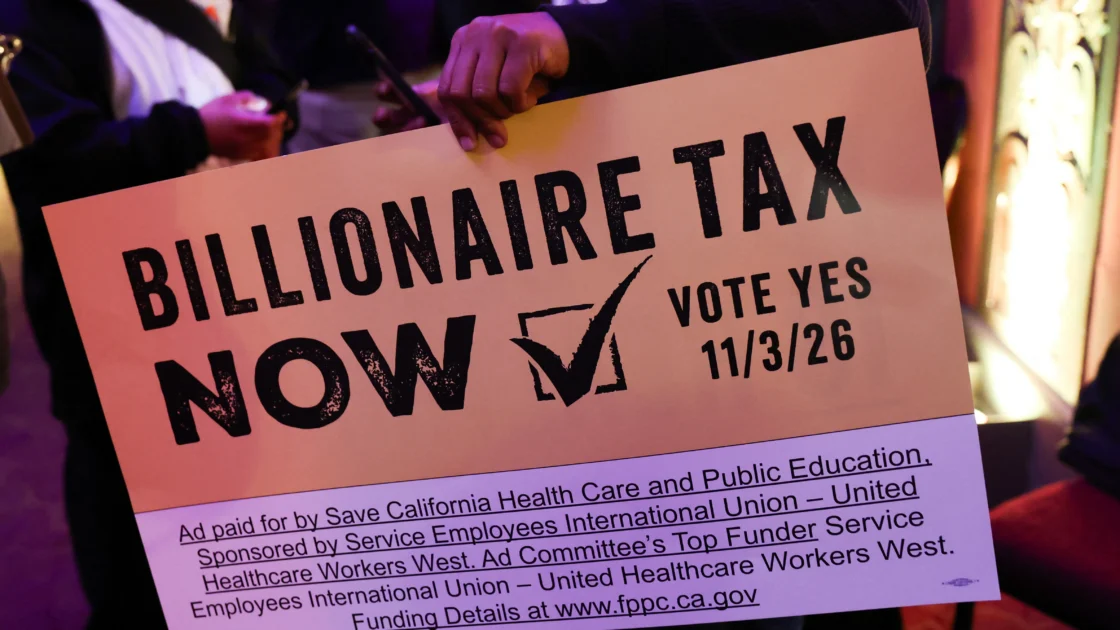
California voters are currently deciding on Proposition 40, a proposed ballot initiative that would establish the first-ever American wealth tax targeted at billionaires. As Election Day approaches, economists are divided on whether the measure will curb rising inequality and generate vital revenue or drive wealthy residents out of the state.
Competing Projections on Revenue and Flight
Economist Gabriel Zucman of UC Berkeley and the Paris School of Economics co-authored an analysis estimating the one-time, 5 percent tax on billionaire net worth could raise approximately $100 billion. Zucman tells NPR that success in California could pave the way for broader national and international wealth tax movements. The revenue from the tax is earmarked primarily to support healthcare for low-income Californians in order to offset federal Medicaid cuts.
Conversely, Stanford economist Joshua Rauh and co-author Benjamin Jaros project a drastically different outcome. Rauh argues that the policy will not raise $100 billion, but instead cost the state $39 billion due to billionaire departures and subsequent income tax losses. He notes that prominent figures like Larry Page, Sergey Brin, Peter Thiel, Don Hankey, Steven Spielberg, Travis Kalanick, and David Sacks had already left California prior to the January 1, 2026, residency cutoff, placing their fortunes beyond the tax’s reach.
Zucman disputes those departures, arguing that legal experts believe those individuals did not successfully end their California tax residency before the deadline, noting that tech executives like Sergey Brin still frequently commute to Silicon Valley. Rauh maintains that billionaires, supported by legal counsel, have successfully established residency elsewhere.
Legal Challenges and the Tech Ecosystem
Rauh also warns that the tax faces severe legal hurdles, including potential constitutional challenges regarding its retroactive provisions, valuation of private companies, and taxation of worldwide assets. While Prop 40’s designers included fallback provisions, Rauh’s central estimate cuts projected revenue in half to account for legal uncertainty.
Zucman counters that the economic pull of California’s thriving tech sector, particularly the AI boom, is strong enough to keep billionaires anchored in the state. He points to Nvidia CEO Jensen Huang telling Bloomberg that he was perfectly fine with paying the tax, and reports that Meta’s Mark Zuckerberg struck a deal with his board to stay in California for eight years while covering his tax liability.
Rauh argues that agglomeration effects are fragile and that taxes on startup valuations will threaten the state’s startup ecosystem. Californians will ultimately decide at the ballot box whether the historic experiment is a breakthrough opportunity or a costly fiscal mistake.