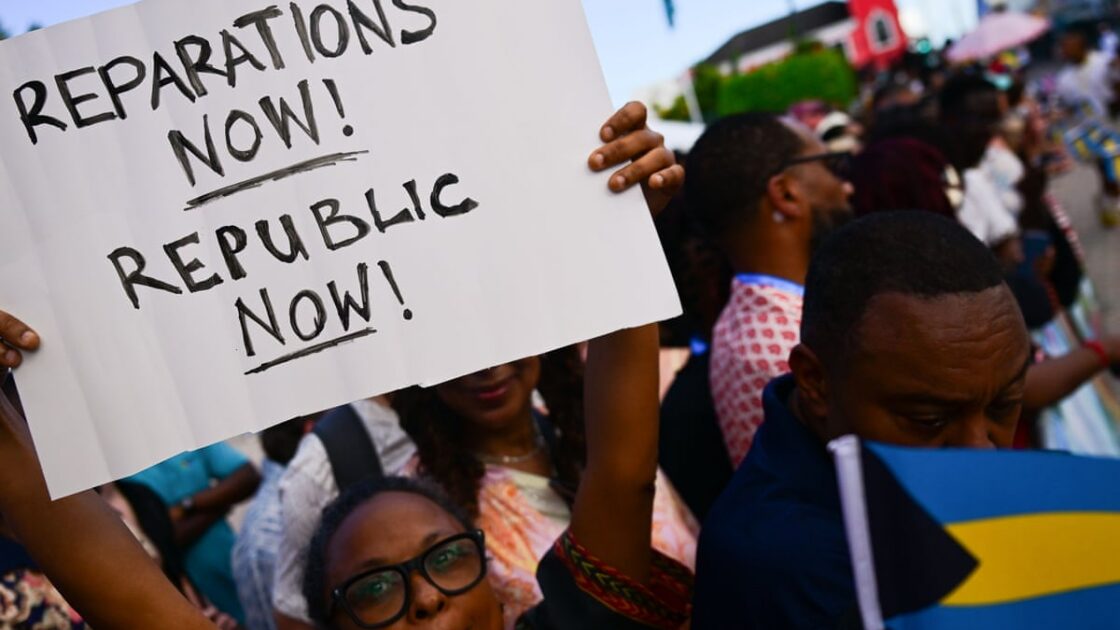
King Charles and UK leaders are facing widespread protests during the Commonwealth leaders’ summit in Antigua, with activists demanding a formal apology and reparations for the transatlantic slave trade. Demonstrators have utilized billboards, placards, letters, and a candlelight vigil to make it clear that the issue of historical enslavement is impossible to dodge.
Protests and Activist Demands at the Commonwealth Summit
James Knight of Citizens for Reparatory Justice told The Guardian that protests became necessary after announcements from the British government and King Charles indicating there would be no apology or reparations. He described the stance as extremely insulting and insensitive given that people have requested to discuss the matter. The Commonwealth heads of government meeting (Chogm), bringing together leaders from 56 member countries, is surrounded by reparations events, including beach vigils and the launch of a global reparations caravan.
Hilary Beckles, chair of the Caribbean Community (Caricom) reparations commission, described the gathering as the “Chogm of reparations” and the “first round of reparations negotiations.” As reported by The Guardian, supporting organizations such as the Repair Campaign, law firm Leigh Day, TrustAfrica, and the UK’s all-party parliamentary group for Afrikan reparations are convening outside the main meeting. Meanwhile, Caribbean leaders are anticipated to push the issue during closed-door sessions.
Official Positions and International Legal Backing
Successive British prime ministers have maintained that the UK will not pay slavery reparations. In an article for The Guardian, the UK prime minister, Andy Burnham, wrote that structured dialogue would be offered to those affected, stating that listening to calls for a formal apology forms an important part of the process and expressing openness to them. However, Burnham also maintained his stance that British people today cannot be held liable for historical wrongs.
Buckingham Palace has distanced the monarch from government policy, stating in a letter to Antigua and Barbuda reparations support commission chair Dorbrene O’Marde that questions regarding the UK’s position are matters for the British government. O’Marde criticized blanket refusal statements as shameful and reliant on verbal gymnastics. Nevertheless, activists point to growing international backing, including a March UN resolution backed by 123 countries describing the enslavement of Africans as a grave crime against humanity, alongside a UN committee recommendation that countries are legally obliged to consider reparations.
Verene Shepherd, vice-chair of the Caricom reparations commission, emphasized that crimes do not rot until justice is achieved. The Caricom reparations commission’s 10-point plan places a full and formal apology first to accept responsibility and commit to non-repetition. While O’Marde stated an apology would pave the way for negotiations, some citizens remain skeptical. In Guyana, visual designer Ron ChangYuen questioned the value of the king’s visit without actual results, while dramatist Deandra Daniels noted that an apology alone would not satisfy generational trauma.
Knight expressed confidence that the meeting in Antigua will advance the campaign further because the issue cannot be repeatedly avoided by authorities.