Table of Contents
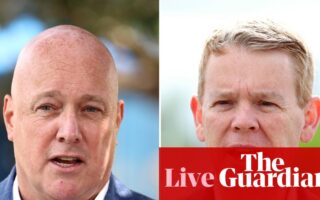
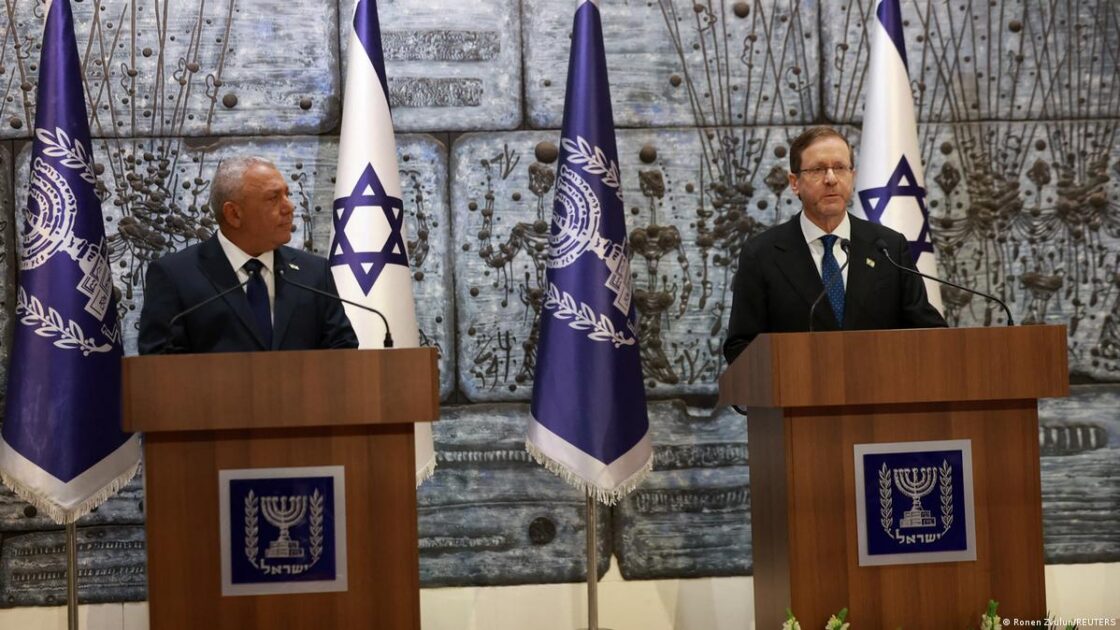
Israeli President Isaac Herzog has officially tasked Gadi Eisenkot, the leader of the centrist Yashar party, with forming a new government. Eisenkot is given 28 days to secure a coalition to replace the religious-nationalist government of current Prime Minister Benjamin Netanyahu, with President Herzog holding the authority to extend the mandate by an additional 14 days.
The Coalition Formation Process
President Herzog stated that discussions with various parties were open, transparent, and reflected the diverse voices within Israeli society, emphasizing that all citizens hold an equal voice. Herzog noted that Eisenkot secured the clearest support from a majority of Knesset members for the leadership task. Pointing to regional pressures, Herzog stated that Iran poses continuous threats, and Israel must advance Trump’s 20-point plan in Gaza, negotiate the future with Lebanon and other neighbors, and establish a stable government to manage these challenges. Herzog expressed his expectation for Eisenkot to build a government serving all segments of the Israeli public.
In response, Eisenkot expressed his commitment to establishing a national emergency government, stating that the country lacks the privilege of endless election cycles and that he will reach out to all Knesset members and parties for talks. Addressing parliament members, Eisenkot remarked that the public looks up to them during the most complicated political situation since the nation’s establishment.
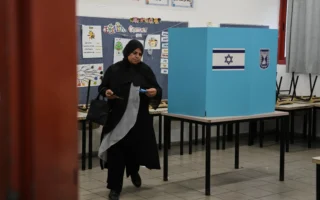
Yashar emerged as the second-largest party in the October elections with 21 seats, trailing Netanyahu’s Likud party, which won 27 seats. However, Eisenkot received 67 parliamentary recommendations compared to 46 for Netanyahu, while the ultra-orthodox Ashkenazi party United Torah Judaism (UTJ) abstained from making recommendations after being part of Netanyahu’s governments for the previous 17 years. If Eisenkot fails to build a coalition, President Herzog can pass the task to a second candidate, likely Netanyahu, and if no leader succeeds, Israel will face another round of elections.
Challenges in Building a Majority
Dividing the Zionist parties into blocs leaves Netanyahu’s religious-nationalist allies with 53 seats, while Eisenkot’s anti-Netanyahu bloc holds 48 seats. Israel’s two Arab parties secured a historic 19 seats due to high turnout, with the majority Muslim party Ra’am, led by Mansour Abbas, expressing willingness to join a coalition to improve conditions for Arab and Palestinian communities, mirroring its historic 2021 agreement with Naftali Bennett and Yair Lapid. The other Arab party, the Joint List, has never joined an Israeli coalition but previously provided opposition support during Yitzhak Rabin’s second term.
Both Zionist political sides previously campaigned on not relying on Arab party votes to form a coalition, meaning Eisenkot’s bloc would need to break an election promise to partner with them. However, a Hebrew University Accord Center poll conducted two days after the election showed that 59 percent of Zionist opposition voters preferred a government involving Ra’am and the abstention of the Joint List over other alternatives. Another alternative discussed by media involves the two ultra-orthodox parties, UTJ and Shas, which hold seven seats each, though this would require Eisenkot to break a promise to pass military conscription legislation for young ultra-orthodox men, to which both parties strongly object. Furthermore, Shas supporters lean right-wing and favor Netanyahu, with party head Arye Deri closely aligned with the long-serving prime minister.
Implications for Palestinians and Policy Differences
The resulting government will significantly impact Palestinians in the Occupied West Bank and the Gaza Strip. Netanyahu’s outgoing coalition includes the far-right parties Otzma Yehudit and Religious Zionism, which hold 13 seats and support annexing the West Bank, re-establishing settlements in Gaza, and moving Gaza’s 2.1 million Palestinians to other countries—a plan supported by large parts of Likud. These far-right parties frequently back violent settlers attacking Palestinians in the West Bank.
Conversely, Eisenkot has pledged to secure a Gaza Strip free of Hamas rule within 18 months of taking office, differing from Netanyahu’s policy of allowing Hamas to control parts of the enclave despite US-brokered ceasefire terms calling for a board of technocrats. While Eisenkot’s bloc includes right-wing parties, their views differ from Netanyahu’s coalition. Naftali Bennett, leader of the opposition’s second-biggest party Beyachad, identifies as a right-winger and settlement supporter, yet has strongly condemned settler attacks on Palestinians. Eisenkot likewise condemned settler violence, attributing it to the policies of the Netanyahu administration.