Table of Contents
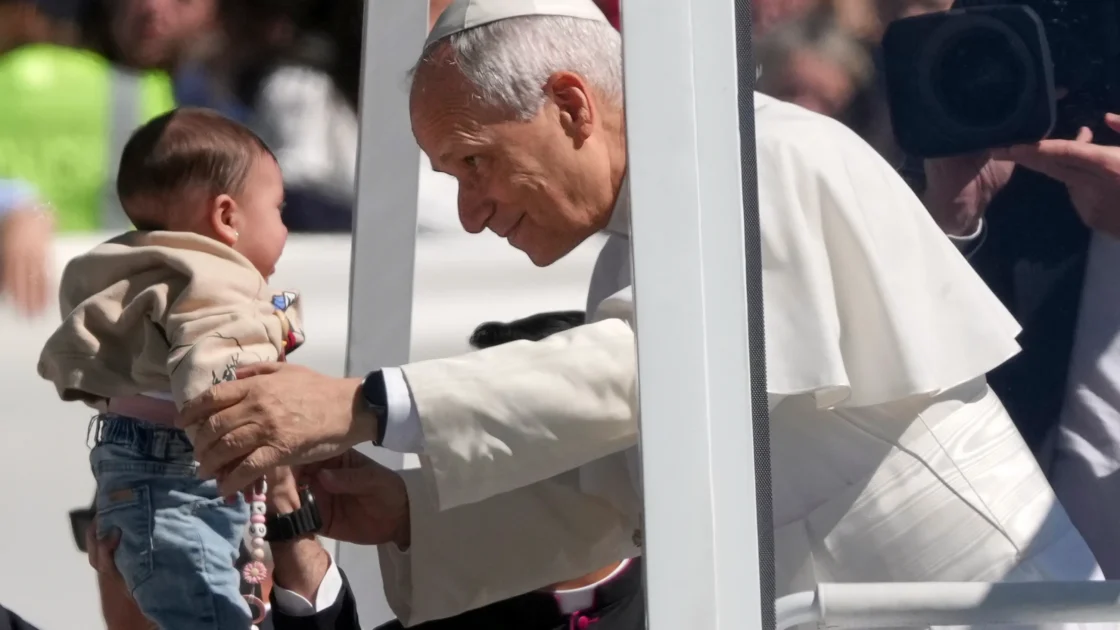
Pope Leo XIV concluded his visit to Uruguay on Sunday, praising the women who have preserved the Catholic faith across generations in Latin America’s most secular nation. The pontiff then departed for Argentina to begin the second leg of his twelve-day South American apostolic journey, marking what is anticipated to be the most politically sensitive stop of his tour due to the Catholic Church’s opposition to President Javier Milei’s strict austerity policies.
Honoring Mothers and Traditions in Uruguay
Leo traveled north from Montevideo to the city of Florida to celebrate the feast of the Virgin of the Thirty-three, commemorating the Guaraní statue linked to the country’s independence declaration on Aug. 25, 1825. As the first pope to visit Uruguay in nearly four decades, Leo sought to remind citizens of the church’s foundational role in their national identity.
Addressing tens of thousands of attendees gathered outside Florida’s cathedral under clear skies, Leo emphasized that the history of any people remains incomplete without acknowledging God and mothers. He expressed gratitude to mothers and grandmothers for transmitting religious traditions to younger generations, while offering words of comfort to those whose children have drifted away from the church.
“You taught your children to pray, and today they no longer do so. You used to attend Mass together, and it has been years since they entered a church,” Leo stated, while encouraging them to remain steadfast. “Mothers and grandmothers: never tire of passing on the faith!”
Among the crowd of roughly 50,000 people estimated by the Vatican, English professor Fiama Pirez traveled from Montevideo alongside her family so her mother could fulfill a lifelong dream of seeing a pope.
Navigating Political Tensions in Argentina
President Javier Milei is scheduled to welcome Leo at the airport in Buenos Aires for an official greeting ceremony and a formal exchange of speeches. The visit comes as the Catholic Church openly criticizes Milei’s aggressive cuts to social spending and healthcare, alongside his embrace of artificial intelligence technology.
Milei has built his presidency around slashing government expenditures to correct Argentina’s economic struggles, dismissing social justice as an aberration and theft. Conversely, Pope Leo has maintained a strong focus on the poor and vulnerable, following the pathway established by his Argentine predecessor, Pope Francis.
Academic experts note that Argentina remains deeply polarized amid ongoing economic hardships. Luis Bahamondes, a professor at the University of Chile, pointed out that the country is experiencing significant upheaval under a leader who frequently defies conventional political protocol.
Official figures show that poverty affected 32.3% of the population, roughly 15 million people, during the first half of 2026. Meanwhile, Milei’s administration has reduced the healthcare budget by 48% in real terms and faced widespread student protests over planned cuts to public universities.
Addressing Francis’ Unfinished Legacy and Security Concerns
In Argentina, Pope Leo is fulfilling pastoral duties that Pope Francis never undertook during his twelve-year pontificate, as the former Buenos Aires archbishop never returned to his homeland. David Lantigua, a theology professor at the University of Notre Dame, noted that divisions remain regarding Francis’ legacy and his lifelong advocacy for marginalized communities.
Leo brings a similar pastoral background, having spent two decades working as a missionary priest with impoverished communities in Peru, which will serve as the final stop of his journey. Ahead of his arrival in Buenos Aires, Argentina’s state intelligence agency announced Saturday that a federal court in Campana ordered the arrest of an individual in connection with death threats directed at the pope.