Table of Contents
The International Court of Justice (ICJ) is set to deliver its long-awaited judgment in The Gambia’s landmark genocide case against Myanmar, seven years after the legal action was initiated in The Hague. The Gambia filed the lawsuit with the top UN court in November 2019, accusing Myanmar of violating the 1948 UN Genocide Convention.
Allegations of Atrocities and Refugee Crisis
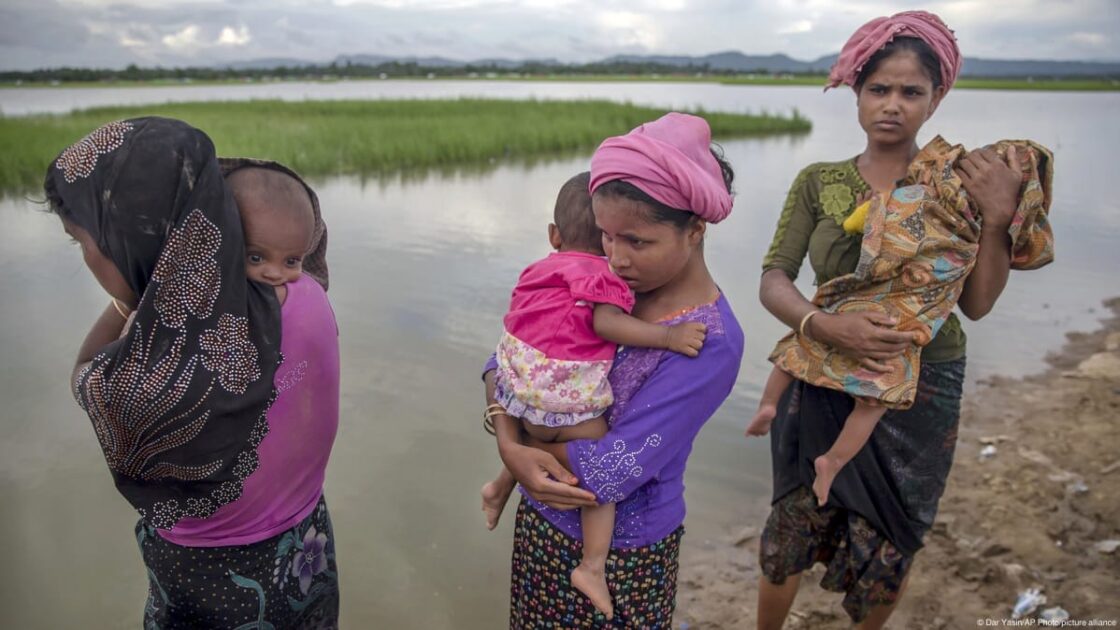
According to documents and court hearings, The Gambia stated that Myanmar carried out a deliberate campaign of murder, rape, and arson in Rakhine State between 2016 and 2017 with the intent to destroy the Rohingya minority. A UN fact-finding mission estimated that approximately 10,000 individuals died during the violence, while around 700,000 Rohingya fled to Bangladesh, where they largely remain in the world’s largest refugee settlement. The Buddhist-majority nation has subjected the predominantly Muslim Rohingya to decades of persecution, restricting citizenship and forcing many into resettlement camps. While various courts globally have addressed Myanmar’s treatment of the community, the ICJ is delivering the first ruling.
Aung Kyaw Moe, a prominent Rohingya activist whose family escaped the violence, told Deutsche Welle: “The Rohingya people have been waiting for justice for decades for the atrocities and crimes committed against [us]. There were no venues available in [Myanmar]… International venues were the only hope.” He added that expectations from the Rohingya community are very high.
Legal Battles and Myanmar Civil War
In December 2019, then-civilian leader Aung San Suu Kyi traveled to The Hague to defend the government, dismissing the accusations as incorrect and incomplete. The ICJ subsequently issued emergency provisional measures in 2020 ordering Myanmar to prevent genocide, which rights groups report were ignored. A military coup in 2021 placed Aung San Suu Kyi under arrest and triggered a civil war. After dismissing Myanmar’s challenges to its jurisdiction, the ICJ held 14 days of hearings in January.
Melanie O’Brien, a professor of international law at the University of Western Australia, noted that the Thursday judgment could be complex because The Gambia accused Myanmar of breaching multiple articles of the Genocide Convention. Myanmar maintains that its actions were lawful counterinsurgency and counterterrorism operations following an attack by the Arakan Rohingya Salvation Army on multiple police posts in August 2017. Conversely, The Gambia asserts that the operations constituted genocide, citing child killings and sexual violence.
Broader Implications and Enforcement Challenges
Michael Becker, an associate professor of international human rights law at Trinity College Dublin, stated that such atrocities undermine Myanmar’s counterterrorism defense. Both legal experts explained that the case provides an opportunity for the ICJ to establish how circumstantial and indirect evidence is weighed when investigators lacked direct access to Rakhine State. The ruling may influence other active ICJ cases involving different nations as well as the International Criminal Court’s consideration of an arrest warrant for Myanmar military leader Min Aung Hlaing.
Enforcement of any court-ordered reparations remains dependent on the UN Security Council, where Russian and Chinese veto power creates uncertainty. Despite these hurdles, Aung Kyaw Moe expressed optimism that the proceedings could eventually lead to compensation, reparations, and domestic transitional justice.