The 2,500-year-old Parthenon stands as an architectural masterpiece of the High Classical period of Greek art and a prominent symbol of ancient Athens. Dedicated to the goddess Athena, the temple influenced Western ideas of humanity and art through its sculptures created under the sculptor Phidias.
Solving a centuries-old mystery
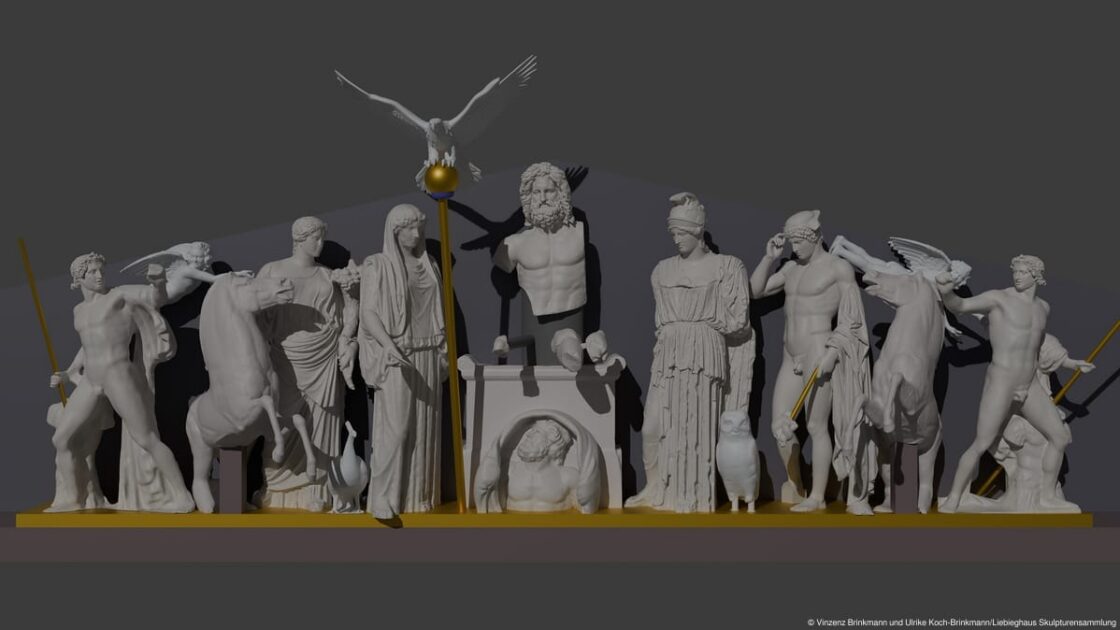
The east pediment above the entrance of the temple depicted the birth of Athena surrounded by Olympian gods, featuring 39 figures across a 29-meter-long artwork with a colossal 3.8-meter-tall central Zeus. The pediment was destroyed during the Christianization of Greece, leaving scholars to puzzle over its original arrangement for centuries. As reported by Deutsche Welle: DW.com, archaeologist Vinzenz Brinkmann and his team have now managed to piece together all surviving fragments.
Brinkmann, who leads the Antiquities and Asia department at Frankfurt’s Liebieghaus sculpture collection, told Deutsche Welle: DW.com that they are very confident they have solved the mystery. The findings are displayed in a Liebieghaus exhibition titled “Athena, the Stage is Yours: The Parthenon Puzzle.”
Only about 20% of the original marble sculpture volume survives, scattered across museums in Athens, London, and other European cities. Brinkmann and his wife, Ulrike Koch-Brinkmann, spent more than four decades working on the puzzle. While 19th-century scholars laid foundational theories and a 1910 study cataloged British Museum holdings, a 2014 visit by Brinkmann to the Hermitage Museum in St. Petersburg provided a breakthrough when he saw a Roman sarcophagus depicting Athena’s birth.
Using modern technology
The team utilized 3D scanners and printers, traveling lightly to examine about 60 original fragments by scanning them simply with an iPhone. Digital reconstruction revealed that Roman copies of the pediment sculptures matched the fragments perfectly, allowing the researchers to determine the original arrangement.
Using a 3D printer, the team built a 4-meter-long model at a scale of 1:7.7 alongside life-size prints and an animated digital assembly. The Frankfurt exhibition features loans from institutions like the Vatican Museums and the Louvre. Greece withdrew its participation after learning the British Museum might also lend fragments, prompting Liebieghaus to forgo the British-owned pieces as well.
The Parthenon dispute
Britain holds a substantial portion of the Parthenon frieze, known as the “Elgin Marbles,” which Lord Elgin removed in the early 19th century during Ottoman rule. Britain maintains the sculptures were legally acquired, while Greece views them as stolen and has campaigned for decades for their return. The exhibition runs through July 25, 2027, at the Liebieghaus in Frankfurt.