Table of Contents
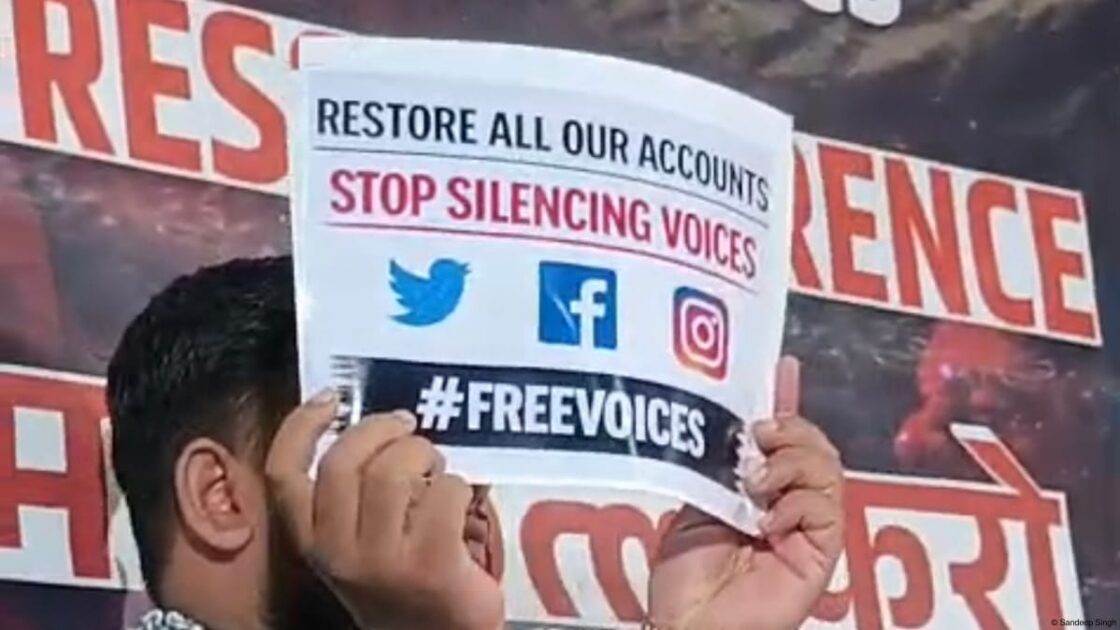
Recent restrictions on social media in India have targeted a variety of content, including a video about youth-led protests, political satire, and material examining the ruling party’s history. Creators and journalists report a growing pattern of online censorship following demonstrations.
A pattern of restrictions
Content creator CitySavitri told Deutsche Welle (DW) that a video she posted about the Rashtriya Swayamsevak Sangh’s (RSS) role in the 2014 election victory of the Bharatiya Janata Party (BJP) was restricted in India within an hour. The experience made her feel that anti-government commentary was being monitored and curtailed.
Independent journalist Sadhika Tiwari covered the youth-led Cockroach Janata Party (CJP) protest in New Delhi on July 20, where police used batons and tear gas. Tiwari told DW that her video of a frightened young girl speaking about police brutality garnered around 10 million views before being restricted in India. Political cartoonist Satish Acharya has also faced repeated restrictions, with Instagram blocking his profile twice recently.
Suppressing independent journalism
In May 2025, independent digital news outlet Maktoob Media experienced its X account being withheld in India while reporting on a conflict between India and Pakistan, according to founder and editor Aslah Kayyalakkath. He told DW that the outlet received no official notice and that access was restored a few days later without explanation. Kayyalakkath stated that Maktoob’s content from the July protest also faced restrictions, adding that suppressing independent journalism undermines transparency and democratic values.
Several content creators and journalists interviewed by DW reported receiving no prior notification or explanation for the restrictions. When asked for comment, Meta pointed DW to a statement on its website noting that users can appeal content and account restrictions.
How does the system work?
India’s IT Rules, 2021, amended in February 2026, require intermediaries to remove or disable access to specified unlawful content within three hours of receiving a valid court order or a reasoned government notice, down from the previous 36-hour deadline. Pranesh Prakash, a technology law and policy adviser, told DW that the amended rules allow authorized police officials to notify intermediaries about content they consider unlawful without a formal complaint.
Prakash stated that this has led to the worst period of social media censorship in India, noting that digital news media accounts, cartoonists, and discussions of an opposition leader’s memoirs have been blocked. The Software Freedom Law Center, India (SFLC.in) raised concerns about transparency, due process, and the reliance on automated takedowns, noting potential flaws in verification processes for takedown requests. X did not respond to DW’s request for comment.
Government denies censorship
The Indian government denies censoring online content. Vinod Kumar, chief of media and communications at the Information Technology Ministry, said in an email response to DW in August that Instagram posts by students and protesters following the July CJP protests were not being taken down as alleged, adding that the media enjoys freedom in India and the government only acts against objectionable content.
Despite this, university professor Madri Kakoti and satirist Shamita Yadav reported that their Instagram accounts were restricted in India on November 16 without notice. Rights groups like Human Rights Watch have warned that expanding content restrictions could chill free expression and encourage self-censorship.
Acharya stated he would continue his work, emphasizing his constitutional right to question and criticize the government. Tiwari noted that keeping such records available is crucial to prevent events from fading from memory and being denied later.