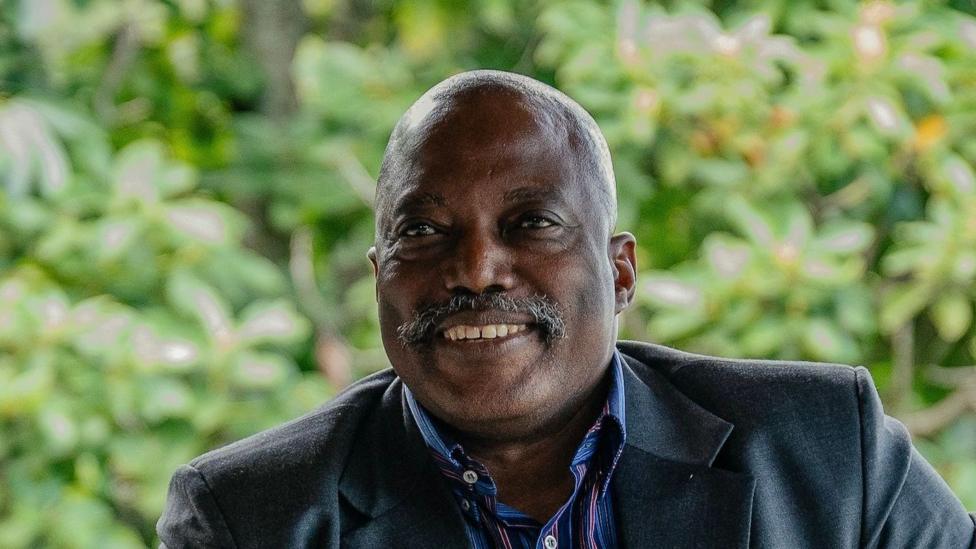
Joseph Kabila, who started his career as a rebel commander before serving as president of the Democratic Republic of Congo for 18 years, has taken on the role of a rebel leader once again at the age of 55. His new position places him in direct opposition to President Félix Tshisekedi, the very leader to whom he previously handed power and with whom he once formed a coalition government.
A Surprising Alliance and Political Strategy
Kabila’s appointment earlier this month as leader of the Front for the Refoundation of the Nation (FRN) confirmed long-standing suspicions that the former president was collaborating with the M23 rebels, who seized large portions of eastern DR Congo last year, including the cities of Goma and Bukavu. This confirmation sent shockwaves through the mineral-rich nation, which holds vast deposits of gold, diamonds, and materials essential for mobile phones and electric vehicle batteries.
Policy analyst Henry-Pacifique Mayala told BBC News that Kabila had few alternatives left to regain political influence after being convicted in absentia of treason, handed a death sentence, and hit with US sanctions over alleged M23 support. Mayala suggested that Kabila likely secured considerable guarantees before making this move, noting that the military strength of M23 could provide him with greater leverage in future negotiations with the government.
The M23 rebels stand to gain the experience and networks of a former head of state, helping to give their movement broader national legitimacy. However, experts remain doubtful about whether the alliance can successfully oust President Tshisekedi, whose territorial and political control remains robust.
Accusations and Differing Regional Interests
Kabila recently criticized President Tshisekedi in an interview with Conspiracy Trackers Great Lakes (CTGL), labeling him a tyrant seeking to bypass the constitution and intimidate civilians, politicians, and military personnel through the reinstatement of the death penalty. He invoked Section 64 of the constitution, which calls on citizens to resist unconstitutional governance. Meanwhile, the C64 opposition coalition declined to support Kabila’s rebellion, advocating instead for direct talks with both leaders to foster an inclusive national dialogue.
International Crisis Group analyst Richard Moncrieff noted that President Tshisekedi maintains significant advantages, including strong American backing, financial resources, and control over both the political and military systems. In his first public reaction, Tshisekedi stated that Kabila’s new role proves he has never truly loved the country or its inhabitants.
Corneille Nangaa, a former electoral commission head and now an FRN deputy, claimed that Kabila and Tshisekedi had reached a secret political agreement before the disputed 2018 elections. Tshisekedi’s subsequent efforts to break Kabila’s parliamentary majority in December 2020 led to a permanent falling out and Kabila’s self-imposed exile in South Africa.
Alex Adams of the European Council on Foreign Relations explained that Kabila’s new position could align his interests with those of Rwandan President Paul Kagame, despite their differing objectives. While Kabila seeks to recover national political influence, Kagame remains primarily focused on Rwanda’s security and strategic positioning in eastern Congo, making it an alignment of convenience rather than deep trust. Analyst Mayala added that having a former Congolese president lead the rebellion could also help Rwanda deflect ongoing accusations of direct interference in Congolese internal affairs.
Fighting continues despite a peace accord overseen by Donald Trump last year, which included a US agreement to extract mineral wealth and subsequent US sanctions against Rwandan officials accused of prolonging the violence. Security analyst Ovigwe Eguegu observed that Kabila is relying on military force to restore his influence while Tshisekedi attempts to extend his time in office, leaving the Congolese population facing a crisis without a credible economic transformation plan from either side ahead of scheduled 2028 elections.