Table of Contents
Adalberto Luis Val has spent decades studying the tambaqui fish in the Amazon rainforest, revealing how tropical aquatic species act as early warnings for climate disruption. His pioneering research in Brazil connects rising temperatures and water-oxygen depletion to broader threats facing global biodiversity, food security, and the rainforest itself.
From Childhood Curiosity to Tropical Climate Science
As a boy in rural São Paulo, Val wondered how fish survived underwater, an early fascination that eventually led him to Manaus in the early 1980s. Over the past five decades, the award-winning ecophysiologist helped transform the Amazonian city into a frontier for tropical climate science. Now 70, Val has dedicated his career to understanding how fish pull oxygen from water and how they perish when the climate goes rogue.
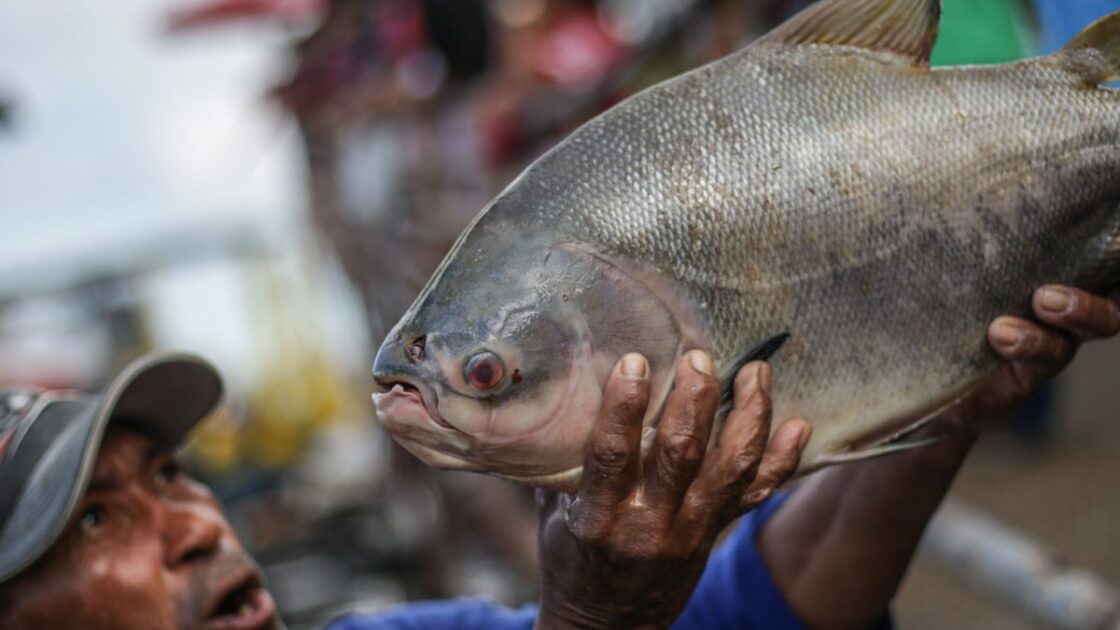
That expertise made the tambaqui a focal point of his work. Coveted by epicureans, the massive freshwater surface breather rises when increased temperatures drive water-oxygen levels to critical lows and carbon dioxide spikes. Thanks to a protruding lower lip designed to hoover up oxygenated surface water, the species has mastered this evolutionary trick over millions of years. Val’s research indicates that tracking the tambaqui serves as one of the best ways to gauge the resilience of the Amazon forest.
Pointing to 65 million years of a reliably stable and predictable climate in the Amazon basin, Val notes that conditions began shifting dramatically following the Industrial Revolution. As a leading investigator at the National Institute for Amazonian Studies (INPA), he discovered that tropical fish are far more sensitive to fluctuations in heat, humidity, and water and air chemicals than their temperate-zone counterparts. Combined with human pressures such as slash-and-burn farming, wildcat mining, and chemical runoff, many signature river species are now living on the brink.
Global Recognition and Laboratory Simulations
Val’s decades of documenting gathering climate upheaval recently drew international acclaim when he travelled to the University of Southampton in the UK to receive the Fisheries Society of the British Isles’ prestigious Le Cren Medal. The honor marks the first time the award has gone to a scholar working in the tropics.
Chris Wood, a University of British Columbia biologist and longtime collaborator, noted that while extensive climate work has occurred in North America and northern Europe, far less research focused on the equator where populations grow. Wood described the combination of climate change, pollution, deforestation, and intense migration as the “perfect storm.”
To measure these impacts, Val and his INPA team established a laboratory with four distinct chambers to monitor vital signs in tambaqui and other aquatic species. Three chambers simulated mild, medium, and extreme climate impacts modelled by the Intergovernmental Panel on Climate Change (IPCC) for the year 2100. A fourth control chamber replicated current river basin temperatures, carbon dioxide levels, luminosity, and humidity using real-time data from a forest tower sensor.
The experiments demonstrated that excessive warming raises water temperatures, depletes oxygen levels, and damages the vascular systems, metabolism, and physiology of river fish. Because tambaqui transport seeds along river courses, depleting the species directly handicaps the recovery of the forest itself.
Wider Ecosystem Threats and Food Security Risks
Beyond the laboratory, Val’s team observed how soaring temperatures prolonged the dry season, leading to record droughts in 2023 and 2024 that provoked major die-offs of fish and river dolphins. Consequently, Brazil’s biodiversity authority, ICMBio, added the tambaqui to its list of species at risk of extinction.
Human-driven habitat disturbances further exacerbate these pressures. Forest clearing and burning pump toxic soot and ash into the watershed, while chemical runoff from mining and agriculture introduces dangerous trace elements like copper, mercury, microplastics, and pesticides into drinking water and aquatic life. Warmer and wetter conditions could also trigger toxic algae blooms and increase vector-borne ailments such as malaria, dengue, and chikungunya.
This combined fallout threatens the 40 million people across the eight-nation Amazon Basin, where freshwater catches account for up to 90% of local diets. Globally, while fish represent 6.7% of protein consumption, 3.1 billion people rely on fish for at least a fifth of their daily protein, with coastal and riverine populations in the global south depending on catches for up to 70% of their diet.
Val laments that research and technology spending in the Amazon basin nation remains a mere 3% to 4% of Brazil’s total science investment, creating a dangerous global blind spot. Each Amazonian species holds vital information about aquatic management and forest conservation, he notes, warning that destruction often means losing unknown knowledge that may never be recovered.