Table of Contents
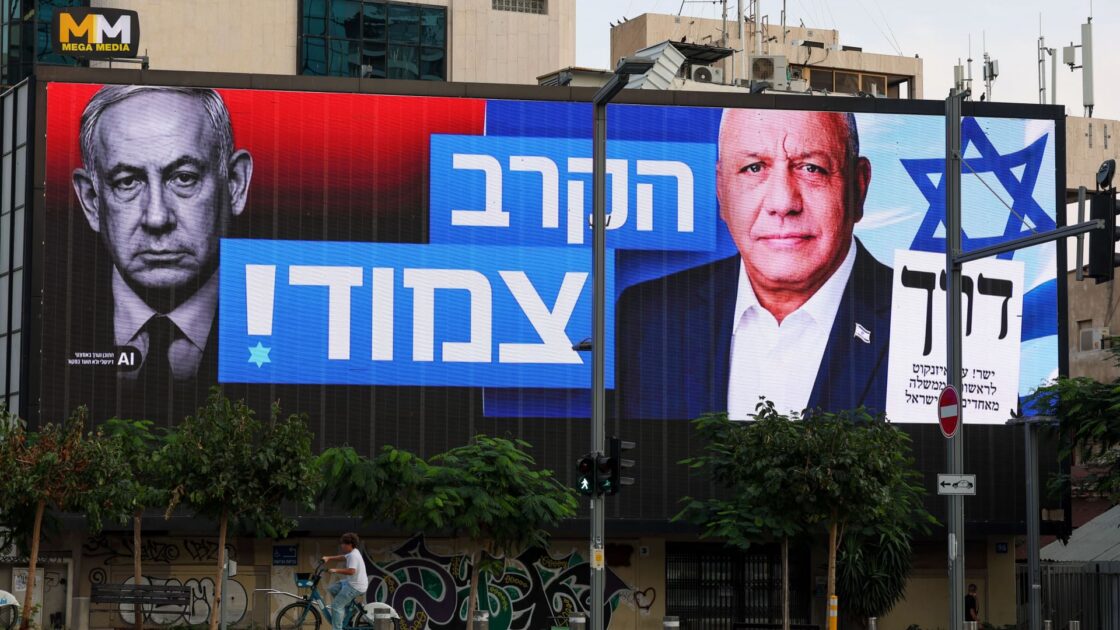
Israeli financial markets experienced a sell-off as the country’s recent national election ended without a definitive winner. With the vast majority of votes counted, neither the bloc supporting incumbent Prime Minister Benjamin Netanyahu nor the faction led by challenger Gadi Eisenkot secured the 61 seats necessary to establish a coalition government, as reported by US Top News and Analysis (cnbc.com).
Market Reactions and Election Turnout
The Israeli shekel declined by 2% against the U.S. dollar, while the Tel Aviv 35 stock index decreased by 2.3%. Government bonds also faced downward pressure as yields increased across the board. The 2-year bond yield rose by 6 basis points, the benchmark 10-year bond yield climbed by 8 basis points, and 30-year bond yields increased by 6 basis points.
With more than 80% of votes counted, the pro-Netanyahu bloc held a narrow lead of roughly 54 seats compared to 49 seats for the opposition. Exit polls do not represent official results, which are scheduled for publication on November 4. The Central Elections Committee reported a voter turnout of 77.7% among eligible voters, marking the highest participation rate in a Knesset election in 27 years.
Political Divisions and Leadership Stakes
Gadi Eisenkot, a former military chief of staff, claimed victory earlier in the day and stated that preliminary results giving his bloc a slight lead should grant him the initial opportunity to form a government. In a statement published on X, Eisenkot said that the initial exit poll results indicate a complete lack of confidence in Netanyahu and his October 7 government.
The election marked Israel’s first national vote since the October 7, 2023 attack by Hamas and the subsequent conflicts in Gaza, Lebanon, and Iran. The vote functioned broadly as a referendum on Netanyahu’s political dominance since 2009. Netanyahu’s supporters praise his management of the war and his resistance to international pressure, whereas critics point to his ongoing corruption trial, controversial judicial overhaul initiatives, and the handling of the Gaza conflict. Furthermore, Netanyahu faces an International Criminal Court arrest warrant concerning the Gaza campaign, which he has rejected.
The Role of Arab Parties
Arab-led parties, which are not aligned with either primary camp, projected winning approximately 18 seats, making them a crucial factor in upcoming coalition negotiations. Ra’am leader Mansour Abbas stated that their vote would change the government, while Joint List faction chairman Ahmad Tibi previously outlined a strategy to prevent Netanyahu from staying in power, as noted by the Jerusalem Post. Amin Saikal, an adjunct senior fellow at Singapore’s S. Rajaratnam School of International Studies, explained that the pro-Palestinian orientation of Arab-led parties aligns them more closely with Eisenkot than with Netanyahu, though neither leader has expressed a willingness to include them.
Michael Feller, chief strategist at Geopolitical Strategy, stated that even if Eisenkot’s alliance secures more seats, it remains unlikely to form a governing majority without incorporating Arab and left-wing parties, noting that otherwise the next government’s policies regarding Iran, Palestine, and security could remain unchanged. Conversely, Yisrael Beytenu leader Avigdor Liberman, whose party is projected to win seven to nine seats within Eisenkot’s opposition bloc, stated during the campaign that he would not rely on Arab parties. On Tuesday, Netanyahu and his far-right coalition partners cautioned against heavy Arab voter turnout, prompting accusations of racism from political opponents after Netanyahu highlighted long polling station queues in Arab communities and warned of a potential government led by Mansour Abbas and Ahmed Tibi.
Potential for Protracted Stalemate
Amin Saikal noted that Netanyahu may use the coming weeks or months to stall the establishment of a new government and fight for his political survival, even if Eisenkot finishes with a higher seat count. Netanyahu previously became the nation’s longest-serving prime minister after earlier electoral stalemates allowed him to remain in office when rival parties failed to form a coalition before deadlines expired, following a period of five elections held between 2019 and 2022.
P.R. Kumaraswamy, an emeritus professor of Middle Eastern Studies specializing in Israeli politics at Jawaharlal Nehru University, anticipates an extended negotiation phase following the release of the final results, stating that it is premature to write Netanyahu off.