Table of Contents
The UK government’s ambition of achieving net zero carbon emissions by 2050 could be undermined by its new policy on artificial intelligence data centres, according to BBC research. During a Budget speech, Chancellor John Healey announced that data centres would be permitted to build onsite power generation while waiting for a grid connection.
Massive Energy Demand and Grid Strain
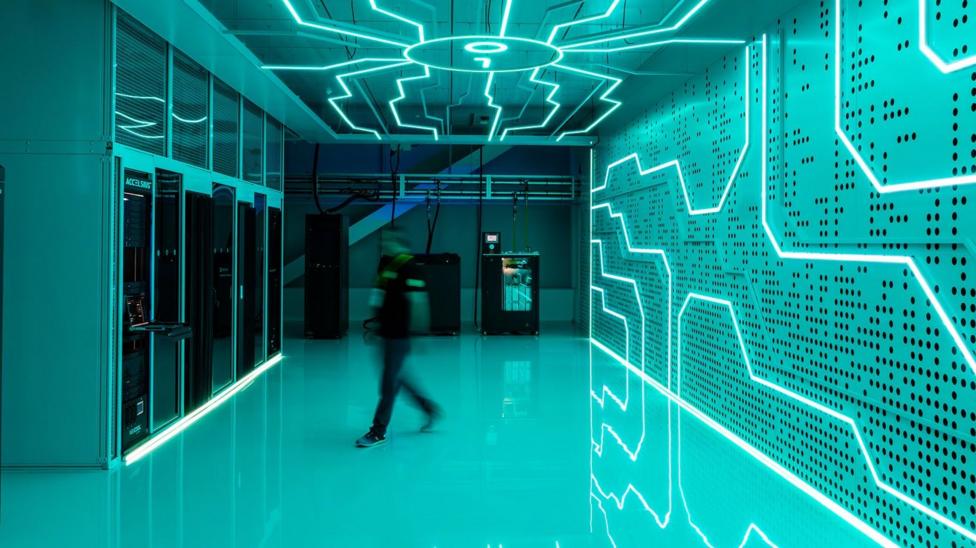
Data centres are warehouses full of computer servers used to run digital services such as streaming, banking, and public services. A new generation of these facilities is emerging on a much larger scale to handle computing demands for artificial intelligence technology. These facilities consume significantly more energy than older models at a time when the National Grid faces immense pressure.
According to the energy market regulator Ofgem, data centre developers are seeking connections totalling 72 gigawatts, whereas peak electricity demand across the country last year reached 45 gigawatts. Developers have been informed they could wait up to 10 years for grid upgrades.
Nathan MacWhinnie, head of market intelligence and oversight at Ofgem, told BBC News that the grid is at capacity in many areas, noting that these projects are sometimes the size of cities.
On-Site Gas Proposals
An investigation by BBC File on 4 revealed that four planned hyperscale data centres—including three in southern England—are considering gas-fired power to meet electricity needs. Calculations show they would require 1.3 gigawatts of power and could produce an estimated 4.1 million tonnes of carbon emissions annually, surpassing the combined emissions of Manchester, Liverpool, and Southampton.
Oliver Hayes, head of campaigns at environmental charity Global Action Plan, told BBC News that powering these facilities with gas means local communities will face large gas turbines, heavy air pollution, noise, and high water consumption.
At Acre Slough west of London, developers may use gas engines with up to 49.5 megawatts of capacity while waiting for a grid connection. At Wapsey’s Wood in Buckinghamshire, a proposed 200-megawatt gas power station could operate until grid capacity arrives around 2040. Buckinghamshire independent councillor Ed Gemmell told BBC News that the plan would be an environmental disaster and set a dangerous precedent.
Quest Park has proposed a data centre on a quarry pit in Bedfordshire with a 1-gigawatt power load. David Kohler, director of Quest Park, told the BBC that creating 1 gigawatt of solar electricity would require an area equivalent to 15% of Bedfordshire, and that wind power was intermittent and expensive, though the company is considering non-gas alternatives. In Cardiff, a developer is also seeking permission for a temporary energy centre with turbines generating up to 49.9 megawatts, which developer Curtis Hall described as a worst-case scenario.
Government and Industry Response
Labour MP Toby Perkins, chair of the Environmental Audit Select Committee, told BBC News that a substantial increase in natural gas use is unacceptable. Government officials defended the strategy, stating that data centres are essential to the economy and that behind-the-meter power generation will be tightly controlled, time-limited, and reserved for exceptionally strategic projects.
A government spokesperson told BBC News that pausing development would send jobs and investment overseas, adding that the new Data Centre Covenant sets expectations for developers to minimise water use and pay fair energy costs.
All four projects stated their intention to connect to the national grid once electricity supply becomes available.