Table of Contents
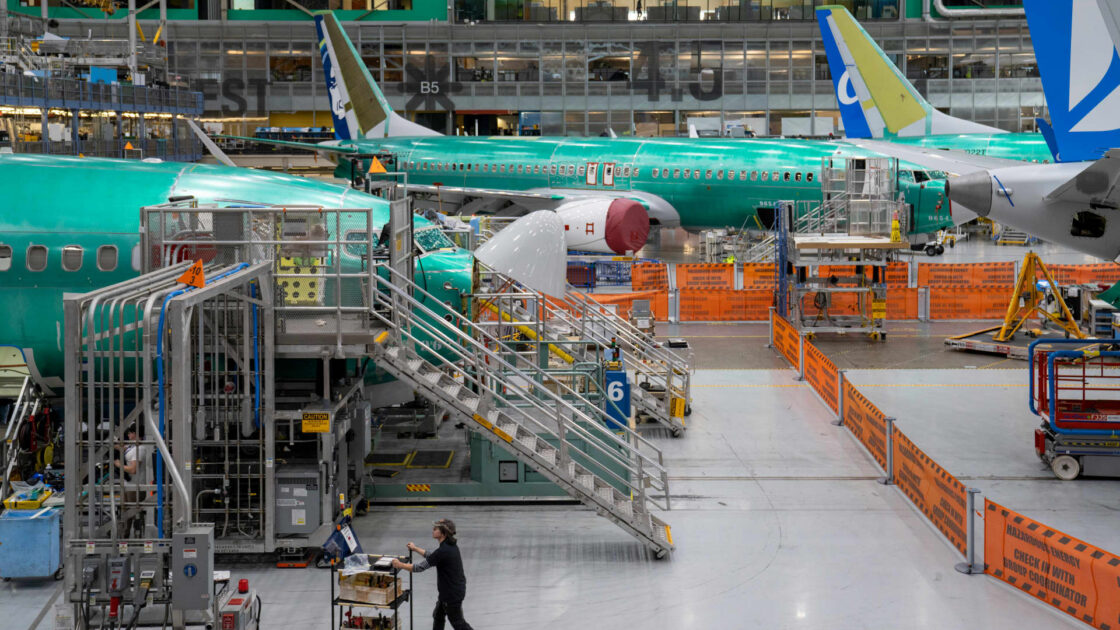
Boeing does not anticipate significantly increasing output of its best-selling 737 Max aircraft until the second half of 2027 as the manufacturer contends with a slower-than-expected pace of wing production. Chief Executive Officer Kelly Ortberg stated during the company’s quarterly earnings call on Tuesday that Boeing is aiming for a production rate of 52 planes per month in late 2027, up from its current rate of about 47 aircraft per month.
Production Challenges and Market Reaction
Ortberg previously informed investors last month that stabilizing production was taking longer than anticipated due to the speed of wing manufacturing. Speaking in an interview with CNBC’s Phil LeBeau on Tuesday, Ortberg emphasized that the company prioritizes doing the job right over speed, acknowledging that stakeholders want faster progress. Boeing stock fell 10% in trading on Tuesday following the announcement.
Reiterating the company’s focus on operational stability, Ortberg noted in a staff memo on Tuesday that elevated expectations require improving performance through lean practices and efficiency while maintaining high safety and quality standards. Aircraft production and deliveries remain critical to Boeing’s recovery because customers pay the majority of an aircraft’s price upon delivery.
Third-Quarter Financial Results
Boeing reported narrowing losses for the third quarter, aided by strong performance in its defense unit. For the three months ending September 30, the company recorded a net loss of $116 million, or 26 cents per share, compared to a net loss of $5.34 billion, or $7.14 per share, during the same period last year when it absorbed a nearly $5 billion charge for the 777X program. On an adjusted basis, the company posted a loss of 34 cents per share, while Wall Street analysts surveyed by LSEG had expected an adjusted loss of 21 cents per share.
Revenue increased 4% year-over-year to $24.19 billion, beating analyst expectations of $23.84 billion. Free cash flow grew to $464 million from $238 million in the third quarter of 2025. The defense division saw revenue jump 15% from the previous year to $7.94 billion.
In the commercial airplane sector, Boeing delivered 161 aircraft during the quarter, representing an increase of one jet compared to the prior year. However, commercial aircraft revenue declined 3% to $10.72 billion. The unit registered a negative operating margin of 6.5%, which Boeing attributed to a less favorable delivery mix, rising projected costs from future production rate adjustments, and higher estimated supply chain expenses. Ortberg told employees in his memo that the company still has substantial work ahead.
Recent Certifications and Defense Wins
The manufacturer recently secured notable regulatory and defense milestones, including the U.S. Navy selecting Boeing to develop its next-generation fighter jet. Additionally, the Federal Aviation Administration approved the 737 Max 10, the largest variant in the Max family, following the certification of the 737 Max 7 in August, completing the final certifications for the aircraft line.