Table of Contents
Climate-forward Democrats swept into power in a blue wave that flipped the Senate, House, and several governor’s races on Tuesday night. With voters laser-focused on affordability, experts said Democrats succeeded in connecting cost-of-living concerns with rising energy prices, datacenters, and the climate crisis, potentially creating a new path for climate politics.
Green Economic Populism and Key Issues
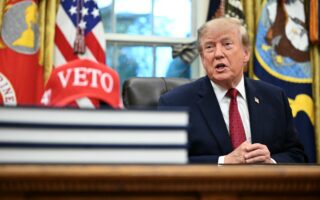
The election results served as a sharp rebuke of Donald Trump, whose Iran policy sparked a war that raised gas pump prices nationwide and highlighted the fragility of fossil fuels while the US oil industry reaped $130bn in profits. Household energy costs soared due to constraints on renewables, climate disasters, and a datacenter boom. Debates preceded the election among Democrats over whether to discuss the climate crisis directly or focus strictly on affordability, with some senior figures like Gavin Newsom warning against climate hushing.
An analysis released Wednesday by the thinktank Climate and Community Institute (CCI) showed that candidates who aligned most strongly with green economic populism won 39 out of 56 federal races, representing 70 percent of contests for the House and Senate. CCI executive director Johanna Bozuwa stated that voters want leaders who make life affordable and stand up for working people against elites, noting that climate is a critical component of that equation.
Environmentalist and author Bill McKibben noted that energy prices, the war in Iran, and the president’s strategy of oil dominance played significant roles as intersecting issues. Furthermore, datacenters emerged as a major crossover issue uniting Republicans, Democrats, and independents. Meanwhile, big oil and gas spent at least $182m to elect Republicans in an expensive and ultimately unsuccessful effort, as reported by Emily Atkins of Heated.
Legislative Avenues and Congressional Power
Holding majorities in the House and Senate will enable Democrats to launch investigations and issue subpoenas for witnesses and documents. Representative Jared Huffman, the top Democrat on the House natural resources committee, vowed to investigate big oil companies regarding their skyrocketing profits during the war in Iran. Additionally, Trump will need to compromise with Democrats to pass budgets, giving lawmakers leverage to insert climate provisions, while Senate control allows Democrats to block anti-climate judicial and cabinet appointments.
McKibben urged Democrats to leverage the budget process to restore funding to the National Oceanic and Atmospheric Administration and other agencies facing severe cuts to climate science. He also called on Democrats to fight against legislation pushed by big oil that would grant them immunity from climate damages. Meanwhile, a controversial permitting bill aimed at clearing the way for clean energy and fossil fuel projects could face a vote as early as November 9.
House Victories for Climate Advocates
In Arizona’s sixth congressional district, Democrat JoAnna Mendoza declared victory against Republican incumbent Juan Ciscomani, who voted to phase out Biden-era clean energy tax credits. Mendoza campaigned on clean energy investments to lower costs for ratepayers, water security, and cleaning up Pfas chemicals in drinking water. In California’s 22nd district, 31-year-old college professor Randy Villegas declared victory against Republican David Valadao, supporting an all-the-above energy approach alongside heat protections for outdoor workers.
Democrat Brad Lander won New York’s 10th congressional district, opposing the Northeast Supply Enhancement methane gas pipeline. In Michigan, 36-year-old climate activist Will Lawrence won a purple congressional seat after campaigning for state and federal moratoriums against hyperscale datacenters. McKibben, who door-knocked for Lawrence, called his win remarkable after overcoming $4m in Trump PAC-funded attack ads. In New York’s 17th district, Democrat Cait Conley won her race after calling climate change a national security crisis and pledging to push for solar, wind, and geothermal investments.
Senate and Gubernatorial Wins
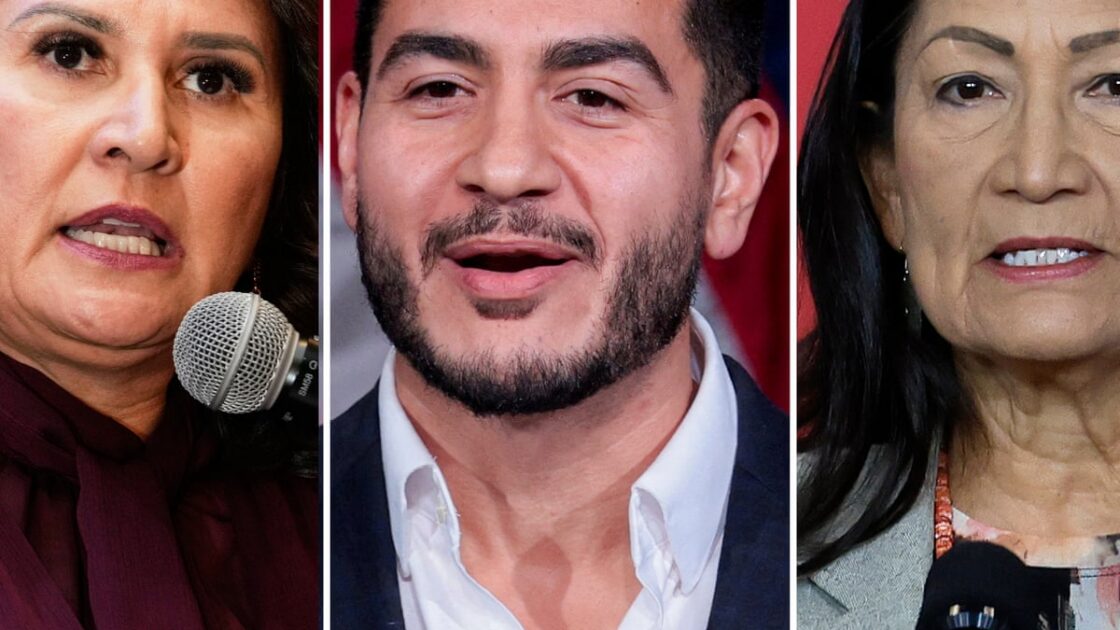
In Michigan, Democratic candidate Abdul El-Sayed defeated Republican Mike Rogers for a Senate seat, running on a platform of 100% renewable energy, datacenter moratoriums, and affordability. In Ohio, Democrat Sherrod Brown defeated Republican Jon Husted, focusing his campaign on how datacenters backed by Husted drove up electric bills by 34% since 2022. James Talarico secured a Texas Senate seat for Democrats by proposing an all-the-above energy approach, while Roy Cooper won in North Carolina by tying former oil and gas lobbyist Michael Whatley to investor-owned utility rate hikes. Ed Markey also won his Senate race in Massachusetts, campaigning explicitly on federal clean energy investments and green union jobs.
Governor’s races also saw climate-forward Democrats prevail. Deb Haaland won the New Mexico governor’s race, becoming the nation’s first female Native American governor. Gina Hinojosa won the Texas governor’s race, replacing Republican Greg Abbott and advocating for emission reductions following the 2021 polar vortex. In Georgia, Keisha Lance Bottoms became the first Black female governor in the state after campaigning to reassess datacenter expansion, and Amy Acton won the Ohio governor’s race on a platform that included a conditional moratorium on datacenters.
Utility Commissioners and Ballot Measures
Electricity bills drove significant voter concern, leading to elections for state utility commissioners in nine states. The Georgia public service commission flipped from Republican to Democratic control on Tuesday night following residential power bill increases driven partly by datacenter growth. Voters in Eugene, Oregon, passed a measure establishing the Eugene Clean Energy Fund, which places a 2% fee on large corporations like Amazon and Walmart to generate at least $15m annually for renewable energy and job training by 2030.
In Michigan, voters approved a ballot measure prohibiting state-regulated electric and gas utilities, such as DTE Energy, from making campaign contributions to candidates overseeing them. However, a separate ballot measure aiming to replace DTE with a public utility was narrowly defeated. The measure formed part of a broader public power movement seeking to lower utility bills through public ownership.