Table of Contents
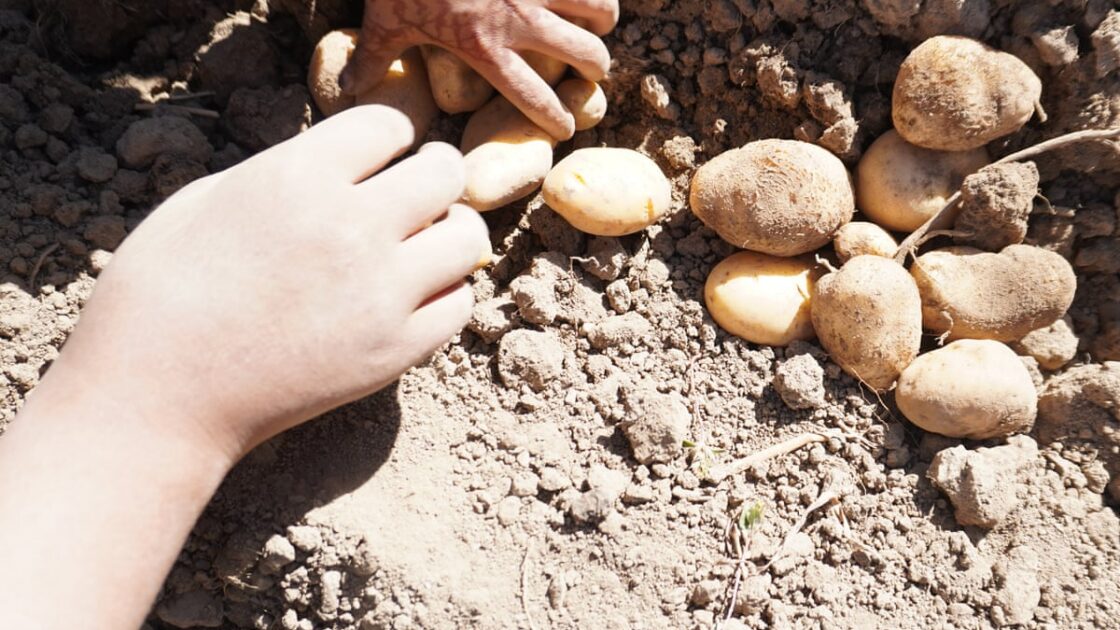
Hajra Begum sorts her potato harvest in the remote mountain village of Chorwan, located in Indian-administered Kashmir. As winter approaches, she prepares to lower the crop into an underground pit, a traditional preservation method that is slowly fading away across the region.
The Tradition of Underground Storage
For generations, families in Gurez have used khraws—traditional underground storage pits lined with straw and sealed against the cold—to keep potatoes, turnips, and cabbages through harsh Himalayan winters. These months routinely bring temperatures below -20C (-4F) and heavy snowfall that cuts villages off from the Kashmir valley, cracking pipes and freezing diesel in the process.
Begum, 40, explains that selecting the right potatoes for these pits is crucial, noting that using a flawed potato wastes the effort of the entire coming year. She learned from her mother how to distinguish potatoes that store well from those that rot or sprout quickly, and she is now passing this knowledge on to her daughter, though she doubts the skill will survive another generation.
As roads have improved and younger generations have left for work and education, fewer families maintain the pits. Begum recalls that nearly every family had multiple pits when she was young, whereas now only a handful of households still use them, with others buying produce from markets or relying on government subsidies.
Threats to Local Genetic Diversity
Perched near the heavily militarised Line of Control about 80 miles from Srinagar, the high-altitude Gurez valley is home to the Dard-Shin people, an Indigenous community with a distinct culture. According to a 2019 study by the Indian Council of Agricultural Research’s National Bureau of Plant Genetic Resources (ICAR-NBPGR), potatoes account for about 45% of the cultivated area in Gurez.
Dr Sheikh M Sultan, a senior scientist at ICAR-NBPGR’s Srinagar station, surveyed the valley and found it increasingly difficult to locate certain local varieties he had previously encountered, pointing to a tremendous loss of genetic diversity driven by migration, improved roads, and changing lifestyles. He warns that when people stop producing their own seeds and rely entirely on commercial varieties, the resulting loss can be permanent.
Sultan cautions that research institutions frequently prioritize introduced varieties over indigenous crops whose unique characteristics remain unstudied. He suggests that local varieties may hold valuable traits, such as tolerance to cold and resistance to pests and diseases, that should be investigated rather than neglected.
Climate Pressures and Land Challenges
Climate change has introduced additional pressures for farmers across the Himalayas. Residents in Gurez report drier springs, reduced snowfall, and water shortages that impact potato production. Abdul Jabbar Mapnoo, a 70-year-old farmer in Chorwan, remembers winters featuring six feet of snow and abundant harvests, contrasting with current conditions where drying springs and lower snowfall have reduced yields.
Farmland in Gurez is already scarce, and additional pressure comes from infrastructure projects like the Kishanganga hydroelectric project, which has affected land through acquisition and submergence in key agricultural areas such as Badwan.
Dr Parveen Kumar, a scientist at the Sher-e-Kashmir University of Agricultural Sciences and Technology of Kashmir, emphasizes that locally adapted varieties should not be overlooked as farmers navigate climate change adaptation. Potential preservation avenues include geographical indications or heritage systems programs, similar to those that helped saffron-growing in Pampore.
However, recognition alone will not save the crops. Researchers emphasize that these varieties and the traditional methods of selecting, storing, and replanting them must be fully documented before they disappear from cultivation entirely.
In Chorwan, Begum finishes loading the final sack of potatoes into the pit and covers it to protect her family’s food supply and spring seeds, relying on expertise handed down through generations.