Table of Contents
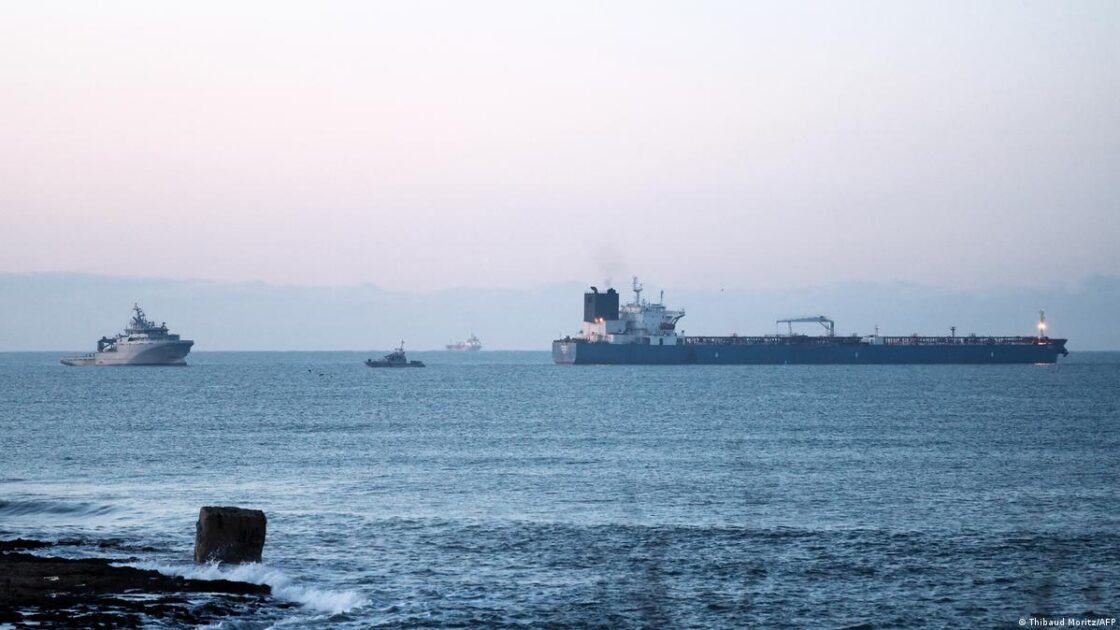
Since the full-scale invasion of Ukraine by Russia, Moscow has increasingly utilized a shadow fleet to bypass Western restrictions and move oil globally. Heavily sanctioned nations like Iran and Venezuela also face accusations of employing similar vessels to export petroleum products.
Risks of the Shadow Fleet
These tankers frequently use deceptive practices, such as disabling location transponders to evade detection and hide the true origin or destination of their cargo. Comprising mostly aging, uninsured, and poorly maintained vessels, the fleet has sparked widespread concern throughout the shipping industry while expanding rapidly to account for nearly 19% of global oil tanker capacity, according to financial intelligence firm S&P Global estimates.
Elisabeth Braw, senior fellow at the think tank Atlantic Council, told Deutsche Welle: DW.com – Top Stories (dw.com) that “the shadow fleet is a scourge,” adding that “it is in nobody’s interest” to have these ships operating in global oceans. She noted that the tankers undermine maritime order while raising the risk of environmental damage and accidents, urging every country to leverage relations with Russia to stop using the fleet since everyone suffers the consequences.
Debate Over US Policy Shifts
To curb Russian oil revenues and target the fleet, the US and European nations have intensified efforts to intercept violating tankers. However, the Trump administration is reportedly considering lifting sanctions on select shadow fleet ships to allow them to transport unsanctioned oil. A US official told Reuters this month that the goal is to lower record-high global freight rates.
Michael Carpenter, senior fellow for Transatlantic Affairs at the International Institute for Strategic Studies (IISS), told Deutsche Welle: DW.com – Top Stories (dw.com) that lifting these sanctions “would decrease the effectiveness of the sanctions regime overall,” rewarding the aggressor and funding Moscow’s continued attacks on Ukraine. Ben Harris, vice president of Economic Studies at the Brookings Institution, added that the move would make it easier for Russia to trade oil at market rates and improve government finances.
Conversely, US Energy Secretary Chris Wright rejected claims that Washington is removing sanctions from these tankers. Bloomberg quoted Wright stating last week that officials are converting dark tankers into legitimate ones by working with investors to refurbish idle sanctioned ships for unsanctioned oil, stressing that “There is no removing of sanctions.” The US government has not yet released a detailed plan for the vessels.
Impact of Trump’s Russia Deal
The proposal follows an agreement between US President Donald Trump and Russian President Vladimir Putin this month permitting sales of Russian diesel on global markets to lower domestic fuel prices ahead of the November 3 US midterm elections. Trump also waived broad new Russian energy sanctions authorized by recent legislation. Ukraine and its European allies sharply criticized the decision over fears it weakens Western economic pressure.
Harris noted that “the US sanctions carry outsized weight because of the threat [for countries and businesses] of being cut off from the US financial system.” If the US steps back, responsibility shifts to European policymakers, who possess less effective options due to the diminished threat of severing financial ties.
Options and Risks for Europe
Despite potential US withdrawal, Harris explained that Europe maintains leverage through its central role in global shipping and insurance by demanding legitimate insurance for ships in its waters, effectively barring many shadow fleet tankers. Policymakers could also pressure flag-state countries to better regulate their vessels.
Carpenter noted that the EU will have no choice but to continue enforcing sanctions because the vast majority of the fleet travels through the Baltic Sea and the Danish Strait, placing the EU in a unique position to board and inspect ships. However, Russia has threatened to seize European vessels in retaliation, and Carpenter warned that enforcement without US backing increases burdens and risks for EU countries. Braw emphasized that while European allies must remain united with partners like Japan, Australia, and Canada, their independent impact remains far smaller than a joint effort with the US.