Table of Contents
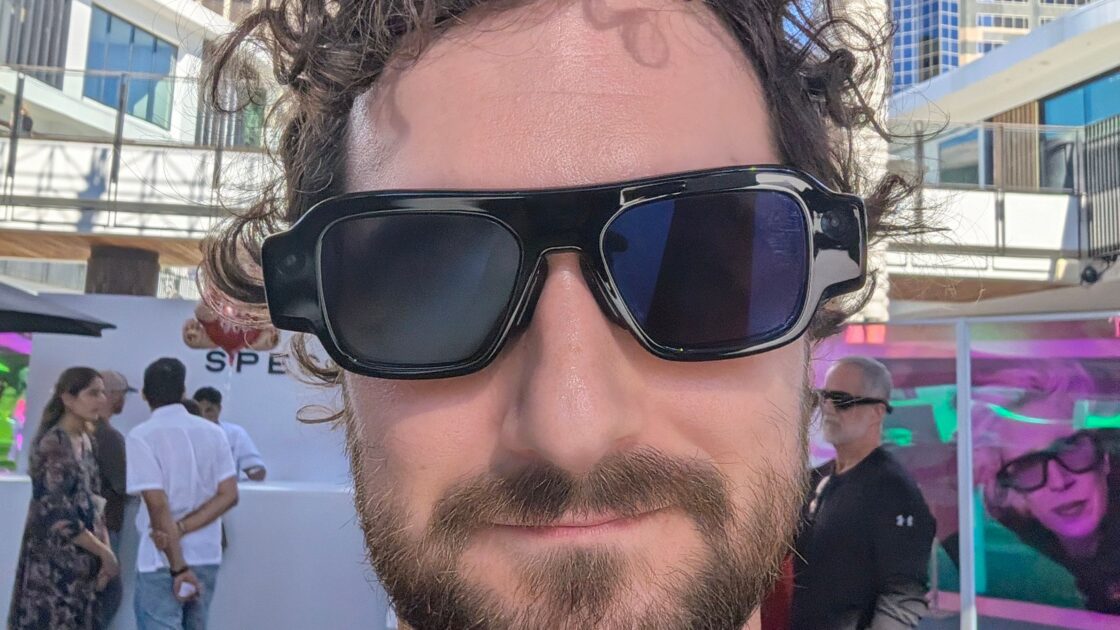
Snap’s latest augmented reality glasses, known as Specs, are priced at $2,195 and are scheduled to begin shipping soon. A reporter tested the chunky device at a public demo zone in Los Angeles to evaluate how they handle physical activity and everyday environments.
Testing the Specs in Public
During the public demo at the Westfield Century City shopping center, the reporter tried out a fitness app called Thirty Ups, which tracks push-ups using a virtual cartoon Jack-o’-lantern. Despite the glasses looking massive, they stayed securely on the face during the exercise, completing 11 counted reps before stopping due to the heat and surrounding onlookers. A nearby Snap representative expressed excitement, noting that the reporter was the first person to attempt that specific exercise during the demo.
Snap officially announced the Specs in June after taking several months to reveal available features. Alongside fitness tracking, the device offers roughly a dozen Lenses that allow users to finger paint in midair, view navigation overlays, interact with physical notebooks, or practice basketball through an NBA partnership. The glasses are available in two sizes and feature automatic sunglasses mode, which dims the lenses in direct sunlight to keep virtual elements visible while protecting eyes from UV rays.
Usability and Distractions
While the hardware feels surprisingly lightweight and stable, wearing the glasses in public presents several challenges. The augmented reality elements can cause distractions, and the lenses exhibit a rainbow shimmer in the user’s field of vision even when turned off. The reporter noted concerns about safety while walking or driving, having witnessed another user wildly swinging punches at unseen screen elements.
Most features rely on hand controls, such as pinching fingers to open applications or playing rhythm-based games. However, these controls can feel finicky, often requiring repetitive gestures. Furthermore, productivity demonstrations revealed limitations, as a connected Bluetooth keyboard suffered from severe input lag when tested with Google Docs.
Market Challenges and Future Outlook
Certain features on the device closely resemble promotional content, including a Harry Potter spell-casting experience tied to an upcoming HBO show and an online shopping browser that hints at future pop-up advertisements. With a steep price tag aimed primarily at developers and early adopters, the glasses face stiff competition from more polished and affordable mixed-reality options from companies like Meta and Xreal.
As stated in a statement provided to WIRED by a Snap representative, consumer adoption remains a gradual process involving the simultaneous development of hardware, software, experiences, and pricing. For now, the most immediately successful part of the public demonstrations remains the complimentary ice cream served to participants.