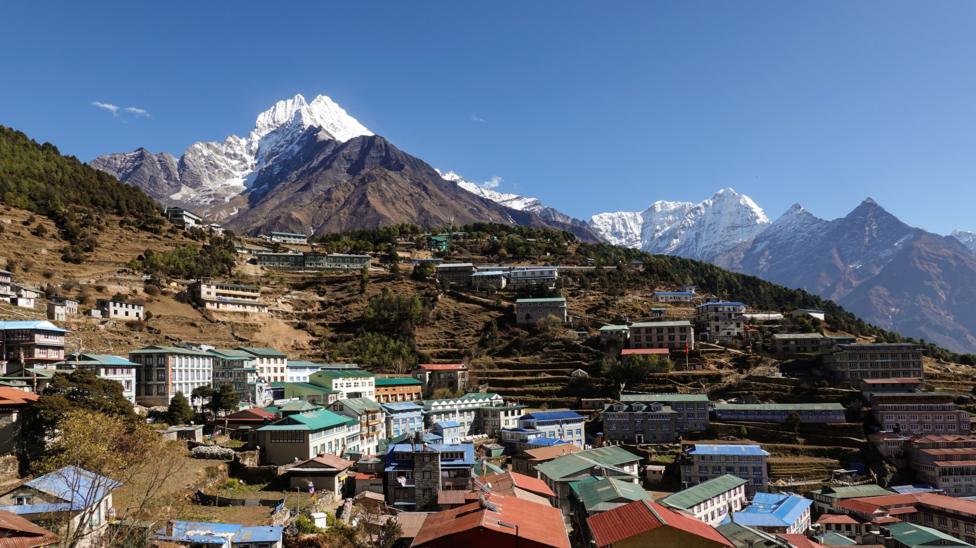
At least 300,000 people living across parts of the Himalayan region could now be in the path of potential disasters, according to a new study. Research published in Scientific Reports indicates that built-up land in high-risk zones across northern Nepal, parts of south-eastern Tibet, and a section of India’s Uttarakhand expanded by approximately 45% between 2016 and 2023.
Rapid Development in Vulnerable Zones
In areas facing severe threats from glacial lake flooding, development surged even faster, increasing by nearly 78% over the same timeframe. The scientific team behind the findings noted that the total number of people at risk could be significantly higher because their analysis focused only on specific territories rather than neighbouring regions facing similar dangers. BBC News reported that the study preceded severe mass floods in August that killed over 1,400 people and left thousands missing in Nepal, followed by subsequent smaller incidents such as an 11 October flood along the Budhi Gandaki river that damaged 200 houses, swept away five bridges, and left five people missing.
Nine researchers from the UK, Nepal, and India examined regions up to 50km downstream from Himalayan rivers and around 1,360 glacial lakes, uncovering widespread expansion of tourism facilities, infrastructure, and real estate. In Pokhara, a major tourism destination at the foot of the Himalayas, Mayor Dhana Raj Acharya stated that managing risks from the Seti Gandaki River is a massive challenge, noting that many older buildings stand just 5m from the river banks despite new regulations requiring greater distances. Further north in the Annapurna trekking region, homestay operator Phurpa Chhiring Lama expressed helplessness during peak season due to unprecedented disasters, while hotelier Krishna Gauchan voiced constant fear of glacier collapses and glacial lake bursts along the Modi river.
Tourism investments frequently ignore environmental hazards, according to Khagendra Poudel, a geographer at a local campus of Tribhuvan University, drawing parallels to pilgrimage-hosting valleys in north India. Laxman Subedi, president of the Hotel Association Pokhara, acknowledged that tourism businesses have expanded haphazardly without proper planning. Beyond tourism, the Bhotekoshi and Trishuli river surroundings have experienced a surge in hydropower plant construction. University of Leeds glaciologist and lead author C Scott Watson warned that current development decisions in populated river valleys will dictate disaster risks for decades.
Climate Change and Enforcement Challenges
Actual risks may exceed the study’s projections, which categorized endangered buildings as those within 50 vertical metres of a river or glacial lake surface. During catastrophic flooding on 26 August, residents in the Rasuwa district reported river levels rising by 70m in places, burying buildings located relatively far from the banks under debris sludge. These escalating dangers stem largely from regional warming occurring at twice the global rate, which accelerates the melting of glaciers, icefields, snowpacks, and permafrost. University of Colorado mountain geographer Alton Byers, who did not participate in the study, called for the research to serve as a springboard for improved early-warning systems and precautionary measures.
Urban planning experts point to persistent enforcement gaps. Prof Surya Raj Acharya, an urban planning expert and registrar at the University of Nepal, explained that roads, hydropower projects, hotels, and market towns have continuously expanded on accessible low, flat land along rivers while safeguards are ignored. Nepal’s national disaster agency chief executive, Dharam Raj Uprety, stated that authorities plan to ban settlements within 15m of the riverbank along the recently impacted Rasuwa-Bhotekoshi corridor and other river areas, despite challenges tied to citizens’ sentimental attachments to their land. Across the border in India’s Uttarakhand state, activist Anoop Nautiyal claimed economic growth has overridden tourism limits and environmental regulations, though the state cabinet approved new floodplain zoning rules on 12 October to regulate land use and protect life and infrastructure.
Basanta Raj Adhikari, director of the Centre for Disaster Studies at Tribuvan University, suggested that complete threat mitigation is impossible, proposing that risk-based insurance grades could encourage people to build in safer locations. Meanwhile, the pace of construction across the entire region continues unabated.